


Apple Watch listening tools test privacy boundaries for wearable AI
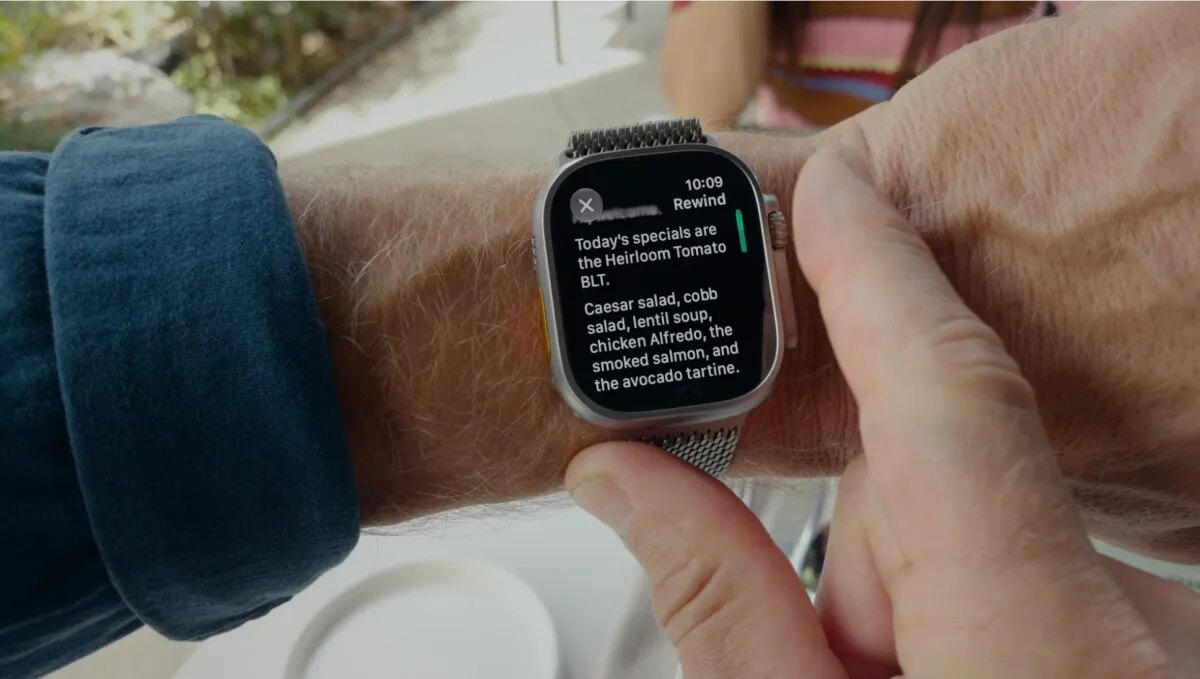
Apple has unveiled new Apple Watch audio features that use on-device AI to recognise sounds, transcribe recently spoken words and generate conversation summaries. The lineup includes Audio Intelligence, Live Rewind and Siri Recap, expanding the watch beyond notifications and health-related functions into contextual audio assistance.
Audio Intelligence is positioned as an accessibility feature for deaf and hard-of-hearing users. It can alert a wearer to sounds including sirens, alarms, doorbells and babies crying, and it can operate when the paired iPhone is not nearby. In situations involving a fire alarm or carbon monoxide detector, that alerting function could be particularly important.
From sound alerts to conversational notes
Live Rewind takes the product into a different category. By double-pressing the Digital Crown, a user can go back 15 seconds and obtain a transcription of what was said. The resulting text can be saved in Apple’s standalone Siri app for later reference. Apple suggests uses such as preserving a book recommendation, capturing a colleague’s idea or recovering something that was not heard clearly the first time.
Siri Recap uses ambient listening to produce high-level notes from conversations. In the Siri iOS app, those notes can include an automatically generated title, summary and key points rather than a word-for-word transcript. Apple points to meeting takeaways and parent-teacher conferences as potential use cases.
The distinction matters because a subtle watch gesture can capture spoken information with less visible signalling than raising a phone to record video. Apple says Live Rewind includes an audible chime and a full-screen microphone animation, but the feature still changes the practical ease with which a conversation can become a saved text record.
Privacy controls do not remove consent questions
Apple says Siri Recap is not enabled continuously by default. Users can choose when it runs, such as during work hours or the daytime, and can switch it on or off through Control Center. The company also says it does not create or retain audio recordings, that raw audio is inaccessible even to Apple, and that the feature neither identifies nor attributes speakers. Generated transcripts and recaps are protected with end-to-end encryption.
Those controls differentiate Apple’s approach from AI wearables designed around persistent availability. The competitive pressure surrounding dedicated AI hardware is illustrated by AI device competition between Apple and OpenAI as companies compete to establish the next generation of personal AI devices. Apple’s implementation instead combines optional listening windows with text outputs rather than retained audio.
However, the absence of stored audio leaves open questions about consent and legal treatment. Recording-device maker Plaud advises users to obtain consent where the law requires it, while Amazon’s Bee terms place responsibility for compliance with minors’ privacy rules on users. Text-only notes might be offered as evidence, but their lack of an audio source could complicate authentication, and applicable evidentiary rules may differ by state.
Business implication
Businesses considering wearable transcription should set clear rules for consent, permitted situations, access and retention before employees use it in meetings or customer interactions. Encryption and opt-in controls are meaningful safeguards, but they do not replace operational policies for handling conversational information.