


MIT researchers identify attribution decay in AI image generation
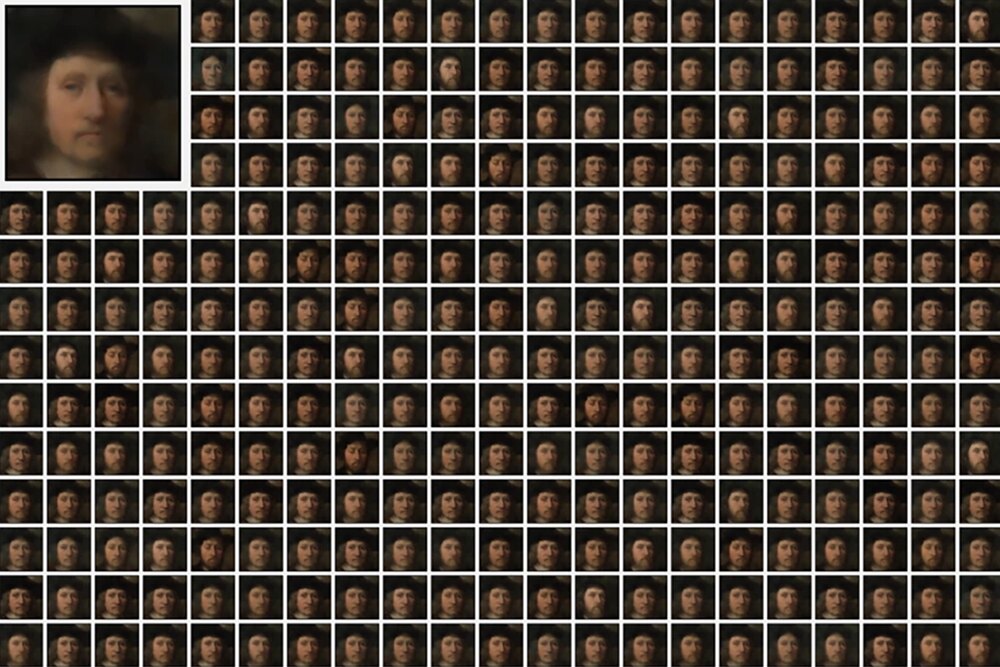
Researchers at MIT’s Computer Science and Artificial Intelligence Laboratory (CSAIL) have identified “attribution decay” in generative diffusion models: as the size of an image-training dataset increases, the contribution of any individual training example to a particular generated image can become imperceptible. The work, led by former MIT CSAIL researcher Zheng Dai and MIT Professor David Gifford, is described in an open-access paper published in Nature Communications.
The team found that at large scales it was often possible to remove a single image, all images by one artist, or all photographs of one person from training data without appreciably changing a model’s generated output. This challenges the assumption that a particular output can reliably be assigned to a particular item or creator in its training set.
An exact way to test removal
Testing the question directly would normally require retraining a model from scratch after removing each individual example. That becomes impractical with datasets containing millions of items, so earlier attribution methods estimated an example’s influence rather than deleting it and its effects.
MIT’s alternative is an architecture called a diffusion ensemble. Rather than relying on one monolithic model, it uses multiple smaller components trained on different slices of the dataset. To evaluate a model without a particular image, researchers switch off the components that encountered that image. The remaining system is a counterfactual model produced without retraining or approximation.
The researchers compared their ensembles with 24 conventional diffusion models trained on the same data. By standard measures, the ensemble outputs were about as good as those from the conventional models. Dai said the ensemble approach performed poorly with small amounts of data but scaled better relative to a standard diffusion model as data increased.
Counterfactual radius shrinks with dataset size
The team trained 24 ensembles on datasets ranging from 256 images to more than 160,000 images. The data came from seven public collections, including CIFAR-10, CelebA, MetFaces and ArtBench. For each generated image, they compared the original output with alternatives made after removing different pieces of training data. They call this set of alternatives the image’s counterfactual universe.
The largest difference between the original and an alternative is the counterfactual radius, which measures the maximum effect a single training item could have had. As datasets grew, that radius declined along an inverse power law. The result held under pixel-level and semantic measures, as well as four similarity metrics.
The researchers also retrained 1,282 separate models at small scale to test whether the result was an artefact of ablation. Attribution decay persisted. It also remained when the fraction of removed data was fixed, and across fixed training epochs, text-prompted models and class-conditioned models.
Implications for copyright and model governance
Gifford said the findings raise questions about derivative works, fair use, copyrightability and compensation where outputs cannot be attributed to individual internet content. The researchers also argue that the method can produce outputs guaranteed to be unattributable to individual training examples.
The study concerns diffusion models, which are widely used for audiovisual generation and in scientific applications such as protein-structure modelling and therapeutic discovery. Whether attribution decay also applies to large language models remains open. James Grimmelmann of Cornell Law School and Cornell Tech said courts and technologists may need methods beyond output attribution to assess copying.
For businesses deploying generative image systems, the practical implication is to avoid treating an attribution result alone as decisive evidence of copying, provenance or licensing exposure, and to maintain governance processes that examine those questions through additional evidence.
How to interpret attribution decay in generative AI
The MIT attribution research does not show that training data no longer matters. It shows that, as diffusion-model datasets grow, connecting a generated image to one specific training example can become increasingly difficult—even when that example is deliberately removed for comparison.
Why some diffusion outputs become effectively unattributable
Attribution decay describes the declining measurable influence of an individual training item as the dataset expands. MIT researchers tested this with diffusion ensembles, switching off components exposed to selected data and comparing the resulting counterfactual output. The observed counterfactual radius decreased as dataset size increased, so removing one image, one artist’s images or photographs of one person could leave no appreciable change in a generated result.
- Attribution concerns the measurable influence of particular training data.
- A negligible output change does not mean the overall dataset was irrelevant.
- The reported finding applies to diffusion models, not automatically to language models.
What the finding does not establish
An unattributable output is not, by itself, proof that copying, provenance or licensing questions have been resolved. The study instead highlights a limit of output-level attribution: visual or semantic comparisons may be insufficient when the contribution of an individual example has decayed below a detectable level.
- Lack of attribution is not the same as proof that no protected material was used.
- Similarity alone may not identify which training example influenced an output.
- Copyright and licensing assessments require context beyond one attribution score.
A practical governance response
Businesses using generative image systems can treat attribution as one part of a broader evidence process rather than a decisive test. Useful records include the model and version used, prompts, generation dates, available information about data sources, output reviews and decisions about publication or reuse.
- Document the model, version, prompt and generation date.
- Retain available information about training-data provenance and licences.
- Review sensitive outputs before publication or commercial reuse.
- Escalate uncertain provenance or rights questions for appropriate specialist review.
Frequently asked questions
What is attribution decay in generative AI?
It is the decline in the measurable effect of an individual training example on a generated output as the training dataset becomes larger. In the reported diffusion-model experiments, removing particular data often produced no appreciable output change at scale.
Why are outputs of generative diffusion models often difficult to attribute?
A generated image reflects patterns learned across a large dataset. When the detectable contribution of any single example becomes very small, output comparison may not reliably connect the result to that image, artist or photographed person.
What did the MIT attribution study test?
The researchers used diffusion ensembles to create counterfactual versions of a model without selected training items. They then compared outputs and measured the largest change associated with removing an item, described as the counterfactual radius.
Does attribution decay settle copyright or licensing questions?
No. It describes a technical limitation in assigning outputs to individual training examples. Copyright, provenance and licensing questions may require additional evidence and appropriate specialist assessment.