


White House Executive Order Rebrands AI as “Super Intelligence”
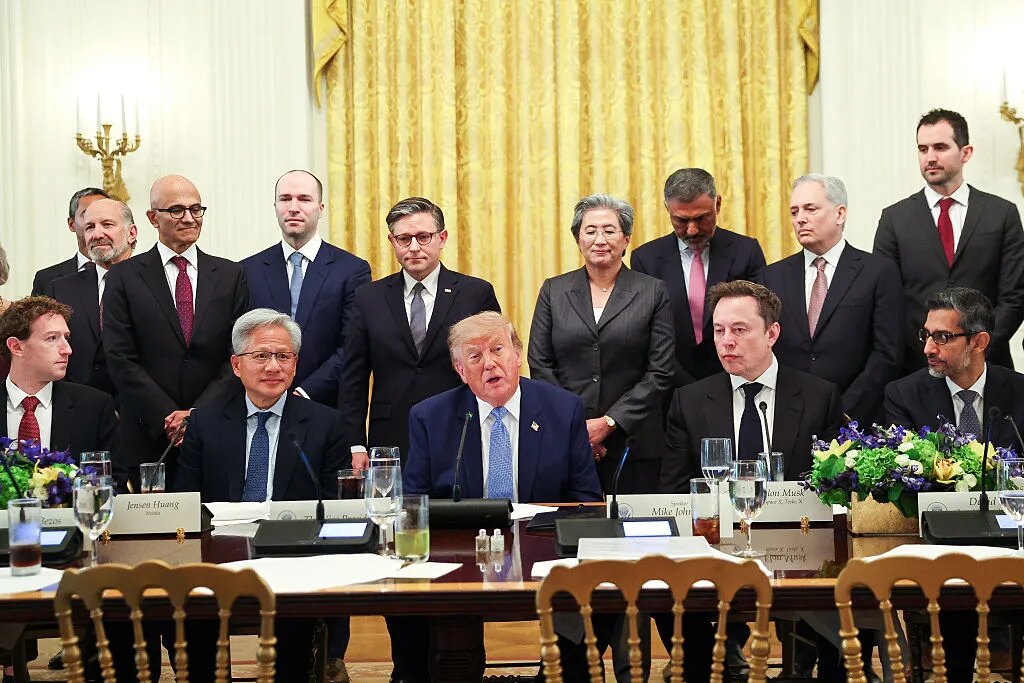
White House puts “super intelligence” at the centre of AI policy
The White House brought together several of the technology industry’s best-known leaders for an AI safety pledge that President Donald Trump called “morally binding.” In the same week, Trump signed an executive order formally rebranding artificial intelligence as “super intelligence.”
The gathering included Meta CEO Mark Zuckerberg, Amazon founder Jeff Bezos, Elon Musk and Anthropic CEO Dario Amodei. The reported pledge placed AI safety alongside a highly visible shift in the administration’s language for the technology.
TechCrunch discussed the developments on its Equity podcast, where Kirsten Korosec, Anthony Ha and Sean O’Kane examined the week’s AI news. Their conversation also considered consumer AI economics, changes in the initial public offering market and startup transactions.
Consumer product design meets enterprise demand
The policy announcement comes as Meta and OpenAI are giving their AI products friendlier consumer-facing presentations. At the same time, the biggest spending in AI still appears to be from enterprise customers, a distinction that matters when assessing where commercial demand is concentrated.
That contrast puts the White House terminology change in a broader business setting. The administration’s executive order and the safety pledge concern a technology that is being positioned differently across government policy, consumer products and corporate deployments.
What organizations should watch
The source does not detail the requirements of the executive order or the terms of the pledge. It does establish that leading executives participated and that the president described the commitment as morally binding, rather than presenting it as a defined technical standard.
For organizations evaluating AI, the immediate practical implication is to separate branding from operational evidence. Teams can monitor the executive order and any resulting safety expectations, while grounding investment decisions in their own enterprise use cases, product controls and the demand signals that are actually emerging.