


Agentic Pentesting Requires a Deterministic Safety Harness
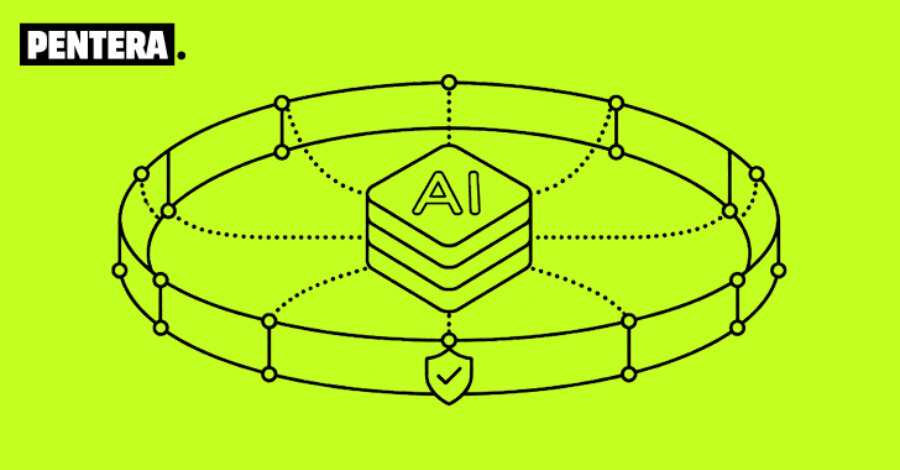
Pentera argues that the decisive engineering challenge in agentic web-application penetration testing is not the general-purpose AI model that proposes attacks, but the deterministic harness that governs every action. Its Pentera Apps product pairs an AI system that selects tests with controls that determine what may execute, record activity and halt tests when necessary.
The distinction matters because a testing agent can make thousands of decisions about its next request. Application boundaries frequently extend beyond a single domain through redirects and external-service calls, so scope enforcement requires code to inspect requests before they leave the testing environment. OWASP’s 2026 guidance calls for privileged actions to be routed through a deterministic policy engine at execution time, outside the model.
Safety controls must operate outside model reasoning
Credential handling is another policy problem. A pentesting agent may discover active keys that fall outside its assignment, and the harness must decide which credentials can be used, for which purpose and when a human must intervene. Those checks need to be applied on every attempt rather than left to natural-language instructions.
Prompt injection further complicates autonomous testing. Web pages and API responses can contain attacker-controlled text in visible content, hidden fields, metadata or comments. OWASP ranks prompt injection as the leading risk for LLM applications and states that no reliable prevention currently exists. The practical issue is therefore limiting the harm an agent can cause when it encounters malicious instructions, while avoiding approval processes so broad that reviewers become desensitised.
Validated evidence is as important as detection
A finding must be reproducible to be useful to developers. Google stopped accepting vulnerability reports for its open-source bug bounty programme in October 2026 after an influx of automated submissions, the majority of which it said were invalid. Pentera presents this as evidence that AI-generated reports need proof: an exploit should be run, its reach captured and the resulting evidence packaged for replay within defined safety limits.
Pentera Apps provides each finding with a replayable exploit script, a CVSS 3.1 score and CWE mapping. After remediation, the same attack can be rerun to check whether the path has been closed. The company says actions are logged, tests can be paused or stopped, and testing can run on demand or on a schedule. Change-triggered CI/CD testing is planned next.
Context and data handling shape deployment
The surrounding platform must also control data exposure and connect web-application findings to the wider environment. Pentera says only minimal, redacted data reaches its LLM, with zero retention, no training on customer data and regional data residency. It also uses reconnaissance across customer attack surfaces, security-stack findings and live threat-intelligence signals to relate a web exploit to network, cloud and identity contexts.
For security teams, the business implication is to assess agentic pentesting platforms as controlled execution systems: require enforceable scope, credential policies, complete logs and replayable evidence before relying on AI-generated findings in production workflows.