


MIT AI-guided formulation improves heat stability of RNA vaccines
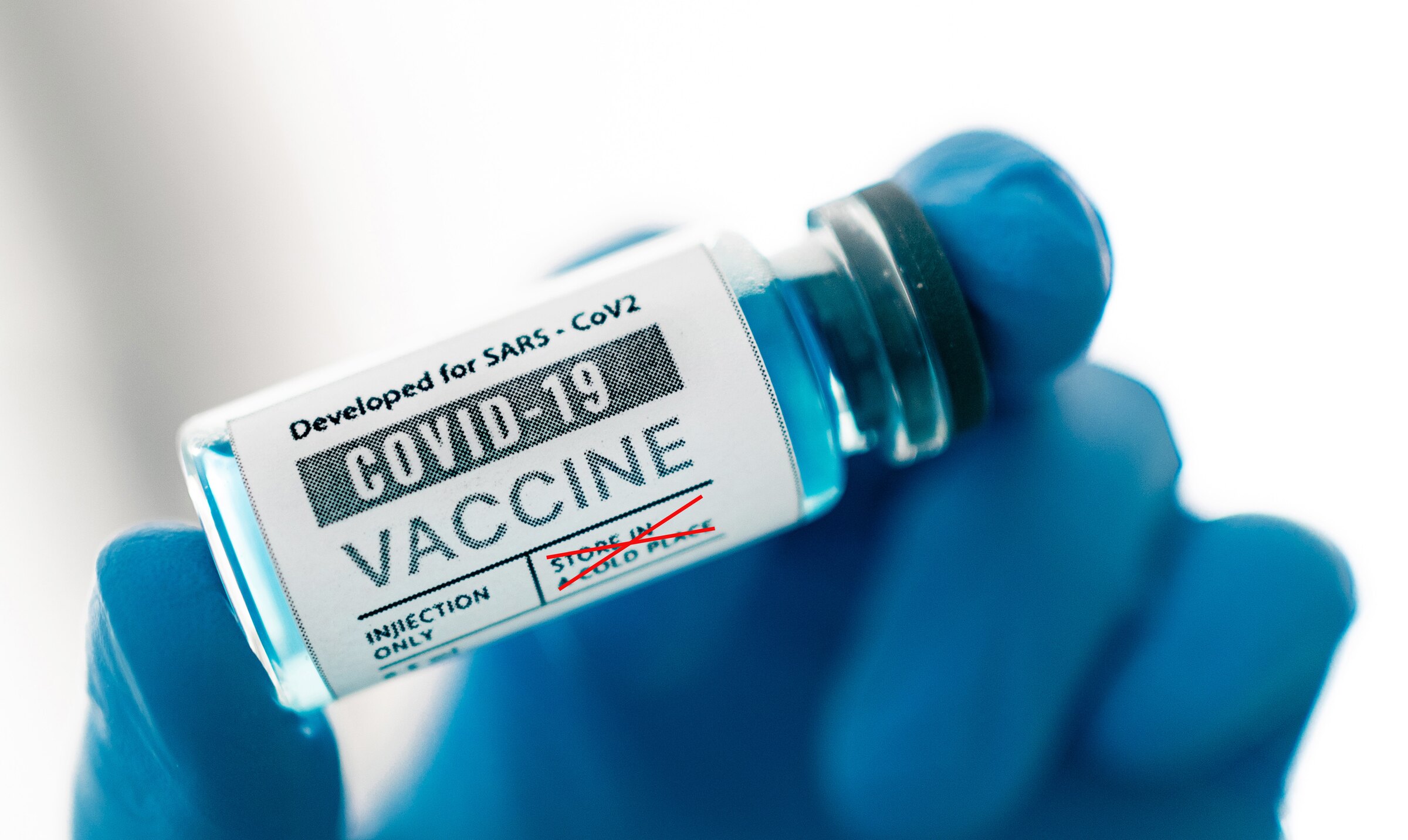
MIT engineers have developed an AI-guided formulation for lipid nanoparticles (LNPs) that kept RNA vaccines stable for up to one year at room temperature or for two months at 37 degrees Celsius (98 degrees Fahrenheit). In mouse tests, Covid-19 mRNA vaccines stored in the new particles generated immune responses equivalent to those produced by LNPs similar to Moderna’s original formulation.
The work, published in Nature Biotechnology, was led by researchers at MIT’s Koch Institute for Integrative Cancer Research and the Computer Science and Artificial Intelligence Laboratory (CSAIL). Ana Jaklenec and Robert Langer are the paper’s senior authors, while Jinbi Tian and Khanh Tran are its lead authors.
Targeting the cold-chain constraint
RNA is fragile, so vaccines package it in LNPs that protect the payload and help it enter cells. Existing RNA-LNP vaccines generally require storage between -20 and -80 degrees Celsius. That requirement can complicate shipment and distribution in locations without ultracold-storage infrastructure.
The MIT team sought to make LNP formulations resembling those used in FDA-approved Moderna and Pfizer Covid-19 vaccines more resilient at high temperatures. Researchers had already tested sugars, salts and polymers as excipients, and had developed polymer-stabilized LNPs. However, those earlier particles differed somewhat from the formulations used in the two Covid-19 vaccines.
In the new work, conventional screening of previously useful excipients did not yield complete stability. The team then collaborated with CSAIL to use machine learning designed to make predictions from small datasets, reducing the need for an exhaustive experimental search.
Small-data algorithm narrows the formulation search
Researchers evaluated nearly 50 FDA-approved excipients by measuring how well they protected LNP-delivered mRNA encoding firefly luciferase in cells. Light emitted by the cells indicated how effectively each candidate preserved the mRNA payload.
They selected five promising excipients and used the algorithm to predict the ratios most likely to stabilize LNPs similar to Moderna’s. The team tested two formulations at a time, returned the results to the model and repeated the cycle over several rounds. The process took a few weeks; the researchers said that prior testing and prescreening had consumed several months without achieving 100 percent stability.
For the final heat-resistance test, the team packaged Covid-19 mRNA antigens in the particles and used vacuum drying. After storage at 37 degrees Celsius for two months or at room temperature for a year, the stored formulations produced equivalent immune responses in mice. The researchers also made solid microneedle patches carrying a SARS-CoV-2 antigen, which produced an immune response similar to injectable RNA vaccines.
Potential delivery applications
The algorithm also stabilized another LNP formulation similar to the one Pfizer uses, using the same excipients in a different ratio. Once a heat-resistant formulation is established for a specific LNP, the researchers say it can be adapted for different mRNA payloads. The study was funded in part by the Gates Foundation.
For organizations developing RNA medicines or advanced delivery systems, the practical implication is that small-data AI can focus formulation experiments on candidates suited to higher-temperature storage, solid-state products and microneedle-patch delivery.