


Android 17 brings system-wide ECH and expanded network protections
Google expands connection privacy in Android 17
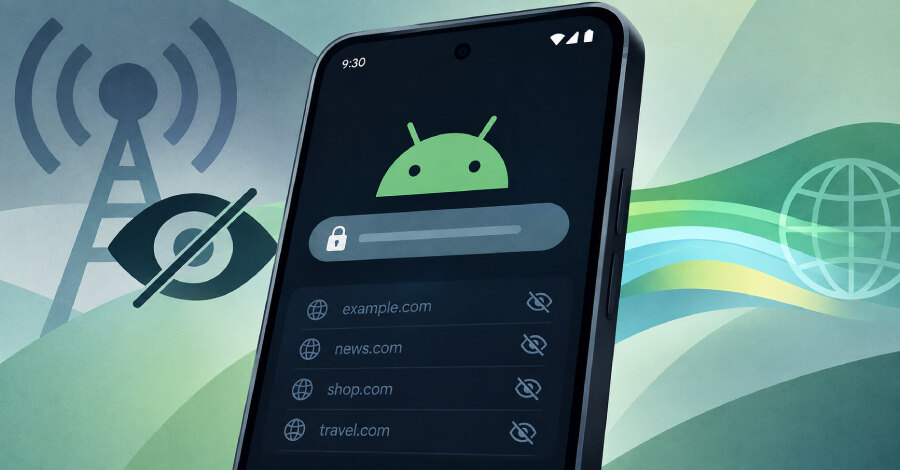
Google has announced a set of network-security protections for Android 17, led by operating-system-wide support for Encrypted Client Hello (ECH). The standard encrypts the destination website name at the beginning of a connection, making it harder for network providers and other observers to determine which websites or apps a user is accessing.
Google said ECH works alongside Private DNS to obscure visited domain names and the metadata that can be used for profiling. The change extends protection beyond individual browsers: ECH had already been integrated into Google Chrome 117 and Mozilla Firefox 118, while Android 17 applies the capability across the operating system for supported websites and applications.
GREASE is enabled to avoid signalling protected traffic
ECH relies on a secret encryption key that only the destination website can decrypt, Google’s Jigsaw division said. Coverage will not be universal, however, because not every web server supports ECH. Android 17 therefore enables ECH GREASE by default.
GREASE sends fake, randomized ECH extensions to websites that do not support the standard. The objective is to make connection requests look alike, rather than allowing ECH-protected traffic to be readily distinguished from traffic sent to servers without ECH support.
Google also noted that OkHttp, the open-source HTTP and HTTP/2 client, has integrated ECH support into its core library. That integration gives third-party Android application developers a route to use the capability in their own apps.
Local-network and cellular controls are also changing
Android 17 enforces Local Network Protection, requiring applications to seek permission before scanning for or connecting to other devices on a user’s local network. The release also enables Certificate Transparency by default, requiring websites to be recorded in a public registry.
For mobile networks, participating telecom operators can disable 2G by default for subscribers. Google said the zero-click setting is intended to reduce exposure to downgrade attacks, rogue base stations and SMS blasters that can send malicious messages or capture nearby-device traffic. Android 12 included a manual hardware-level option to disable 2G, and Android 14 allowed IT administrators to disable 2G on managed devices.
What organisations should assess
Businesses with Android fleets should verify how their managed-device policies and carrier arrangements handle the new 2G setting. Application and web teams should also assess ECH support in their server estate and Android networking stacks, because the privacy benefit depends on destination services supporting the protocol and on applications adopting the available client capability.