


Apple and OpenEvidence launch U.S. health AI study app
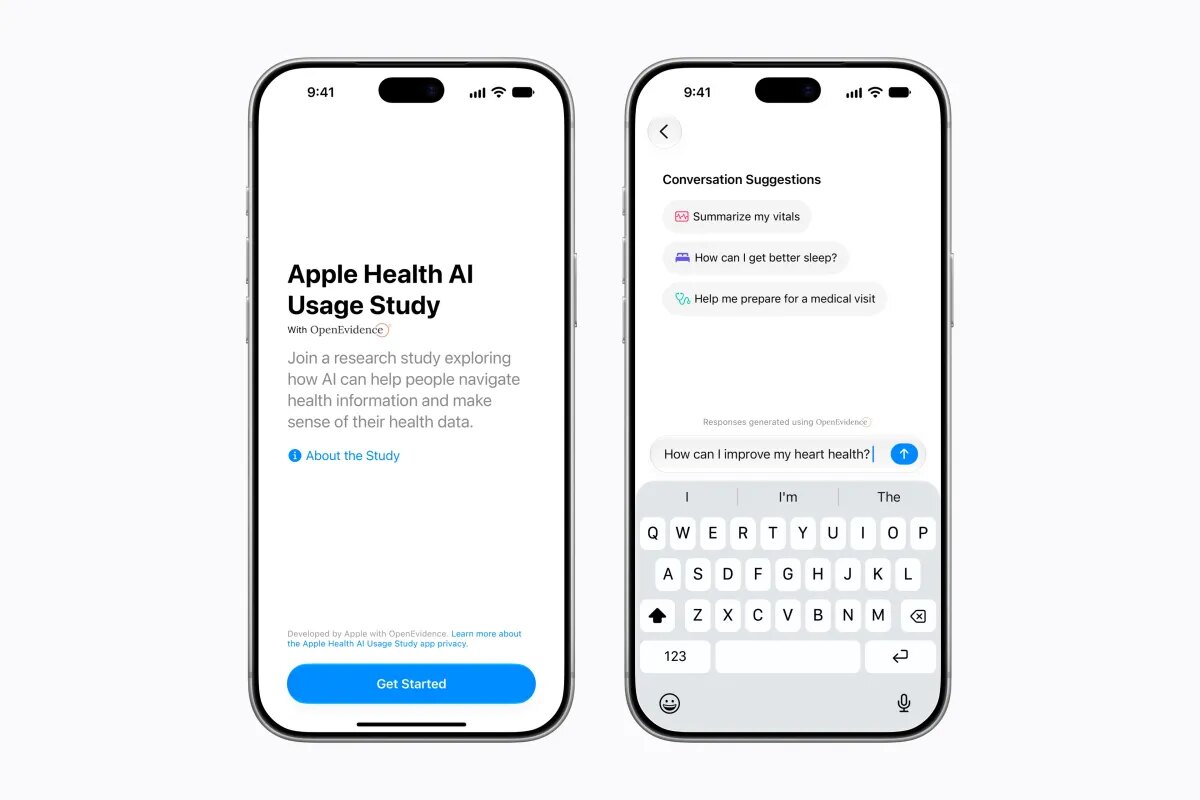
Apple has launched a U.S. research app with healthcare-focused AI company OpenEvidence to study how people use, understand and assess AI-generated health information. The company plans to run the study with up to 200,000 participants for more than 12 months.
Eligibility is limited to U.S. residents aged 21 or older who have an iPhone 15 or later, run iOS 26 or later and have Apple Intelligence enabled. The app is available for download now.
A research app for everyday health questions
Participants can ask health-related questions in a conversational format. Apple said the app is designed to provide simplified answers to everyday medical questions, while grounding responses in clinical data from sources including The New England Journal of Medicine, the Journal of the American Medical Association and Nature.
Users can rate the quality of answers and submit feedback on individual responses. They will also be invited to take monthly surveys, giving Apple and OpenEvidence a continuing record of how participants engage with and evaluate the service over the course of the study.
The programme arrives as health-related chatbot use becomes more visible across the AI market. The relationship between Apple and OpenAI has already drawn attention in Apple and OpenAI AI device competition, while Apple is taking a study-led approach with OpenEvidence rather than announcing a consumer health-answering feature for Health or Siri.
Health data and retention controls
Participants may choose to share HealthKit information, including resting heart rate, activity, sleep and lab results. Apple said this data can enable more personalised and specific suggestions from the app. It also said the service can help people prepare for a doctor’s appointment and direct them to appropriate providers when a medical issue is concerning.
Apple said information shared for the study will be anonymised before being sent to a secure third-party cloud provider. The company also said the data will not be used to train AI models. OpenEvidence will delete query and response data after 24 hours, Apple said.
What Apple aims to learn
Sumbul Desai, M.D., Apple’s vice president of Health and Fitness, said responsible innovation in health requires scientific rigour and clinical grounding. She said the study is intended to help Apple understand how people engage with, comprehend and evaluate health AI in everyday life, contributing to a broader scientific conversation about trusted tools.
Apple has not said whether the research will lead to AI-powered answers in the Health app or Siri. For organisations evaluating conversational health tools, the study underscores the practical importance of clinically grounded content, user feedback, explicit data controls and clear routes to professional care.