


Base Power secures $1 billion to expand its distributed battery network
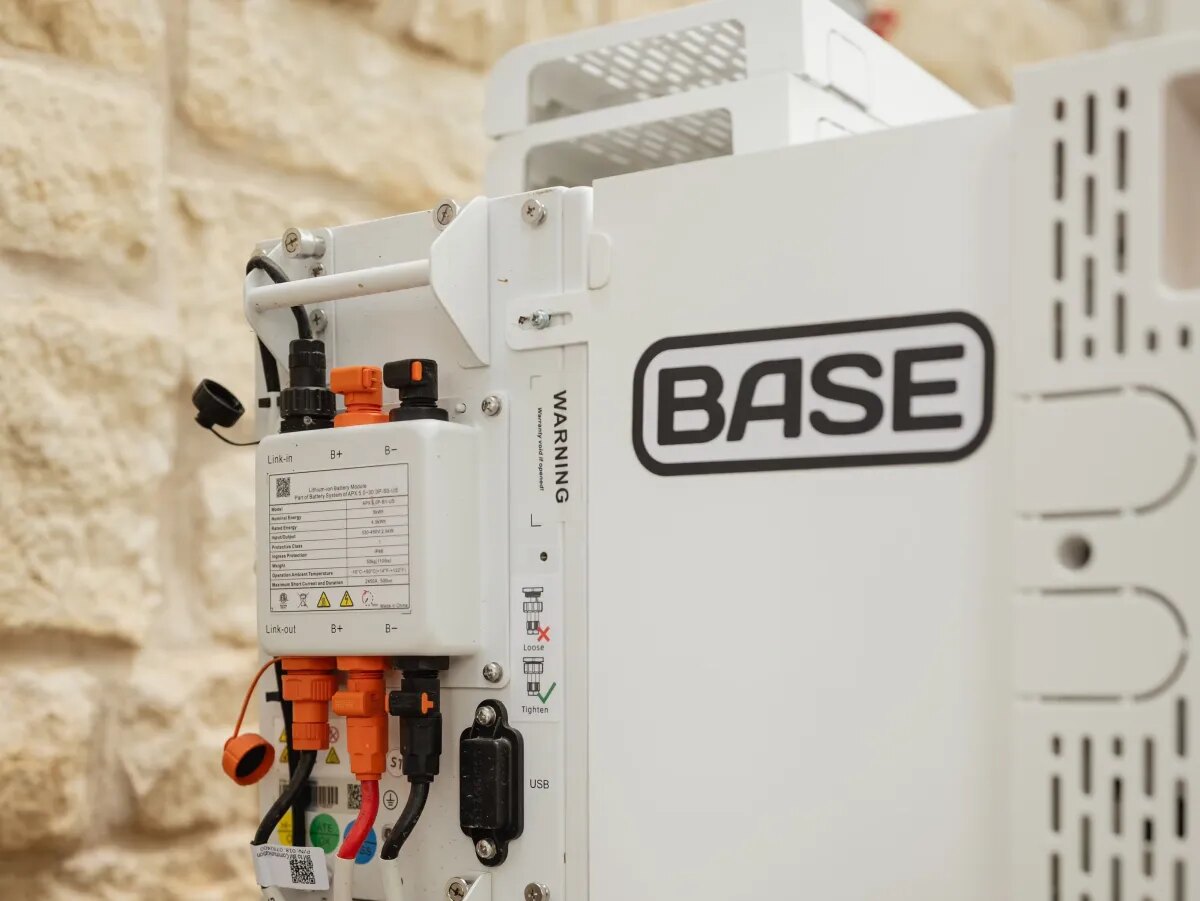
Base Power has raised another $1 billion less than a year after its last billion-dollar round, giving the home energy storage startup a $13 billion post-money valuation. The Series D follows the installation of more than 500 megawatt-hours of storage across its network.
The company is pursuing a distributed model: instead of developing large battery sites near major grid connections, it places equipment at customers’ homes. Base Power currently operates in Texas and Illinois and is installing about 100 batteries per day, The Wall Street Journal reported, equivalent to roughly 8 megawatt-hours of daily capacity. It hopes to double that pace by the end of the year.
A larger home battery
Alongside the funding announcement, Base Power introduced Base Core, a home battery manufactured at its factory in Austin, Texas. The unit stores 39.2 kilowatt-hours of electricity, and customers may select either one or two batteries.
That capacity is designed to serve two purposes. Homeowners can use the batteries during blackouts, with nearly 40 kilowatt-hours providing backup power for a day or more. Base Power, which retains ownership of each unit, can also sell stored electricity to the grid during periods of high demand.
The model has particular relevance as electrification and rapid AI data centre construction drive electricity demand higher. The US grid has resumed expanding after decades of stagnation, but pressure has intensified in several locations, notably PJM, which serves a region containing many data centres. Portions of Illinois in Base Power’s operating footprint also belong to PJM territory.
Within that market, Base Power’s entry into the PJM electricity market shows how residential storage can help address grid constraints in regions where electricity is scarce, while preserving backup capacity for participating homes.
Subscription economics replace an upfront purchase
Rather than asking customers to pay thousands of dollars to buy a home battery, Base Power supplies the equipment through a subscription. In the Houston area, the company charges $695 to install one battery, plus $19 per month and 13.1 cents per kilowatt-hour for electricity, a price described as close to the prevailing regional rate.
Base Power monetises the asset by dispatching stored power when demand is high. In regulated markets, it works with utilities to install batteries in customers’ homes where they can reduce pressure on the local grid. In both regulated and deregulated markets, the same equipment remains available for household backup during outages.
Investors back faster deployment
Ribbit, Addition, Valor Equity Partners and JPMorganChase’s Strategic Investment Group led the round. Participants included Altimeter, D1 Capital Partners, Sands Capital, Coatue, Layer Global, Energy Impact Partners, Thrive Capital, a16z, Lightspeed, Trust Ventures and CapitalG, among others.
For businesses evaluating energy resilience, Base Power’s approach illustrates how one distributed asset can combine customer backup with grid support. The practical questions are whether local regulation permits dispatch, whether subscription pricing is competitive, and whether an operator can deploy and manage enough batteries to deliver useful capacity at network scale.