


OpenAI takes ChatGPT Work beyond coding with workplace agents
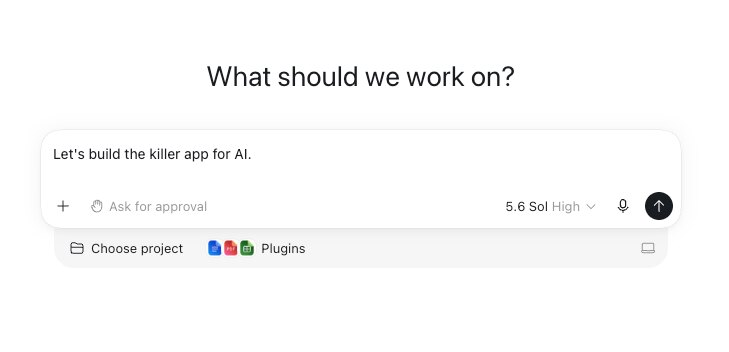
OpenAI released ChatGPT Work last month on its lowest-priced subscription tier, at $20 per month, aiming to move AI agents from software development into everyday white-collar work. The product, built from the company’s Codex technology, is designed to connect a language model with services such as email, Slack, web browsers and business applications so it can carry out multi-step tasks rather than simply answer prompts.
The company is positioning Work for routine, data-heavy coordination: recurring metrics reports, planning spreadsheets, dashboards and research summaries. OpenAI product engineering lead Akshay Nathan described the goal as giving workers practical access to information spread across system-of-record tools, including Salesforce, and then enabling action on that information.
From coding agent to general workplace tool
ChatGPT Work represents OpenAI’s attempt to make an agentic workflow accessible to people who do not use command-line tools or write code. Its desktop-app lead engineer, Andrew Ambrosino, said the team adapted Codex after non-engineering colleagues encountered an interface that was actively oriented around code changes. Work retains a conversational interface but adds controls for projects and plugins to improve discovery for newer users.
The change builds on ChatGPT Work workplace agent rollout by extending task completion into connected workplace systems and non-engineering workflows. OpenAI describes the intended experience as an agent that can work autonomously on complicated tasks, while the product team acknowledges that users still need clearer guidance on how to choose the right level of reasoning and effort.
Adoption data illustrates both the opportunity and the gap. An OpenAI-backed study found that 98% of OpenAI employees used Codex in June. Usage was 17% among organizational subscribers and below 1% among individual subscribers. OpenAI did not provide a split between Work and Codex users, but said their joint app has 20 million users, compared with more than one billion people prompting ChatGPT online.
Permissions and usability remain central constraints
An agent becomes more useful when it can access the information and tools needed to act, but this also raises practical governance questions. Work can be linked to existing workspaces and SaaS platforms, yet the source’s testing found permission setup confusing. In one case, read-only cloud-drive access produced errors until a mobile prompt indicated that complete access was necessary. Some settings were available only through the web application.
Product limitations also affect reliability. ChatGPT Work can create Google Calendar events after a connection is made, but it cannot create new calendars. The source reported that lower effort settings could lead to weak results, while OpenAI harness engineering lead Joe Gershenson said the effort controls are not yet intuitive for new users.
Competition and the economics of longer-running agents
OpenAI is competing with products including Anthropic’s Claude Cowork and Claude Code, as well as specialised providers such as Harvey for legal work and Clay for sales. The company argues that its latest models are a key differentiator, while rivals and independent tool builders show that performance can vary materially with the combination of model and agent harness.
For businesses, the immediate implication is to treat workplace agents as controlled workflow tools rather than unrestricted assistants. Start with repetitive, low-risk tasks, set narrowly scoped permissions, review outputs and monitor the operational cost of longer-running jobs before expanding access to more sensitive systems.