


MIT model CheMeleon targets molecular prediction with limited data
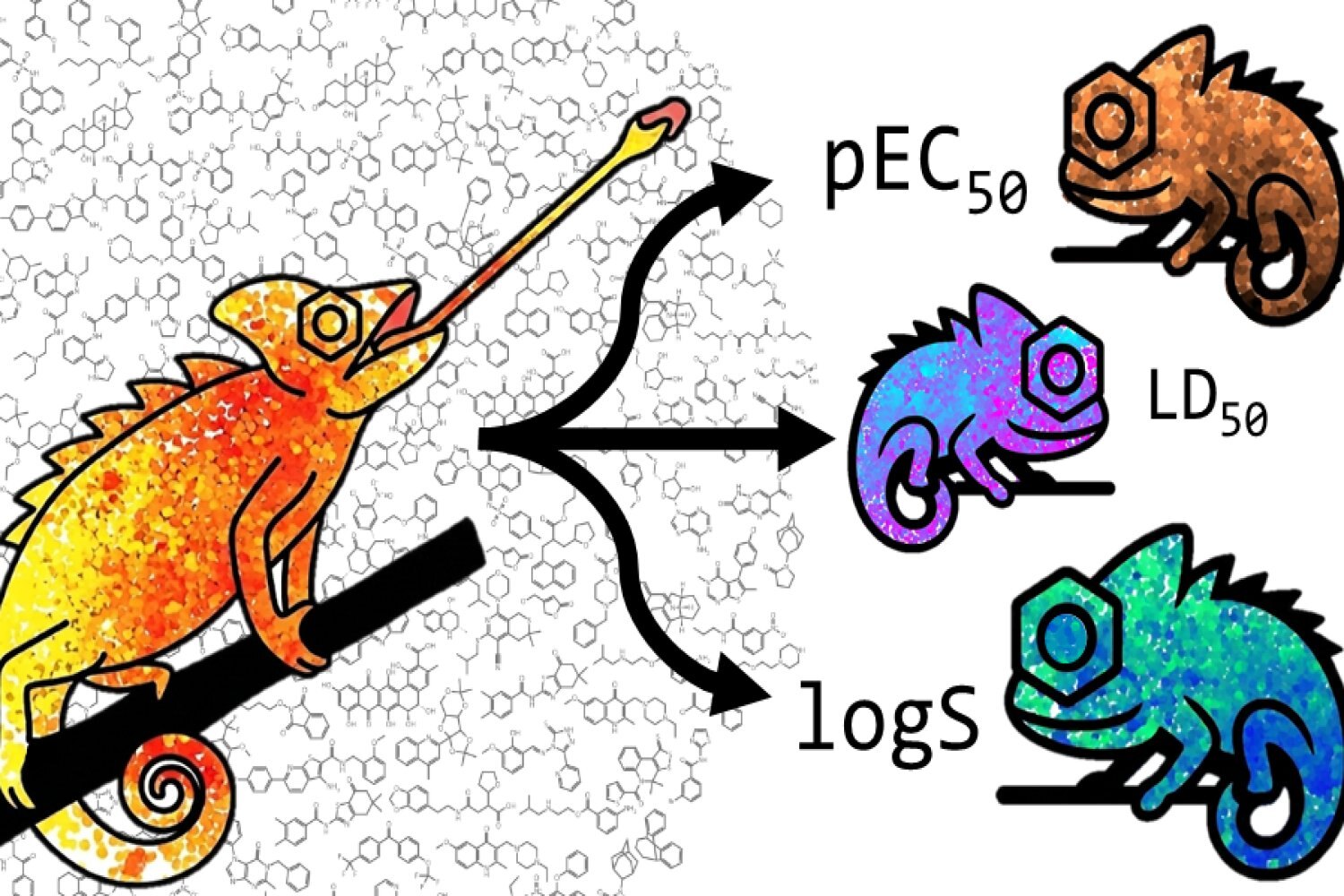
MIT researchers have developed CheMeleon, an open-source machine-learning foundation model designed to predict molecular properties when only limited task-specific data are available. In tests spanning 58 cases, the team reports that the model outperformed other foundation models and classical approaches. The work, involving researchers from MIT and BASF SE, was published in the Journal of Chemical Information and Modeling.
The system addresses a recurring problem in drug and materials discovery: promising compounds must usually be synthesized and tested before researchers can establish whether they have the desired behavior. That process is slow and expensive, particularly for properties where measurements are scarce, such as ligand affinity for a newly identified cellular target.
A foundation model trained on molecular descriptors
CheMeleon was built with ChemProp, an open-source machine-learning package developed and maintained by the MIT Green group. Its pre-training data consists of about one million molecules from PubChem, the chemical-information database maintained by the U.S. National Institutes of Health.
Rather than learning from published chemical literature, the model is trained to predict around 1,600 molecular descriptors calculated for those compounds. These include properties such as molecular weight and the number of oxygen atoms. This task is intended to help the neural network learn relationships between molecular structure and chemical behavior before it is adapted to a specific prediction problem.
Users can then fine-tune the pre-trained model with a smaller dataset for a target property. The researchers cite familiar applications including solubility and viscosity, as well as bioactivity or reactivity involving a particular protein or enzyme. The approach is meant to avoid making each task-specific model learn chemical patterns from scratch.
Early adoption and experimental implications
CheMeleon had already been used in nine of the 20 highest-ranked entries in an OpenADMET contest on predicting properties of molecules that had not previously been synthesized. MIT Professor William Green said pharmaceutical companies began making inquiries while the paper was still in peer review, and the model has found regular use at several pharmaceutical companies.
The research team says the practical advantage is a reduction in the number of molecules that need experimental testing before properties of new compounds can be predicted with useful accuracy. CheMeleon does not eliminate laboratory work; its role is to narrow a potentially vast candidate set and guide which compounds warrant synthesis and measurement.
What teams can do with the model
For organizations working with sparse molecular data, the model is available through ChemProp for local fine-tuning. A disciplined workflow would use it to prioritize candidates, compare predictions with existing domain methods, and retain experimental validation as the decision point. The business implication is a more focused allocation of synthesis and testing capacity when selecting molecules for further development.