


OpenAI Finds Coding Agents Can Modernize Scientific Software—With Human Verification
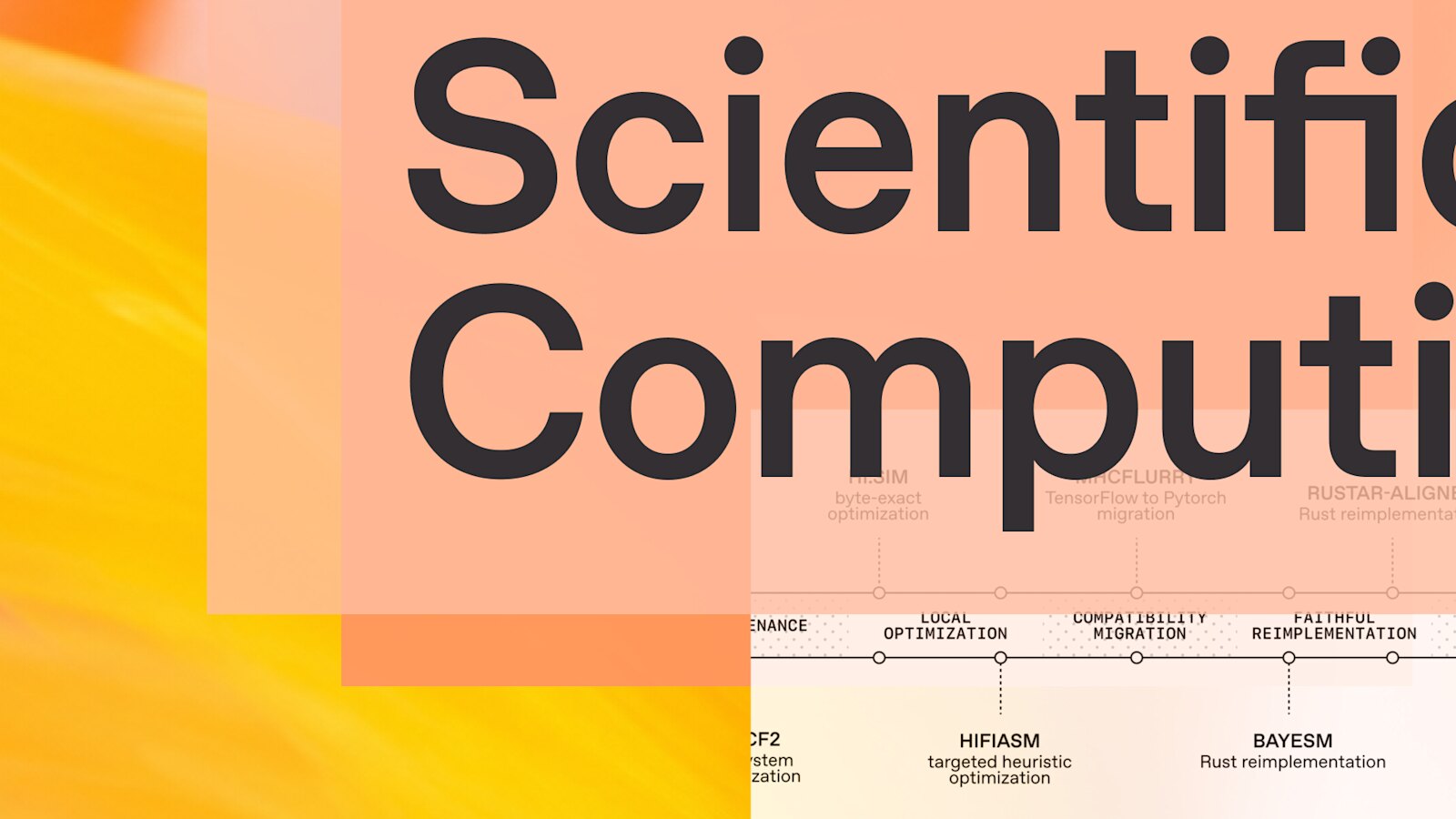
On July 28, 2026, OpenAI published an exploratory field report on eight agent-assisted scientific computing projects, primarily in life sciences. Five used Codex alone and three combined Codex with Claude Code for maintenance, optimization, language migrations and GPU-native redesigns.
Engineering is no longer the only bottleneck
Research tools often begin as code attached to an academic paper. Small teams may have little time for packaging, testing, performance work or long-term support, leaving critical pipelines difficult to install, reproduce and maintain.
Coding agents can reduce this engineering burden and make previously impractical work feasible. However, they cannot reliably determine whether an output is scientifically valid and may remain confident when clear errors are present.
What the eight projects revealed
The portfolio covered cyvcf2, HI.SIM, hifiasm, MHCflurry, bayesm-rs, a Rustar-aligner, svb and kuva effort, RustQC, FastQC-Ruest and Trim Galore, and HelixForge. Teams reported faster development, although edge cases and subtle numerical differences made the final mile laborious.
The strongest workflows divided broad objectives into small iterations and tested each step against exact output agreement, an existing tool, expected statistical behavior or answers prepared with simulated data. In cyvcf2, GPT-5.5 replaced the genomic library’s legacy build and packaging system with a unified process.
“With coding agents, it's quite easy to go fast; for now, to go far in science, there's still a need for expert guidance, understanding, taste, and care.” — Brent Pedersen
Stewardship remains essential
Lower implementation costs can also produce competing rewrites and fragment expert attention. Changes to MHCflurry and cyvcf2 entered their original upstream projects, while rustar-aligner moved to new community stewardship after its original project was abandoned.
For businesses, the practical model is to treat agents as implementation capacity rather than autonomous authorities. Define measurable acceptance criteria, keep domain experts responsible for verification, coordinate with maintainers early and assign a credible long-term owner before release.