


MIT GeoPT broadens AI physics simulation with synthetic dynamics
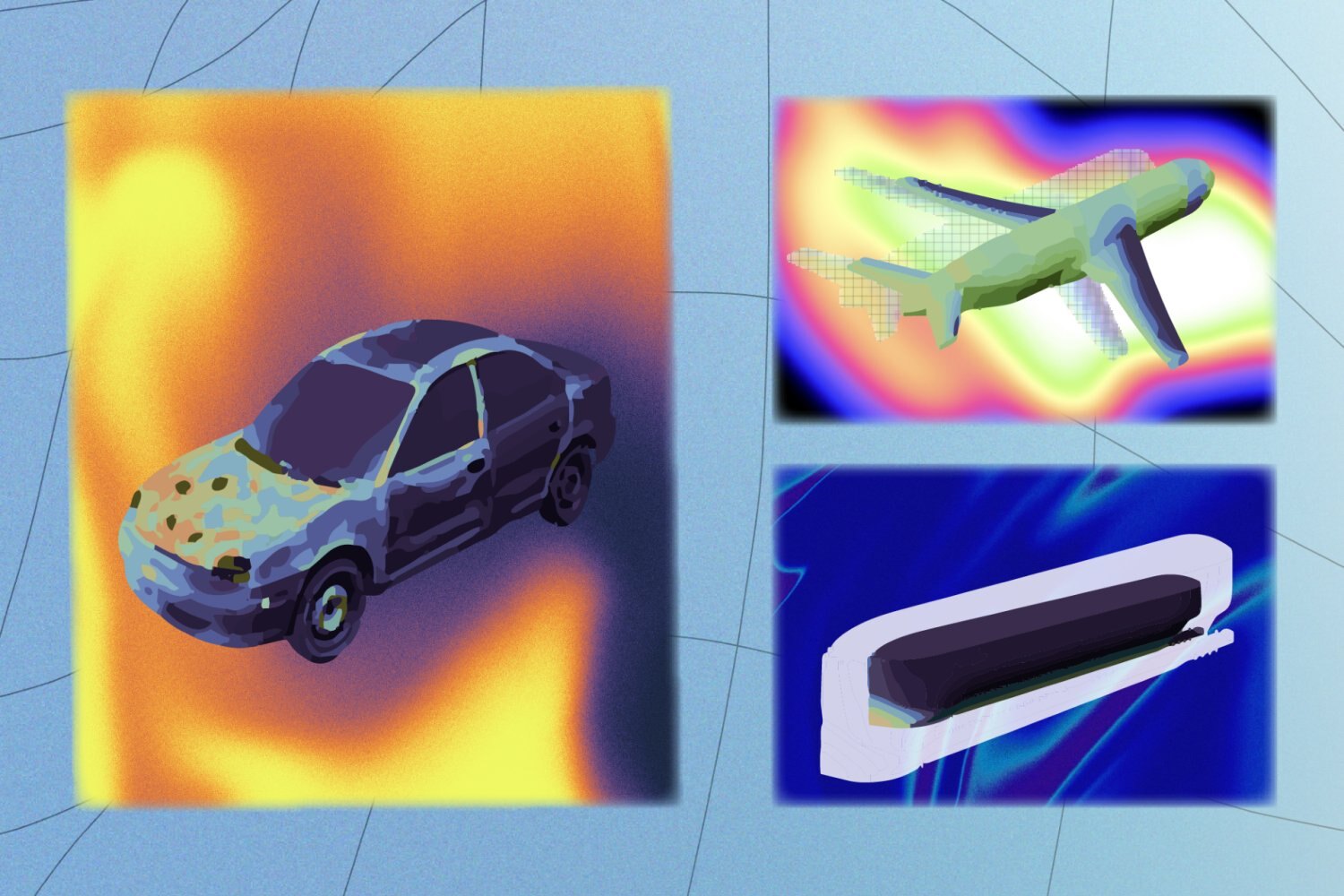
Researchers at MIT’s Computer Science and Artificial Intelligence Laboratory (CSAIL) and Tsinghua University have introduced GeoPT, a pre-training approach for AI physics simulation. The system learned from 1.3 million synthetic-dynamics samples and, compared with leading simulation models, reached peak performance twice as fast while training on up to 60 percent less labeled data.
GeoPT is intended to help models simulate how 3D objects respond to forces including wind, water and collisions. MIT says the approach could support testing of vehicles, consumer objects and robots without requiring as many costly physical experiments or large collections of solver-generated training data.
Training a model on contact interactions
Physics simulators typically depend on numerical solvers to calculate physical properties at points across a 3D shape. That process can be thorough, but it is slow enough to constrain the amount of data available for training neural networks.
GeoPT takes a different route before labeled task data are introduced. Its synthetic-dynamics dataset models small spheres moving at different speeds and angles toward complex 3D shapes. Each sphere stops when it contacts an object, rather than passing through it or bouncing away. Those contact interactions give the model a reusable representation of how geometry and forces relate.
In use, a customer uploads a 3D object, such as a battleship, passenger aircraft or truck, and specifies the velocity of the force to be simulated. GeoPT produces a heat-map-like view of how different parts of the object are affected. MIT lists collision deformation, light behaviour around objects and a boat’s response to turbulent waves among the potential scenarios.
Results across industrial simulation tasks
On benchmarks involving complex shapes under wind currents and surface pressure, GeoPT exceeded state-of-the-art models in speed, accuracy and efficiency. It also performed well in simulations of fighter jets exposed to wind and in vehicle-collision tasks, where it predicted deformation of 3D cars with less data than the reported baselines.
For a boat-hull task involving both air and waves, GeoPT required 60 percent fewer labeled data and reached peak accuracy four times faster than top baselines. Haixu Wu of MIT CSAIL said the system generated high-fidelity simulations with more than 100 million mesh points in seconds.
The work points toward the kind of physics foundation model discussed in physics foundation models for robotics, where a broadly trained backbone could help AI systems generalize across physical tasks. GeoPT’s authors say they aim to scale training to more shapes and more complex phenomena, including weather, materials and realistic video generation.
What engineering teams should take from the work
The reported results do not replace validation, but they suggest that pre-training on synthetic contact data can reduce the labeled data burden for selected simulation tasks. Teams evaluating design, robotics or digital-twin workflows can consider where such models might shorten early-stage exploration, while retaining physical testing for decisions that require it.