


Google Play opens private distribution for personal AI-built Android apps
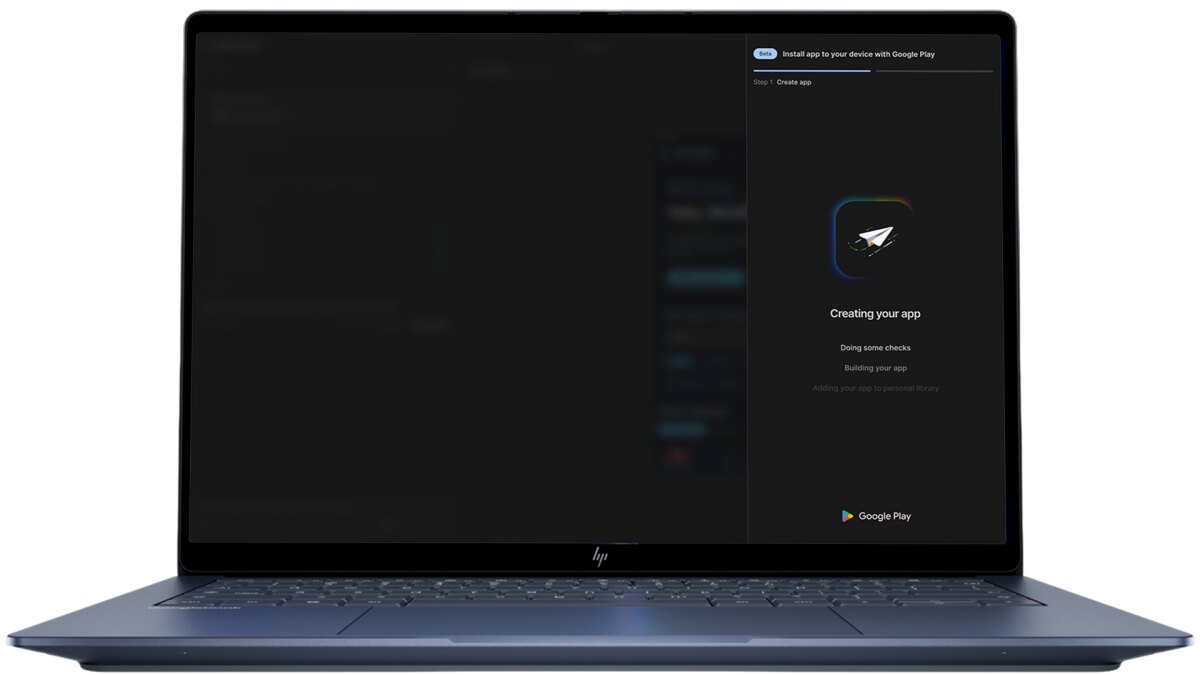
Google has introduced a Google Play feature that lets Android owners run personal, AI-built applications on their own devices without making them public in the Play Store. The initial rollout is limited to users in the United States who are aged 18 or older and use their standard Google account.
The apps will not appear in Google Play search results or listing pages, and they will not be shared with anyone other than their creator. Google says users can build an app with Google AI Studio and then launch it for their own Android use through Play, avoiding the need to publish it to the store’s roughly 3 billion users.
Private route for personal Android software
The change addresses a practical limitation for people experimenting with “vibe coding”, where AI is used to create software for a specific personal need. Previously, running such an app natively on an Android phone meant publishing it on Google Play, which made it publicly accessible. That constraint led some creators to keep their experiments as web apps that could run across devices.
Personal apps remain subject to Google Play’s existing policies. The new option therefore changes distribution visibility, not the requirement to follow the platform’s rules. Sam Bright, Google’s VP and GM for the Google Play and Developer Ecosystem, described the direction as a move from “there’s an app for that” to “there’s an app for me.”
Sharing and publication remain separate steps
Google plans to allow users to share these AI-built apps with a network of trusted friends in the coming months. This would support limited-use software created for a family, friends or a local activity such as a child’s T-ball league, without requiring a public store listing.
If a personal app later needs a wider audience, Google says creators will be able to shift it to a public Google Play release after completing trust and safety reviews. The distinction gives creators a private starting point while preserving the review process for apps intended for everyone.
Broader AI changes in Google Play
The rollout sits alongside other AI-related Play updates. Google is introducing Game Finder, a personalised game recommendation engine that will first be available in English in the United States. It combines a user’s gaming preferences with Google’s knowledge from its community of 1.2 billion players.
Play is also adding game lists, Community Posts for questions and 48-hour gaming challenges called Sprints. Ask Play, the store’s built-in AI assistant, is gaining comparisons between similar apps, while Play apps and games will be more deeply integrated into Gemini conversations.
Google is additionally supporting an age-range feature that lets parents share a child’s age range, rather than an exact birthdate, with developers for age-appropriate experiences. For teams evaluating personal Android tools, Google AI Mode launches actions in apps from Search illustrates Google’s broader push to bring AI-led actions into its products, while private Play distribution offers a controlled way to assess whether a narrowly tailored app merits a public launch.