


Claroc finds 35,578 publicly reachable Grok-built apps
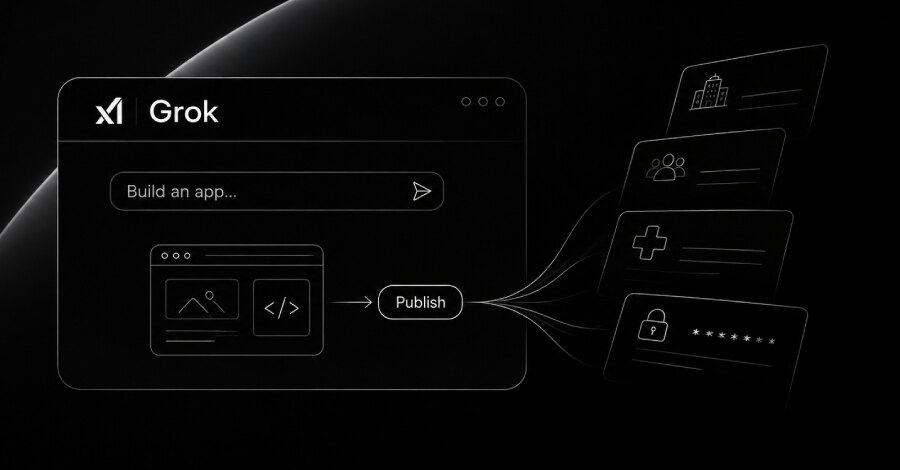
Security company Claroc says it found 35,578 of 37,571 Grok-built applications online that could be opened without a sign-in. The researchers said that about one in 10 of the open apps contained internal business or personal data, and estimated that roughly 2% held material serious enough to be rated high or critical.
The dataset included 24 applications built by employees at X and SpaceXSI, the company that makes the Grok AI assistant. Claroc said those apps exposed a confidential onboarding plan, a sales-territory map covering 594 accounts, and an X advertising proposal to a US federal agency marked confidential. SpaceXSI had taken down all 24 employee apps by the time the research was published, Claroc said.
Exposure reaches organizations beyond Grok’s maker
Claroc identified internal data from 30 other organizations in exposed apps, spanning construction, energy, healthcare and defence. Twenty-six of those organizations had more than 1,000 employees, and six were Fortune 500 companies.
Examples cited in the report include a searchable staff list with more than 3,500 employees at a hospital group, an intensive-care briefing concerning one patient, a fire department’s live shift board, and a contractor timesheet. In the last case, the app’s code contained every employee password in plain text.
Grok can generate a working app from a description entered into its chat interface. The feature was opened to all Grok plans on August 19. Each published app receives a grok.me subdomain, and its creator selects who can access it. Claroc said no app becomes public until its creator clicks Publish.
Default access and discoverable subdomains
In the paid Grok account used by the researchers, the publishing flow offered “Anyone with the link”, “Invited users” and “Only you”. “Anyone with the link” was already selected. Claroc argued that the setting is not a meaningful secrecy control because visits to an app trigger DNS lookups for its subdomain, and passive DNS services can retain those lookups for searching.
Grok suggests four random words for app names, and about half of the discovered names followed that pattern. Such names may be difficult to predict, but the researchers said they do not protect an address that has entered searchable DNS records. Claroc found app names through standard subdomain-discovery methods and loaded each first page once without signing in.
The team also created two test applications containing fictitious data. A contact-list app received a database but no sign-in, allowing a visitor in a private browser window to add a row that the next visitor could see. A second test app had Google and X sign-in buttons, but its generated code added each authenticated person to the team before checking membership. An uninvited Google account was able to view, edit and delete customer records. The researchers said they did not test whether third-party apps accepted changes in the same way.
Checks for organisations using AI app builders
Claroc reported the issue to SpaceXSI through the company’s security.txt contact, first including two staff apps and then reporting the other 22. It requested that “Only you” become the default and that Grok add a setting to restrict an app to a company email domain. SpaceXSI said apps remain private until their creators share them and that employee accounts default to “Only you”, but Claroc noted that the 24 employee apps had still been reachable by anyone.
For organisations, the immediate task is to identify AI app builders that staff use, including Grok, Lovable, Replit, v0, Bolt, Base44 and Google AI Studio. Teams should inspect discovered app domains in a private browser session, ensure internal apps use “Invited users” or “Only you”, and test whether an outside account can enter. Claroc also recommends checking loaded scripts for names, email addresses and passwords, assigning owners to deployments, and unpublishing apps without one. In its tests, “Only you” returned a 401 error for both the page and its data, while unpublishing removed an app within seconds. Businesses should treat AI-generated app publishing as an access-control and asset-inventory responsibility, not simply a sharing choice.