


Industrial Next unveils AI stations for faster factory retooling
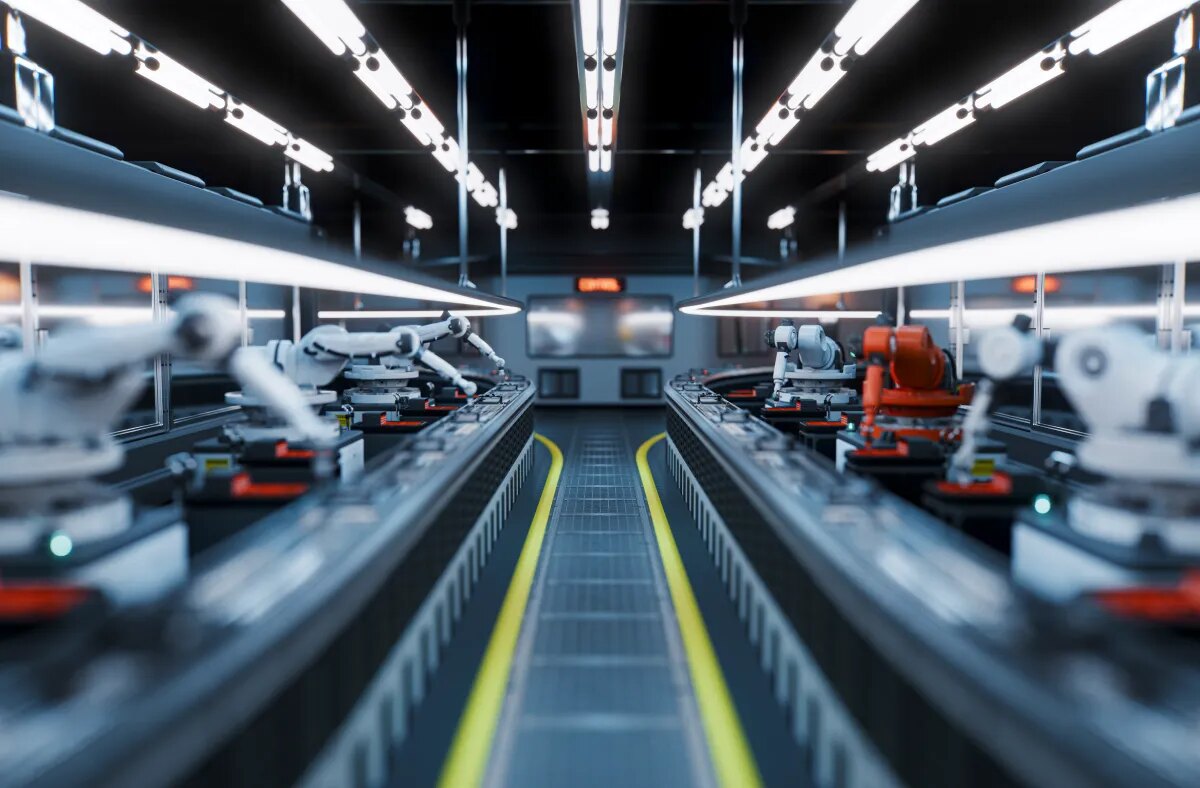
San Francisco-based Industrial Next presented AI-driven, self-contained robotic stations at TechCrunch Disrupt 2026, saying they can be retooled for new production tasks in minutes rather than the weeks or months often required by conventional automation. The startup also announced a partnership with BMW Group Technology Office to evaluate its AI-powered dexterous manipulation for manufacturing.
Founded in 2021 by former Tesla employees Lukas Pankau and Allen Pan, Industrial Next is targeting complex and delicate work that has traditionally remained manual. Its stations are designed to connect vision, task context and motion through proprietary foundation models, rather than relying on programming for one narrowly defined operation.
Replacing fixed scripts with simulation and demonstration
Industrial Next argues that conventional industrial robots are built for highly specific, repeatable processes. A small change to a product or workflow can therefore lead to failure or costly downtime, while changing a line may require both reprogramming and physical retooling. The company says this rigidity can push manufacturers to simplify products for repeatability.
The startup teaches new tasks through simulation and demonstration instead of hard-coded scripts. Pankau said Industrial Next uses an extremely high-fidelity simulation engine that closely reflects real-world dynamics, giving robots an understanding of the broader process before they work with physical parts.
That approach addresses a central limitation in robotics: unlike internet-trained AI systems, robots do not have vast datasets for complex physical work. Industrial Next says its simulated environments allow the machines to practise high-precision, high-dexterity tasks that would otherwise require substantial real-world training data.
From smartphone assembly to automotive evaluation
Some of the company’s workstations are already being used to make an undisclosed popular smartphone, Pankau said. They perform operations manufacturers had attempted to automate for years, including threading a delicate flex cable and snapping a small connector cap into position.
Industrial Next also described a film-peeling station that removes protective film from camera modules and buttons at or above human speed with 100% accuracy. The company said the system maintained that performance after being moved to a new phone model and a production line it had not previously encountered.
The robotic stations can be reconfigured, combined and redeployed across product lines. BMW Group Technology Office will evaluate whether the company’s dexterous manipulation technology can extend this model into manufacturing use cases.
What manufacturers should examine
Industrial Next’s claims focus on reducing the time and specialised programming associated with changing automated work. Manufacturers evaluating the approach will need to determine whether simulation and demonstration can support their own precision requirements, product changes and line configurations. The practical implication is to identify fragile or frequently changing tasks where faster reconfiguration could be tested without treating a robot cell as permanently dedicated to one product.