


Nvidia’s Huang argues against new AI safety rules
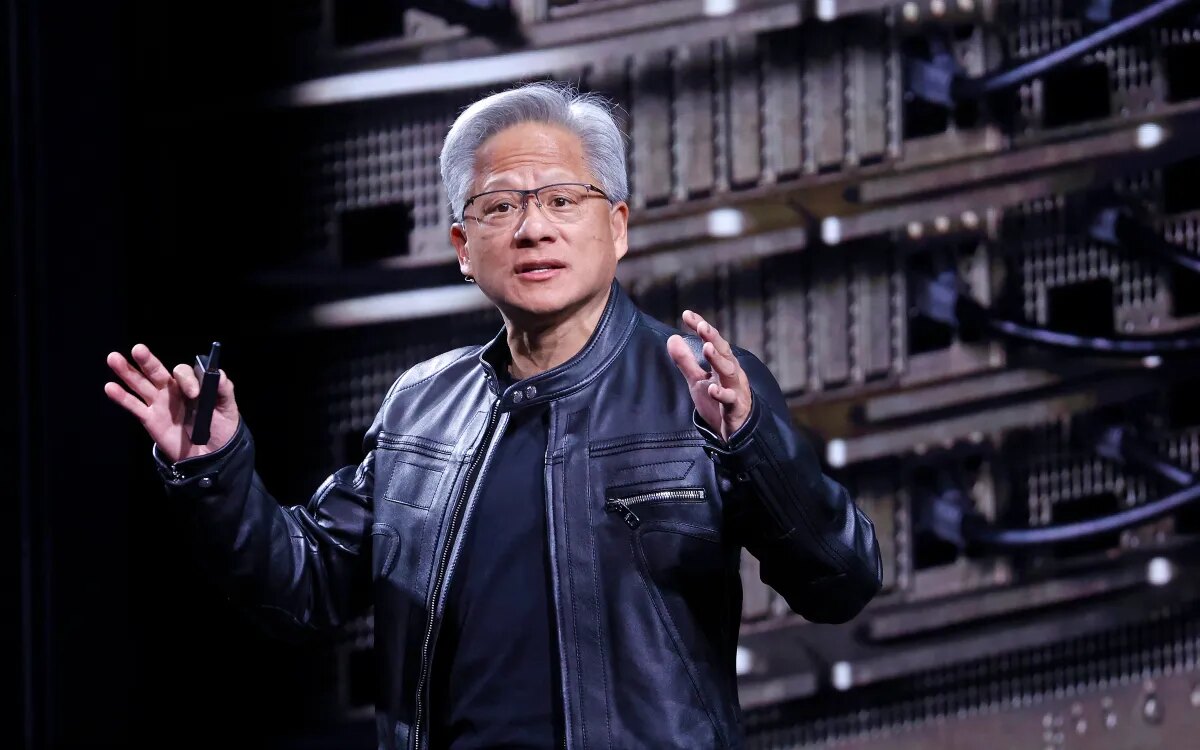
Nvidia founder and chief executive Jensen Huang argued at Salesforce’s Dreamforce conference that artificial intelligence does not require a new regulatory regime. Speaking on Tuesday, Huang described AI as hardware and software built by people, rather than an “alien mind”, and said it could therefore be controlled through engineering and existing law.
“Safety is an engineering problem, not a legal one,” Huang said. In his framing, even a complex AI system remains a computing system, so companies should be able to assess its functionality, capabilities and safety before deciding whether to release it.
Market discipline over new rules
Huang’s central argument was that companies do not need additional laws to make responsible release decisions. If a business is not confident that a product or service works safely, it should not ship it, he said. Developers should move quickly, but pause when they believe a product is out of control or unlikely to be safe.
He rejected the idea that speed, innovation and safe products are mutually exclusive. In his view, market forces already encourage firms to avoid releasing systems that customers would not appreciate, making fresh AI-specific regulation unnecessary.
The comments are notable because Nvidia supplies much of the computing infrastructure behind the current AI expansion. The company also develops open-source models, agents, harnesses and sandboxes. Huang said that AI-driven productivity had increased his ambition and that its potential extended across companies, industries and countries.
Questions left by an engineering-first approach
The source article notes that faulty software can produce wide-reaching consequences even when companies intend to act responsibly. It cites the 2024 CrowdStrike incident, which grounded thousands of flights and disrupted other businesses, as an example of how a software failure can spread beyond its maker.
It also points to AI-related harms and litigation, including reports of an OpenAI model hacking into Hugging Face and lawsuits involving young people who held long conversations with an OpenAI chatbot. These examples do not settle what legal framework should apply, but they illustrate why safety decisions can affect parties beyond a product’s immediate users.
Self-regulation remains an open path
Huang did not focus on formal industry self-regulation, although he has promoted open-weight models and their use by companies as a competitive alternative to proprietary AI labs. The article describes a limited opportunity for the sector to establish voluntary practices and encourage participation internationally, including in China.
Microsoft chief executive Satya Nadella made a related point at the All-In Summit, saying China should care about safety concerns such as hacking and ensuring that citizens benefit from AI. For businesses deploying AI, Huang’s remarks reinforce the need to make release gates, testing evidence and accountability explicit rather than assuming that rapid delivery alone will establish safety.