


Three Lincoln Laboratory Technologies Win 2026 R&D 100 Awards
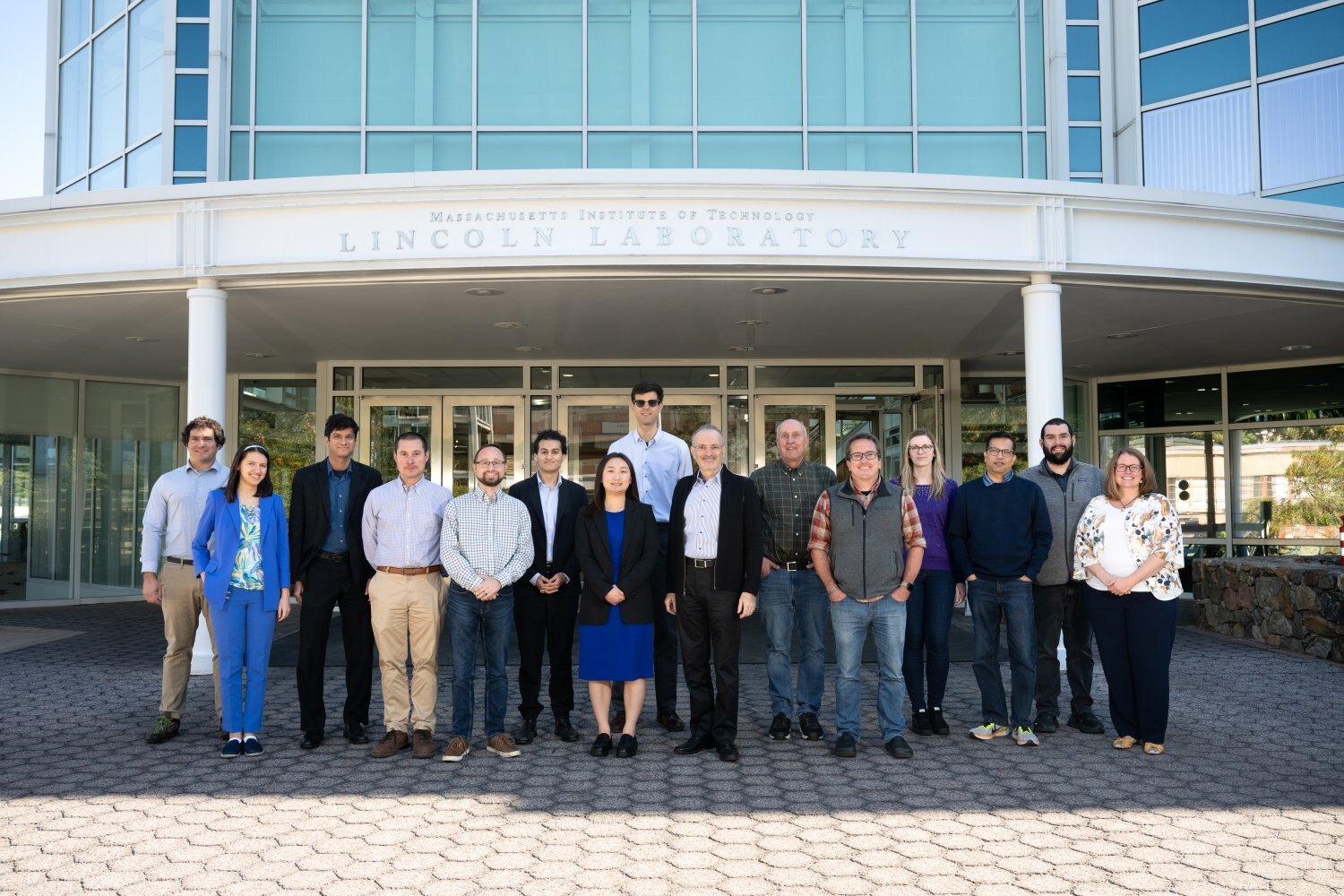
MIT Lincoln Laboratory has received three 2026 R&D 100 Awards for Magnetite, a secure operating system for embedded computers; the Quantum Microsystems platform for wafer-scale chip integration; and an algorithm designed to cancel 5G interference. R&D World administers the annual awards, which recognize 100 significant innovations that have transitioned to use or become available for licensing during the past year.
The three winners address cybersecurity, quantum and high-performance computing, and radio-frequency communications. Melissa Choi, director of Lincoln Laboratory, said the technologies tackle critical problems in those areas and have been developed and transitioned for the nation’s advantage.
Since 2010, the laboratory has received 111 R&D 100 Awards for transferring its unclassified technologies to industry and government. Lincoln Laboratory is a Department of War federally funded research and development center, where technology transfer is part of its role.
Magnetite targets embedded-system security
Magnetite is intended for embedded computers used in systems such as satellites, drones, and radars, where real-time performance, limited resources, and the physical consequences of failure shape operating-system requirements. The laboratory describes conventional operating systems as large, complex products built on legacy designs that predate many modern threats.
The operating system is built on seL4, a formally verified microkernel. Mathematical proofs are used to establish that the microkernel code behaves as intended, addressing one potential source of security flaws. Magnetite’s networking, storage, and communications services are written in Rust, which is designed to prevent common memory-corruption bugs.
Its services are also configured as isolated processes following the principle of least privilege, so components do not gain access to unnecessary data. If one service is compromised, it can be locked down while critical functions continue operating. Magnetite is free for government use and approved partners, and is being integrated into Department of War space and flight platforms. It was also named Lincoln Laboratory’s Best Invention of 2025.
Wafer-scale integration for quantum systems
The Quantum Microsystems platform addresses interconnection constraints in modern computing. Dense chip-to-chip electrical paths consume space, slow data transfers, and generate heat; quantum systems also commonly rely on bulky coaxial cabling between cryogenic superconducting chips and room-temperature control electronics.
The platform integrates hundreds of superconductor and semiconductor chips in a single wafer-scale system. An AI decision-tree approach selects routes for connections across a wafer. Following defect testing, digital lithography creates custom wiring around defective circuit components to support the highest possible wafer yield.
Microbump or bumpless connections place chips extremely close together, while a superconducting fabric carries signals across the wafer. Integrated, lithographically defined flexible interconnects replace coaxial cables, reducing cryogenic wiring overhead and system complexity. The reworkable design allows chiplets to be replaced or upgraded without rebuilding the entire system, and is intended for transition to government and commercial foundries.
Reconstructing and subtracting 5G interference
Lincoln Laboratory’s third award recognizes an algorithm for cases where 5G base-station signals encroach on bands used by nearby non-5G radio-frequency antennas, including military radars, aircraft altimeters, satellite ground stations, and radio telescopes. The method uses the published international 5G standard to decode a nearby transmission and estimate multipath distortion.
It then reconstructs a copy of the interfering signal and subtracts it from incoming data. Unlike beamforming-based approaches, the technique does not depend on spatial separation between the desired and interfering signals. By operating on each antenna channel, it also preserves antenna resources for other interference types, including jamming.
Tests using over-the-air signals from a Nokia 5G base station at Hill Air Force Base recovered a radar test signal buried by cellular interference. The recovered signal was within two decibels of its original signal-to-noise ratio, preserving 89 percent of its interference-free detection range. The Department of War is evaluating the technology for multiple platforms, underscoring a practical business implication: organizations building mission-critical systems can assess security, integration, and RF resilience as engineering requirements that must be designed for transition rather than added after deployment.