


MIT Lincoln Laboratory convenes biotech security roadshow
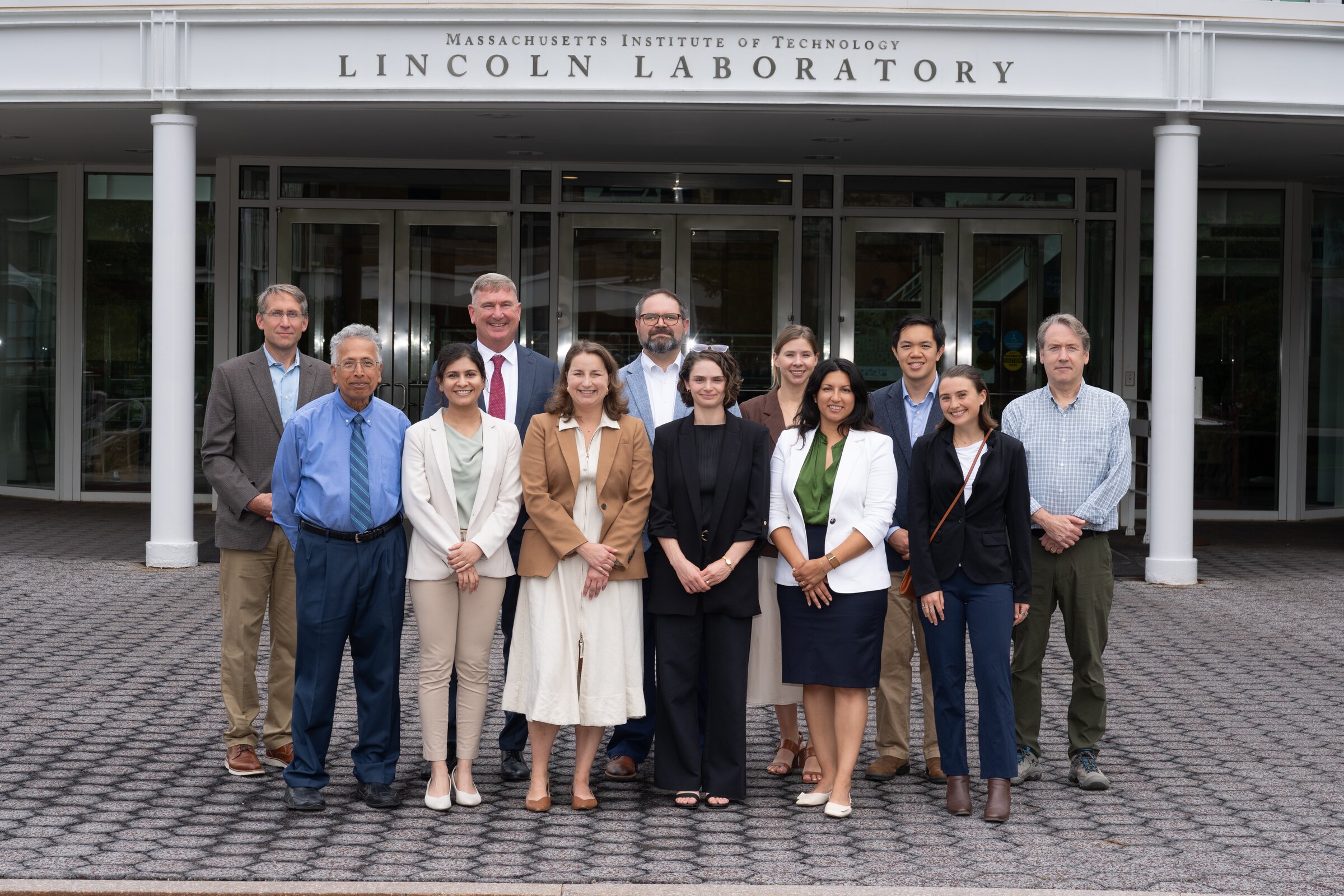
MIT Lincoln Laboratory hosted the National Security Commission on Emerging Biotechnology (NSCEB) on Sept. 3, bringing together Massachusetts state organizations, defense centers, universities, technology companies and business leaders. The roadshow stop examined how the state’s biotechnology ecosystem could reinforce national biodefense capabilities.
The event took place as the 11-member bipartisan, bicameral commission completes the final year of its three-year mandate. Created by Congress in 2022 to assess biotechnology’s national-security implications, the NSCEB released a report in April 2025 calling for at least $15 billion in federal investment over five years.
Christina Rudzinski, assistant head of Lincoln Laboratory’s Biotechnology and Human Systems Division, said the region has substantial assets to advance biotechnology beyond biopharmaceuticals and across industries. The commission’s national tour is intended to bring local ecosystem insights back to Washington as Congress considers how to support regional strengths.
Massachusetts positions biotechnology within defense policy
Massachusetts has made biotechnology a priority area within the Strategic Hub for Innovation, Exchange, and Leadership in Defense, or SHIELD. Governor Maura Healey launched the initiative in October 2025 with $47 million in initial aligned investment.
SHIELD includes the BioNexus program, which uses state matching funds to develop biotechnology and biomanufacturing solutions for the U.S. Army Combat Capabilities Development Command, known as DEVCOM. Healey also included a $100 million authorization for defense-sector capital projects in the Mass Wins Act, an economic-development bill filed in April and under consideration by the state legislature.
Ben Linville-Engler, co-chair of the SHIELD Working Group and deputy director of the Massachusetts Technology Collaborative, said more than 40 partner organizations are participating in the initiative. He cited $48.6 billion in defense-sector economic contributions to Massachusetts last year and stressed that biotechnology and national-security activity extends beyond Boston and Cambridge.
In July, the SHIELD Working Group submitted recommendations intended to speed the transition of technology into deployable capabilities, strengthen the defense workforce pipeline and reinforce the state’s national-security industrial base. Lincoln Laboratory said its role as a Department of War federally funded research and development center gives it sustained links to academic, commercial and government laboratories that can support such collaboration.
BioSHIELD targets the manufacturing scale-up gap
A central project discussed at the event was the proposed Biotechnology Scale-up Hub for Innovation, Economic Development, Labor Training, and Defense, or BioSHIELD. Planned for Worcester, Massachusetts, the 200,000-square-foot facility is intended to help mobilize the regional defense-biotechnology sector.
BioSHIELD is designed to offer shared equipment, infrastructure and secure laboratory space. Its backers say these resources would help innovators cross the gap between early discovery and commercial- or defense-scale production, while addressing technological and regulatory hurdles.
The project responds to the NSCEB’s call for a national network of biomanufacturing scale-up facilities. Edward Wack, BioSHIELD project co-lead and principal staff in Lincoln Laboratory’s Biotechnology and Human Systems Division, said New England currently lacks that capacity.
The coalition includes Massachusetts Biomedical Initiatives, Worcester Polytechnic Institute, Bio Base Europe Pilot Plant and Lincoln Laboratory. Wack announced that the organizations had signed a memorandum of understanding, with design workshops due to begin before funding and construction.
AI and biotechnology remain connected priorities
Panels also considered biotechnology’s intersection with artificial intelligence. Representatives from Boston University, the University of Massachusetts Boston, the Massachusetts Life Sciences Center, the Parker Institute for Cancer Immunotherapy, the Wyss Institute and Phicil-itate Change discussed the need for high-quality AI-ready datasets and the potential uses of AI in biomanufacturing and therapeutics.
For businesses working in biotechnology, the event underlines the practical importance of building partnerships that join research, manufacturing capacity, regulatory support and defense requirements before a promising capability reaches the scale at which it can be deployed.