


MIT training method improves climate emulator reliability
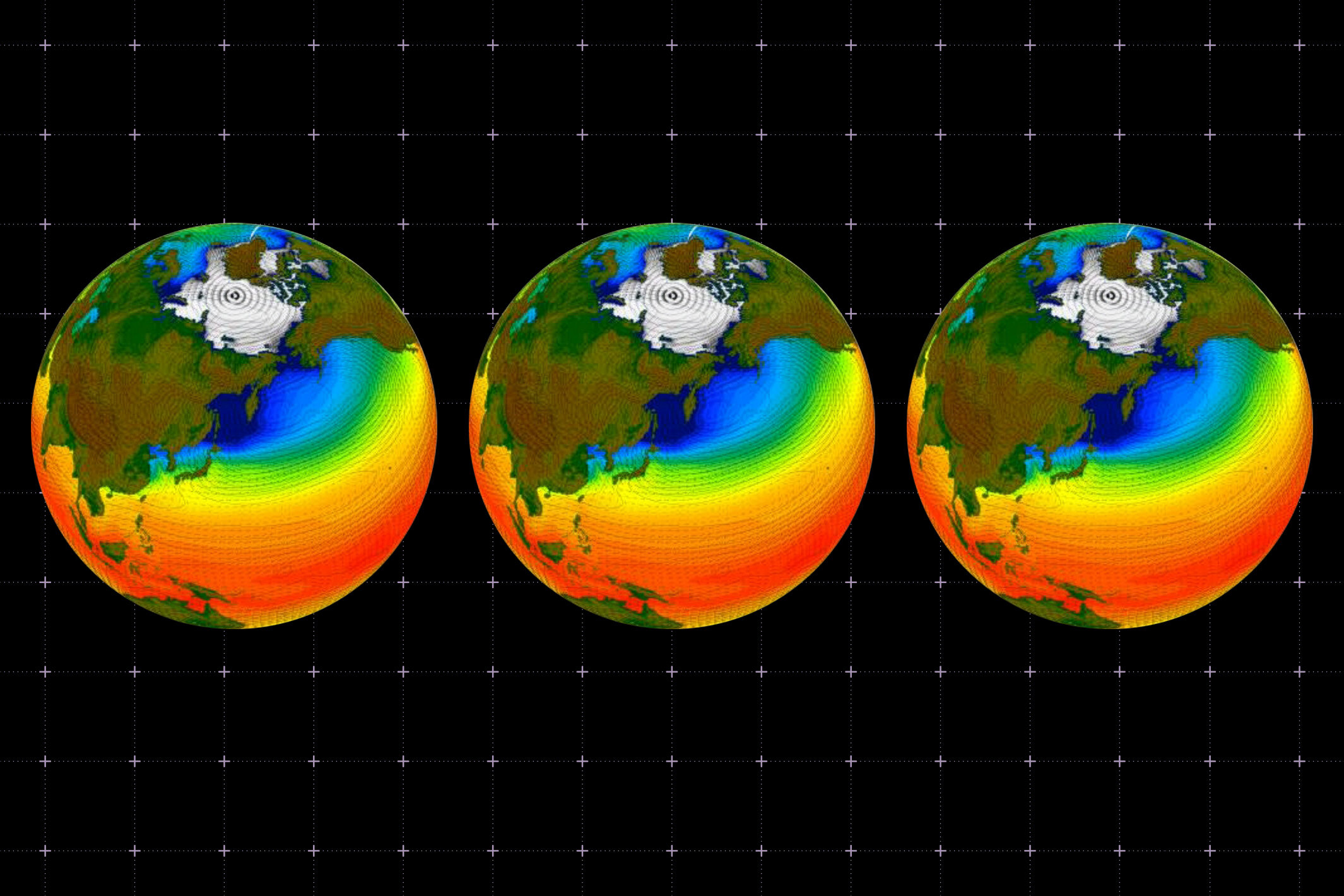
MIT researchers have developed a training technique intended to make artificial intelligence climate emulators faster to produce, more adaptable, and more reliable. The approach can generate optimized training data from one run of a full Earth system model (ESM), rather than the six to eight ESM runs commonly used to prepare an emulator.
Climate emulators are AI surrogate models that reproduce the behaviour of far larger, physics-based climate models. They can simulate the effects of human activities on future temperature, sea level, pollutants, and other outcomes in seconds. In contrast, a detailed ESM can take months on a supercomputer cluster to produce one long-term climate scenario.
The work, published in the Proceedings of the National Academy of Sciences, was led by Christoher Womack of MIT, now a postdoctoral researcher at ETH Zurich. The research involved MIT’s Department of Earth, Atmospheric and Planetary Sciences, the Center for Sustainability Science and Strategy, and the Institute for Data, Systems, and Society.
Training scenarios designed for model performance
Scientists often train climate emulators on six to eight scenarios that follow plausible future emissions pathways. Producing those datasets requires running each scenario through a full ESM, making the process expensive and slow. MIT’s researchers had also found that emulators trained on realistic scenarios can perform poorly when asked to predict unfamiliar conditions.
Instead, their algorithm creates synthetic emissions scenarios specifically to improve an emulator’s predictive skill. It begins with an arbitrary scenario from a fast, simple climate model, compares the emulator’s output with the ESM result, and uses that error measurement to iteratively revise the training data.
The optimized scenarios do not need to resemble a plausible future. They may, for example, sharply raise carbon dioxide emissions in 2050 or rapidly cut methane emissions in 2037. The process continues until the emulator’s error falls below a selected threshold.
Why rapid variation can improve adaptation
The resulting synthetic data contain rapid changes rather than the smooth emissions paths common in conventional scenarios. Womack said these high-frequency variations and oscillations give an emulator more information about the wider climate system.
In the researchers’ evaluation, an emulator trained with the new technique accurately predicted scenarios it had not encountered during training. It could also represent the effects of local pollution-control policies that reduce one pollutant while other emissions continue to increase. The traditional emulators assessed by the team did not pass that test.
Fast emulators allow scientists to test thousands of scenarios and investigate regional interventions or specific pollutants. Noelle E. Selin, the senior author, said the ability to simulate unfamiliar scenarios more robustly could provide more reliable information for stakeholders making decisions.
Implications for climate-planning workflows
The team plans to test the method with an emissions scenario generated by a full ESM, extend it to other climate models, and examine broader machine-learning and computer-vision uses. The research was part of the Bringing Computation to the Climate Challenge project and received support from Schmidt Sciences through the MIT Grand Challenges.
For organisations that depend on climate scenarios, the practical implication is that quicker emulator production could enable more frequent testing of policy-relevant options, while full physics-based models remain essential for generating and validating the underlying climate evidence.