


Former OpenAI Engineer Charged Over Alleged Executive Room Recorder
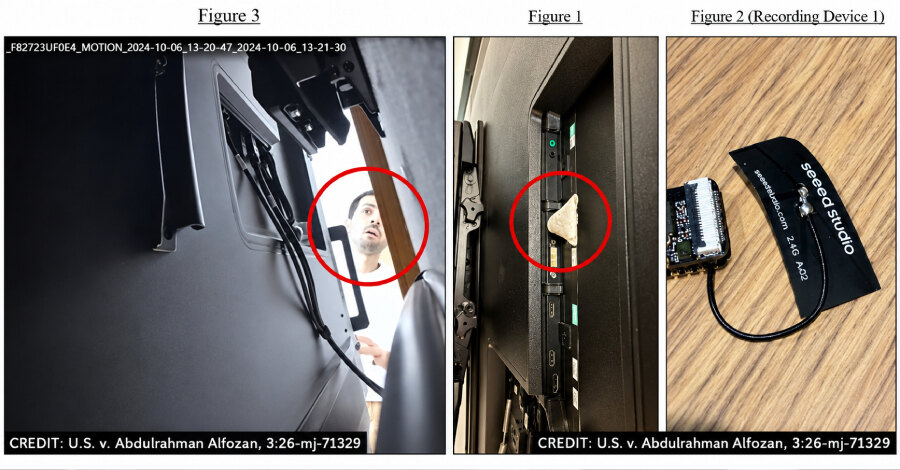
U.S. authorities arrested Abdulrahman Alfozan, a former OpenAI engineering lead, on October 9, 2026, over allegations that he planted a covert audio recorder in an executive conference room at the company’s San Francisco offices. The Department of Justice said Alfozan, 35, was charged with using or endeavouring to use an electronic, mechanical or other device to intercept oral communications.
The alleged offence carries a maximum penalty of five years in prison and a $250,000 fine, followed by up to three years of supervised release. OpenAI said Alfozan, who had worked at the company since July 2025, has been terminated.
Recorder allegedly concealed behind conference-room television
The complaint says OpenAI personnel discovered the audio-recording device on or around September 30. It had allegedly been inserted into a USB port on the back of a television in an executive conference room and concealed in toilet paper. Investigators said the device was installed around September 28.
The room was used for discussions involving highly confidential technical, commercial and strategic information. The complaint describes material including proprietary research, product plans, business-development opportunities, non-public technical progress, strategic decisions, capabilities, priorities, government engagements and commercial relationships.
CCTV footage reportedly showed Alfozan near the executive conference room on several dates before the discovery, although he was not authorised to access or participate in meetings held there. On October 5, investigators allege, he entered the room and appeared to look behind the television where the device had been placed.
Investigation examined tools, prompts and a second device
Before the device was allegedly installed, Alfozan was said to have used an unspecified productivity tool to collect details about OpenAI building addresses, meeting rooms, room capacities and calendars, leadership and executive locations, and external partner meetings. The investigation also examined prompts submitted through a chatbot account associated with his spouse.
Those prompts, submitted between September 24 and 30, related to building, customising, installing, testing, obscuring and remotely accessing an audio-recording device. Other prompts reportedly addressed continuous recording, Wi-Fi connectivity, live listening, SD-card encryption, a custom header and a unique MAC address.
The complaint further alleges that Alfozan left a bag unattended in another OpenAI room on October 5. Authorities said it contained a second recording device, together with his wallet and identification.
OpenAI says no data exfiltration has been identified
OpenAI described the hardware as a sophisticated recording device and said it used its AI models to understand the device and its origin before referring the case to the FBI. The company told TechCrunch that it featured advanced encryption, audio-monitoring capabilities and a data-transfer mechanism designed to evade monitoring.
OpenAI said it had no indication that model weights, source code or customer data had been accessed or exfiltrated. The incident nevertheless places insider-risk controls alongside the broader security questions raised when OpenAI agent attack using exposed credentials demonstrated the consequences of AI agents using exposed credentials in an attack.
For businesses, the practical implication is that protection of sensitive work must extend beyond repositories and cloud systems to meeting rooms, physical ports, internal calendars and signals of unauthorised access to executive discussions.