


Ring introduces indoor security drone and business patrol robot
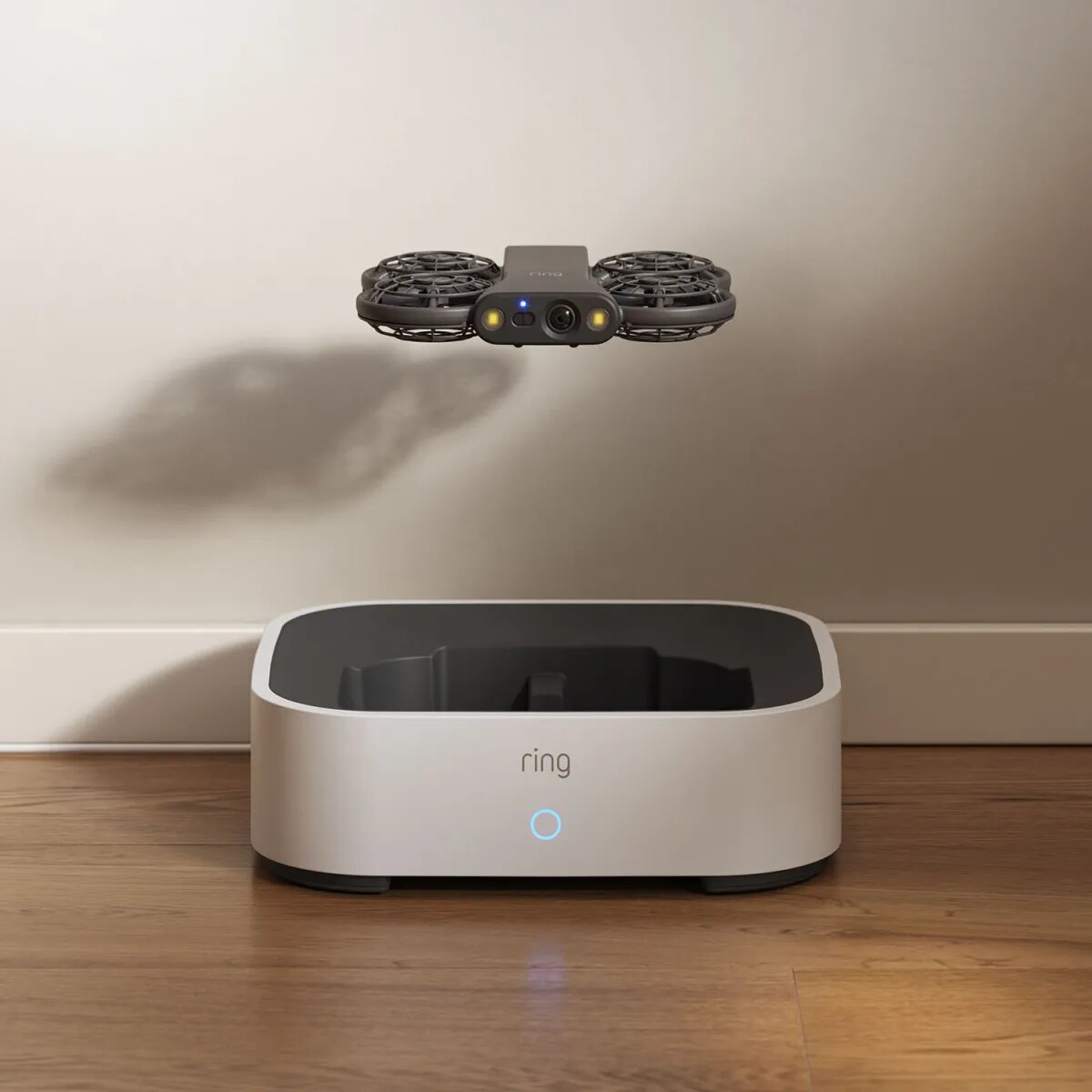
Ring creates a robotics division for home and business security
Amazon-owned Ring has announced Ring Robotics and unveiled two autonomous security products: the Ring Drone Cam for homes and the Ring Rover Cam for businesses. The Rover will be available from December 16 for $1,000, while the Drone Cam is scheduled to launch on January 27 at $270.
The products extend Ring’s camera and alarm portfolio beyond fixed devices. Both are intended to patrol indoor spaces, stream or record video, and investigate events when connected security systems detect activity.
Two devices with different patrol roles
Ring describes Drone Cam as a flying indoor security camera. It can move between rooms, inspect a home while its owner is away, and fly to a location when a Ring alarm is triggered, such as at a back door. When inactive, it remains in a docking bay.
The drone records in 2K and has LED lights for night-time and low-light monitoring. Users can control it through Amazon’s Alexa Home Map and schedule patrols for periods when a home is unoccupied.
Ring Rover Cam is aimed at commercial premises. It can patrol defined routes on a schedule, stream continuous 4K video to the Ring mobile app, and automatically begin recording when it detects a person. Its adjustable periscope camera is designed to look over obstacles, while two-way audio lets a remote operator speak with a person at the site.
AI Pilot and the privacy question
Ring says both devices use its proprietary AI Pilot system, which combines specialised vision models, sensors and cloud processing to see, think and navigate autonomously. The company says the robots can explore an indoor environment and develop a detailed schematic of a house or office.
The launch arrives after Amazon’s Astro robot was repositioned from a domestic helper to an enterprise security product and later discontinued. Ring says feedback from Astro customers informed the Rover’s development.
Privacy remains a central consideration for Ring’s new devices. The company says videos from both products are protected by TAKE, or Throw Away the Key Encryption, which it describes as its strongest default encryption yet. Ring has not clarified whether local video storage will be available; its cameras generally record footage to the cloud.
What buyers need to evaluate
Autonomous cameras can expand the coverage of a fixed security deployment, but the operational decision is not limited to image quality or navigation. Businesses considering Rover should define patrol routes, recording triggers, remote-access permissions and escalation procedures, while also reviewing where footage is stored and who can access it. The practical implication is that a mobile security robot should be introduced as part of a governed physical-security process, not as a standalone camera purchase.