


SANSAR malware hides Linux cryptomining behind false GPU telemetry
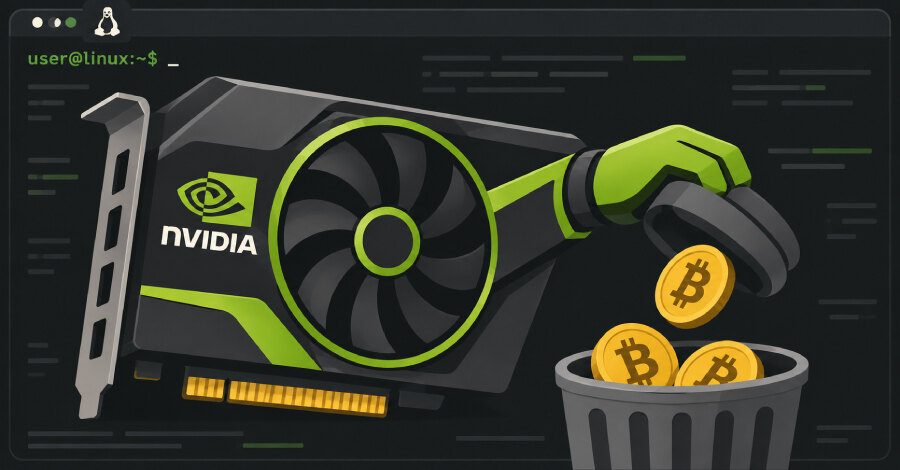
Elastic Security Labs has documented a Linux-focused cryptomining operation tracked as REF3364 that uses a toolkit called SANSAR to conceal CPU and GPU mining. Observed in late October 2026, the activity combines a Rust-based orchestrator, a kernel rootkit, a modified NVIDIA Management Library wrapper and an Ethereum-assisted backdoor.
A central evasion feature alters the readings exposed to GPU monitoring software. The modified NVML wrapper hooks calls used by tools including nvidia-smi, reporting GPU utilisation as 0% while mining activity is running. It also replaces temperature readings with random values between 36°C and 46°C and power values between 100 and 200 watts.
Exposed Ray agent provided initial access
Elastic said the documented attack chain began with an exposed Ray job agent. The actor executed jobs that ran nvidia-smi to collect GPU inventory and exfiltrate it to an external server. A subsequent Python reverse-shell job connected to a remote listener, after which an SSH key was added to the account's authorized_keys file for persistent access.
After obtaining root privileges, the actor staged the toolkit under /opt/vadi_. Researcher Salim Bitam said the group built the acpi_thermal_mgr kernel module through Dynamic Kernel Module Support and added an initramfs loader. Because the module and loader are stored in the boot image on disk, the rootkit can load again when the host starts with that image.
Rootkit, Tor control and blockchain-assisted backdoor
The acpi_thermal_mgr.ko rootkit uses ftrace to hide processes, directories and socket entries. It intercepts system calls associated with directory listings, file access and process-termination signals, removing selected records or denying requests with messages such as “No such file or directory” and “No such process.”
SANSAR performs an anti-debugging check by reading TracerPid and exits when its value is non-zero. It then communicates through Arti with a Tor onion service, collecting host and GPU information, obtaining miner status and receiving instructions. The orchestrator launches the selected miner: XMRig version 6.25.0, named kurt, for CPU mining, or SRBMiner-MULTI version 3.6.9, named tilki, for GPU mining.
The operation also deploys lyrebird, a legitimate pluggable transport proxy for Tor, and a backdoor called netns registered as a systemd service. Netns requests a controller IPv4 address from an embedded Ethereum contract, then opens a plain TCP connection to port 8080 and can establish a reverse shell based on the command-and-control response. Elastic found Turkish-language comments in the rootkit source code but did not attribute the operation to a specific actor.
GPU telemetry needs independent scrutiny
For organisations expanding GPU estates for AI and LLM workloads, the incident shows why job-submission permissions and monitoring components need review. Restricting access to Ray job agents, checking the integrity of GPU monitoring libraries and investigating a mismatch between demand and reported utilisation can help identify cryptojacking that diverts compute capacity and raises operating costs.