


Scimplify secures $25 million for AI-led critical materials expansion
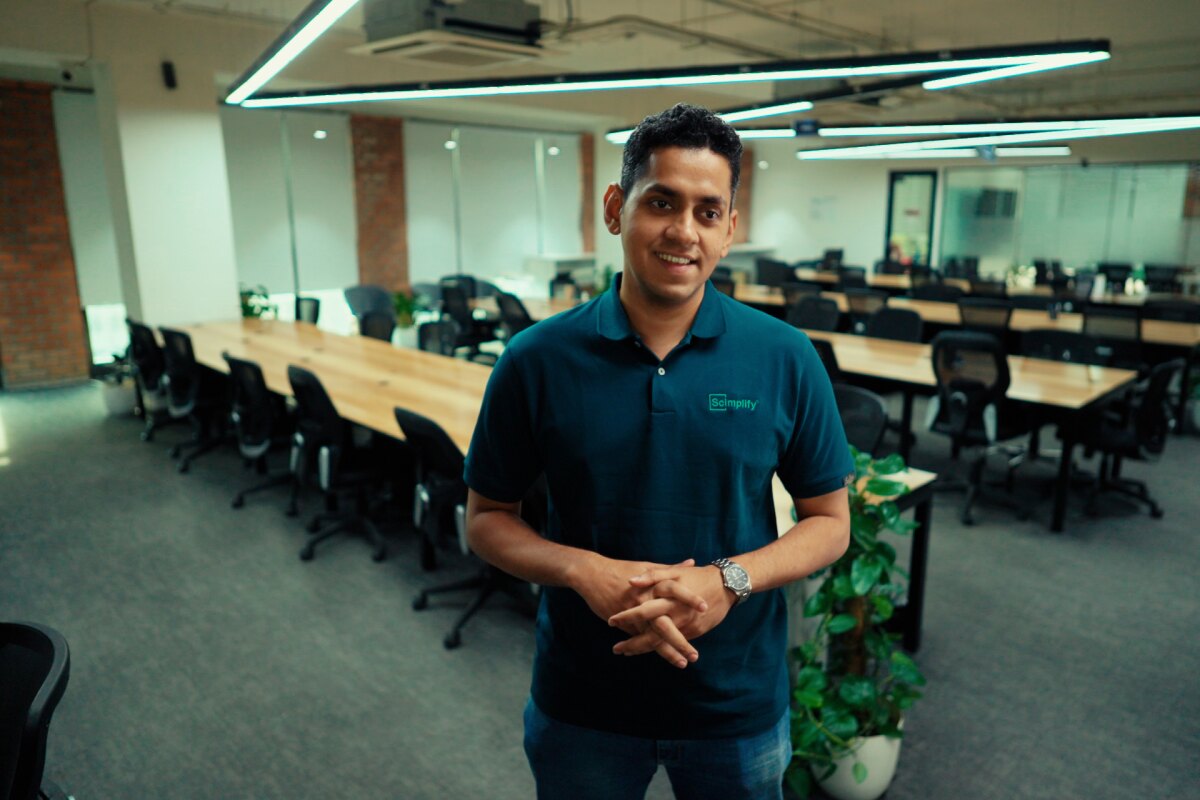
Bengaluru-based Scimplify has raised $25 million in an all-equity strategic round to expand its AI-powered production of specialty chemicals and critical materials. Hitachi Ventures led the investment, while Henkel and Teknor Apex joined as new investors. Existing backers Accel India, Bertelsmann India Investments, Omnivore and 3one4 Capital also participated.
The startup said the financing lifts its total equity funding to $80 million. A person familiar with the transaction said the round values Scimplify at $250 million after the investment, compared with $150 million after its $40 million Series B in March 2025. Scimplify did not disclose its valuation.
AI platform targets slower materials qualification
Founded in 2023, Scimplify develops manufacturing processes at research facilities in Bengaluru and Hyderabad, then transfers them to partner factories for commercial output. Its proprietary Scinode platform identifies possible production routes and manufacturing facilities, while tracking quality and regulatory requirements.
Co-founder Sachin Santhosh said Scinode uses specialised AI agents for research, manufacturing and quality control. The company begins with a customer requirement and works backwards to determine what process and production capacity are needed. In some cases, Scimplify says it has moved from requirements to delivery in two months, against a typical 12-to-18-month timeline.
The company’s scientists and engineers oversee production through a network of more than 500 manufacturing facilities. About 90% of its manufacturing currently takes place in India. Scimplify is positioning that network as an alternative source for materials whose supply is concentrated in China and a small number of other countries.
US and Japan network expansion is planned
Scimplify plans to expand its production network to the United States and Japan over the next year. It has earmarked about $7.5 million of the new funding for its US expansion, including the manufacturing network, and a further $2 million for additional Scinode development.
The US business has grown to an annualised revenue run rate of about $60 million, up sixfold from $10 million a year earlier, Santhosh said. The market accounts for roughly 30% of the company’s business. Customers outside India now collectively contribute more than half of revenue, compared with less than 5% about 18 months ago.
Overall, Scimplify serves more than 1,000 customers and has delivered products to more than 40 countries. It reported an annualised revenue run rate of about $200 million, three times its level a year earlier, and is targeting $400 million over the next year. The company has been EBITDA-positive for the past two months and expects to become profitable after tax this month, Santhosh said.
Critical-material demand shapes the product focus
Energy, electronics and defence now account for about 45% to 50% of Scimplify revenue, up from less than 15% a year ago. The company is working on tungsten derivatives from scrap and on rare-earth materials, categories with supply chains heavily dependent on China.
Scimplify works with customers including TDK, BASF and Hitachi, and employs about 340 people, including roughly 70 scientists. For manufacturers, its expansion illustrates a practical route to test alternative material sources: process development, factory qualification and compliance management must advance together if a new supplier network is to move beyond laboratory promise.