


Shopify launches Canvas for AI-assisted online store building
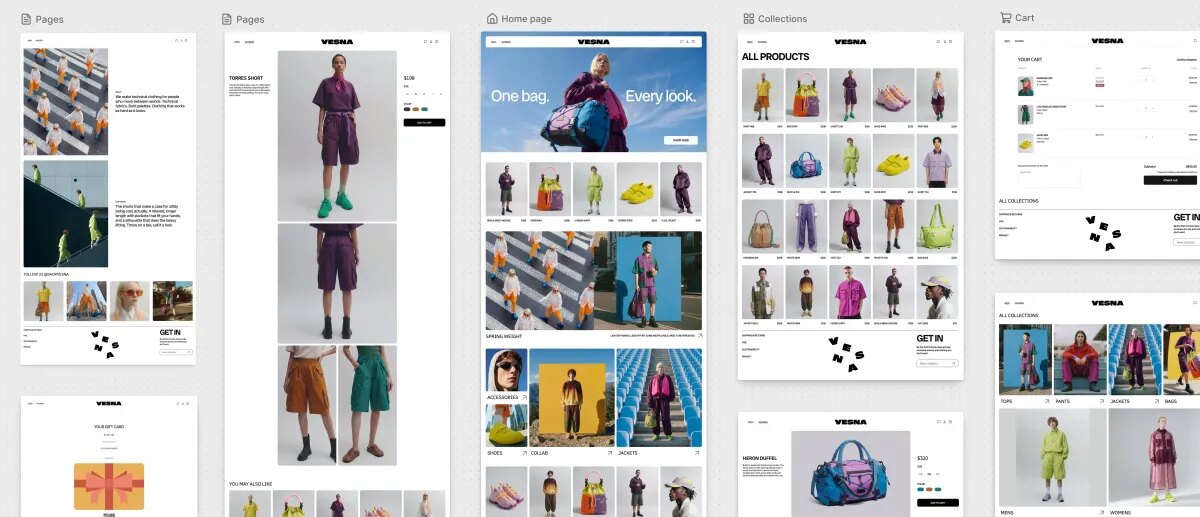
Shopify has introduced Canvas, a new site-building workspace that lets merchants create and modify Shopify stores by chatting with its AI agent, Sidekick. Instead of primarily arranging sections and blocks in a selected theme, users can describe the storefront they want and watch changes take shape across the full site.
Canvas renders the real code behind a merchant’s store as Sidekick works, Shopify said. That distinguishes the workspace from a static mock-up: merchants can test page interactivity and animations, view pages at different screen sizes, and zoom in on particular details while retaining an overall view of the store.
From theme editing to conversational construction
Shopify’s existing no-code builder already allowed merchants to rearrange modular theme sections and blocks. More extensive changes could still require code editing or a developer. Canvas combines Sidekick’s existing abilities to write code, build apps, customize themes and make edits into a product focused on constructing a complete storefront.
Merchants can still select individual elements and change them directly. But Canvas is designed around conversational instructions to Sidekick. The AI agent also takes screenshots as work progresses, enabling it to view the evolving page in the same way as the merchant.
Theme architecture is central to the product
To support the workflow, Shopify gave Sidekick the ability to work directly with theme files and simplified theme architecture. Shopify says those changes make a store’s structure, logic and design easier for the agent to understand and modify.
The release also follows a wider emergence of AI-powered website creation tools from Wix, Squarespace, Webflow and Framer, as well as vibe-coding platforms such as Lovable and Replit. Within Shopify’s commerce operation, AI traffic and orders for Shopify merchants illustrates the growing role of AI-driven visits and orders for its merchants, while Canvas applies AI to the creation of the storefront itself.
What merchants should assess
Shopify describes Canvas as an early product that will need to expand and improve. Its potential value is to make store creation more accessible to sellers without the budget for designers and developers, or the time to learn coding.
Businesses adopting Canvas should use its real-time rendering to check layouts, interactions and animations across screen sizes before publishing changes. The practical implication is that teams may be able to move more storefront work into a chat-based workflow while keeping direct element editing available for detailed review.