


Starcloud adds $250 million to fund orbital AI compute expansion
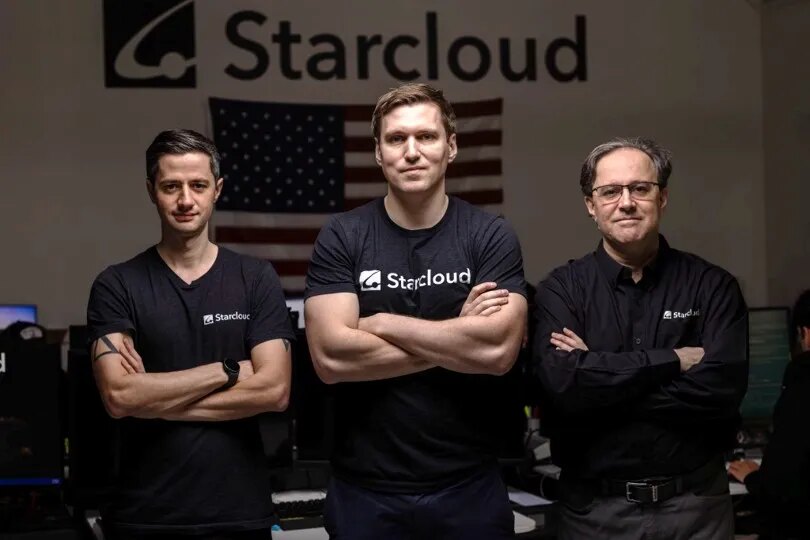
Starcloud has raised a $250 million extension to the $170 million Series A it announced in March, taking the orbital AI-compute startup’s valuation to $2.3 billion. The company says the new capital will support a larger manufacturing facility and development of Starcloud-3, its largest orbital data-center spacecraft, which it intends to launch on SpaceX’s forthcoming Starship rocket.
Chief executive Philip Johnston also said the funding will help Starcloud secure rocket capacity as satellite operators face a tightening launch market. The company has requested Federal Communications Commission permission to operate 88,000 spacecraft and expects it will need to contract for a substantial volume of launches.
Launch access becomes a central constraint
Starcloud is planning two rideshare launches in 2027 for its new 8 kW compute satellites, known as Starcloud-2. Those spacecraft are intended to run orbital inference workloads for customers that include US government agencies. The company is also considering a dedicated Falcon 9 mission and agreements with additional launch providers for later missions.
Johnston identified launch capacity as one of the major costs facing the business. SpaceX plans to end its Falcon 9 programme in 2028 and transition to the larger Starship system, which has not yet established regular operational service. Blue Origin’s New Glenn and ULA’s Vulcan are not flying regularly, while Rocket Lab’s Neutron has yet to reach the launch pad.
That transition matters for Starcloud because its longer-term model depends on Starship reducing launch costs enough to support an orbital inference layer that can compete with terrestrial data centres. SpaceX has delayed a planned attempt to catch a returning Starship for several months and aims to re-fly the vehicle for the first time late this year or in early 2027.
Nvidia support and space-grade compute
Manhattan West Ventures led the extension, with Nvidia and Cisco among the participants. Benchmark, EQT, Soma, NFX, 776, Cedar Capital, Goanna Capital and Standard Capital also invested. A person familiar with the transaction said Nvidia contributed $25 million.
Starcloud says it is the only company currently operating an Nvidia H100 terrestrial data-centre GPU in orbit and the first to train a model with one. The company is sharing data from its Starcloud One mission with Nvidia as the chipmaker develops the Vera Rubin Space-1, its first purpose-built GPU for space. Nvidia’s expanding compute commitments also illustrate how demand for large GPU capacity is reshaping infrastructure economics, as the scale of contracted accelerator access around SpaceX demonstrates the scale of contracted accelerator access around SpaceX.
Engineering and production plans
Starcloud hopes to fly the Vera Rubin Space-1 chip in late 2028. Its engineers are assessing chip operating temperatures against radiator size, radiation-shield placement and the ruggedisation needed to withstand launch conditions. The company has 25 employees and is developing production lines at a 100,000-square-foot facility in Woodinville, Washington, near satellite manufacturing operations run by SpaceX and Amazon.
For businesses evaluating space-based compute, the practical implication is that hardware progress and funding are only part of the decision: mission schedules and economics will remain closely tied to the availability, cost and reliability of launch contracts.