


Russia charges Telegram founder Pavel Durov, places him on international wanted list
On July 29, 2026, Russia’s Federal Security Service said it had charged Telegram founder Pavel Durov under Part 1.1 of Article 205.1 of the Russian Criminal Code for allegedly aiding terrorist activity. The FSB also accused Telegram of failing to remove prohibited content and placed Durov on an international wanted list.
Why the allegations matter
The case places platform moderation, criminal liability and national security in direct conflict. The FSB alleges that Ukrainian services and extremist groups used Telegram to coordinate sabotage, terrorism, mass killings and cyber-fraud, causing casualties and damage valued in the billions.
One allegation concerns the Daivinchik dating chatbot. The agency says operatives posed as young women, built relationships with Russian men, requested meeting locations near malls or critical facilities, and sent phishing links for tickets or gifts.
Recruitment methods and Telegram’s response
In joint operations with the Ministry of Internal Affairs and the Investigative Committee, authorities allegedly detained 46 Russians aged 12 to 22 between July 2025 and July 2026. The FSB linked them to armed attacks, arson against transport, energy, communications and financial infrastructure, and the movement of fraud proceeds through cryptocurrency exchanges.
The platform “failed to remove numerous channels, chats, and bots” allegedly used to coordinate sabotage, terrorism, mass killings and cyber-fraud, the FSB said.
The agency claims other operatives then impersonated Russian law enforcement or Rosfinmonitoring officials on foreign messaging apps. Targets were told that their payments had reached Ukraine’s armed forces and that shared coordinates could support attacks, before being coerced into violence under threats of prosecution.
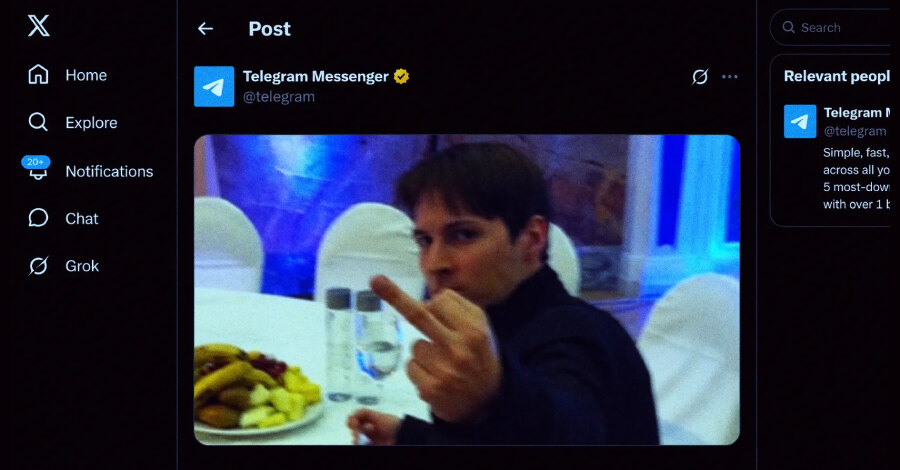
Telegram responded through its official X account with a photograph of Durov making an obscene gesture. Durov, who lives in Dubai, had not commented publicly. Russia throttled Telegram earlier in 2026 and imposed a near-complete blockade in April; Durov had also been charged in France almost two years earlier over alleged failures to curb illicit activity.
For businesses, the operational lesson extends beyond content moderation. Abuse reporting, privileged-account controls, phishing resistance and employee training for false-authority scenarios must cover attempts that can escalate from financial fraud into physical harm and infrastructure disruption.