


Thermo Fisher adds signatures to protect DNA analysis files
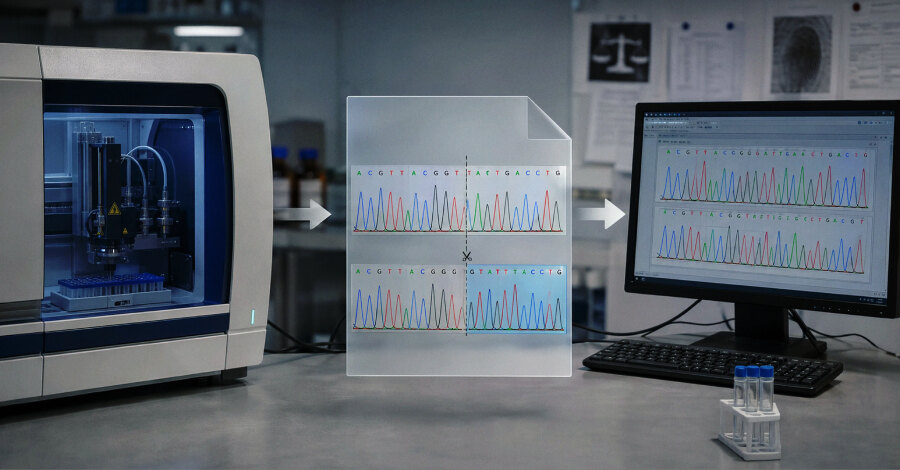
Thermo Fisher Scientific has patched CVE-2026-17583, a high-severity integrity flaw in selected Applied Biosystems human identification software. Rated 8.2 under CVSS v4.0, the issue could allow nearly undetectable alterations to .fsa and .hid files before analysis software loads them if laboratory controls are circumvented.
Updates are available for five supported product lines and introduce digital signatures intended to help customers verify that newly generated data files have not changed. Three end-of-life data collection products will not receive vendor fixes.
Products and fixed versions
The affected 3500/3500xL Series Data Collection Software 4.0.2 and earlier is fixed in 4.0.3. The 3730/3730xL Series software 5.0.2 and earlier is fixed in 5.0.3, while SeqStudio Genetic Analyzer software 1.2.5 and earlier is fixed in 1.2.6.
SeqStudio Flex Series Instrument Software 1.2.0 and earlier is fixed in 1.2.1. Laboratories using SeqStudio Flex with security, audit and electronic signature functionality enabled must first install the latest SAE profile on the SAE Admin Console. GeneMapper ID-X Software v1.7.3 and earlier is fixed in v1.7.4.
No update is planned for 3130 Series Data Collection Software 4.1 and earlier, ABI PRISM 3100/3100-Avant Data Collection Software 2.0 and earlier, or ABI PRISM 310 Data Collection Software 3.1 and earlier because those lines have reached end of life.
What researchers demonstrated
Nathan Adams of Forensic Bioinformatics tested the weakness with a public data set. He told The Wall Street Journal that his first successful modification, created with Anthropic's Claude, took about 45 minutes. In a demonstration, code combined scans from two individual DNA profiles into a file that appeared untouched since 2015, and commonly used analysis software displayed no warning.
Thermo Fisher's bulletin does not state what access is required. The researchers said an attacker would need local or remote access to laboratory servers and sufficient knowledge of DNA testing. This dependence on legitimate-looking access reflects the abuse of borrowed trust as a recurring security concern across sensitive systems.
The vendor said it knew of no exploitation. As of August 3, 2026, the identifier was absent from CISA's Known Exploited Vulnerabilities catalog, and no public primary source linked altered casework to the flaw. The weakness concerns digital testing records, not physical DNA samples.
Controls for laboratories
The bulletin says signatures will support verification “moving forward,” but does not explain whether files created before the updates can be validated retroactively. It also does not define a method for checking those historical files. Thermo Fisher did not confirm researchers' estimate that the weakness may extend to files produced since 1995.
Customers should install the applicable update. Where that is not possible and another analysis platform cannot be used, Thermo Fisher recommends maintaining chain of custody, storing files on encrypted and password-protected media, restricting access, applying least privilege to instrument and analysis systems, and limiting internet connectivity to trusted sources.
For laboratories, the practical priority is to map every deployed product and version, update supported systems, identify unsupported instruments, and document compensating controls for the complete path from file creation and storage to analysis.