


Trezor confirms recovery-phrase implants in CryptoBilis Safe 5 wallets
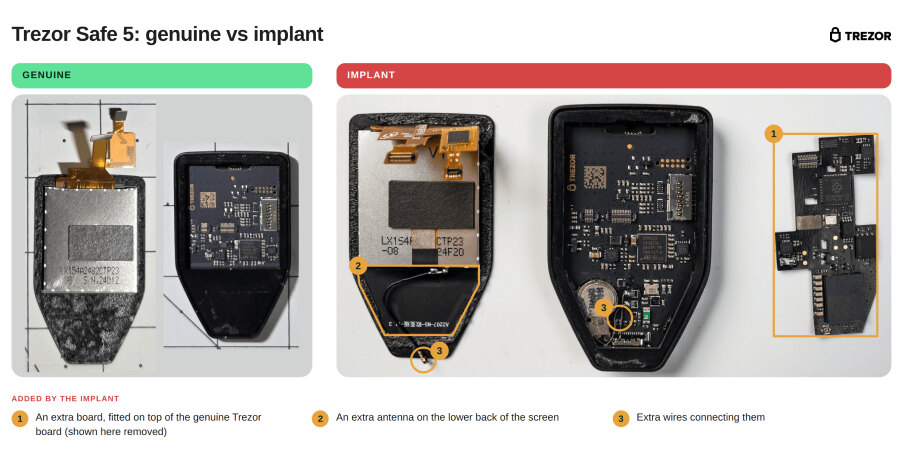
Trezor has confirmed that three Trezor Safe 5 hardware wallets sold by former reseller CryptoBilis contained hidden hardware implants capable of copying recovery phrases. The company examined one device in its laboratory and identified the other two from photographs supplied by their owners. It said none of the three owners has reported lost funds.
The affected wallets were purchased between August 20 and September 23. Trezor said it has so far found implants only in Safe 5 devices sold by CryptoBilis, not in other models or devices supplied through its other resellers. The company does not know who installed the components or where this occurred in the supply chain.
How the implant captures wallet secrets
The added circuit board sits between the Safe 5 main board and its display. Trezor said the modification does not alter the wallet's own firmware or Secure Element. Instead, it reads information displayed during the creation of a backup or the restoration of an existing wallet.
That means it can collect a recovery phrase when the words are shown on screen, as well as a passphrase if one appears there. The implant encrypts captured information and attempts to send it through the mobile network to attacker-controlled infrastructure. If it cannot connect, it retains the data and retries until transmission succeeds.
Trezor engineers extracted and analysed the implant firmware from the first reported device. The company will not release technical details that could assist attackers or increase customer risk. It said the implant operates in the same broad manner as components found in genuine Ledger wallets sold by the same reseller, adapted for the Safe 5 display.
Firmware protection does not replace a new backup
Firmware version 2.13.1, released for Safe 7, Safe 5, Safe 3 and Model T devices, prevents the implants identified so far from collecting data on wallets running the update. Trezor stressed that the update cannot protect a wallet backup that was captured before installation.
Its guidance remains unchanged for anyone who bought a Trezor from CryptoBilis since March, including through the reseller's Tokopedia and Shopee stores: transfer funds to a newly created wallet protected by a new recovery phrase. Restoring the previous phrase on another wallet does not remove the exposure, and an unused device from the reseller should not be set up.
Reseller investigation continues
CryptoBilis had been an official Southeast Asian reseller until Trezor removed it on October 9. That coincided with Ledger's investigation into customer fund losses involving devices from the reseller. Ledger subsequently confirmed an unauthorised implant designed to capture recovery phrases during setup, followed by a coordinated draining of affected wallets.
After its October warning, Trezor asked affected buyers to contact the company. Forty-eight customers have done so, and the company is reviewing devices in its lab or from internal photographs. Customers should keep any suspect wallet and contact Trezor Support rather than weigh or open it, as neither is a reliable check. Trezor also warns that scammers may impersonate the company and that it will never request a recovery phrase. For businesses and individual holders, the practical response is to treat a potentially observed recovery phrase as compromised and migrate assets using independently generated credentials.