


Uber partners with Zipline for Uber Eats drone deliveries
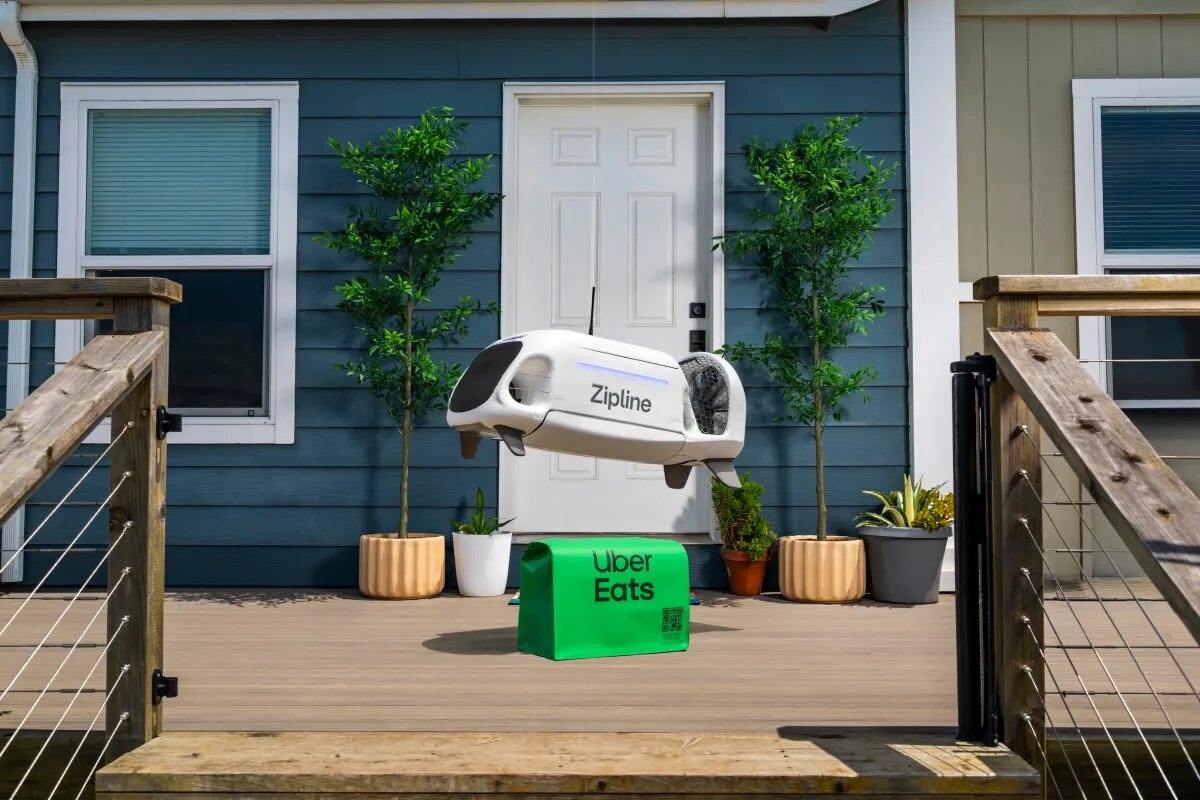
Uber has invested in and formed a delivery partnership with Zipline, setting a target of one million daily drone deliveries by the end of 2029. The companies said Zipline drones will begin fulfilling Uber Eats orders in Zipline’s existing markets by the end of this year.
The partners intend to expand the service to dozens of US cities. Financial terms of Uber’s investment were not disclosed. Uber believes Zipline’s aircraft can complete Eats orders in five to ten minutes.
A platform strategy for autonomous delivery
The agreement adds another drone operator to Uber’s network rather than creating a proprietary aviation service. That mirrors the company’s approach to robotaxis and other autonomous-vehicle services: bring multiple providers onto the Uber platform.
Uber has sold businesses that once pursued in-house autonomous systems, including Uber Elevate and Uber Autonomous Technologies Group. It has instead used commercial partnerships and investments, committing more than $10 billion to dozens of autonomous-vehicle providers.
The Zipline deal also follows Uber’s late-2025 partnership with Israeli drone-delivery startup Flytrex, which included a minor investment. In the company’s broader effort to extend beyond ride hailing, Uber’s broader platform expansion strategy reflects how travel, financial services and data have also become part of Uber’s operating model.
Fast fulfilment is the commercial objective
Uber CEO Dara Khosrowshahi described quick commerce as a market that could exceed the original food-delivery opportunity. The prospective five-to-ten-minute fulfilment window is central to that thesis, positioning drones for orders where speed is especially valuable.
Zipline is based in San Francisco and recently closed an extended $800 million Series H round, giving it a $7.6 billion valuation. Its existing operating markets will provide the first locations for the Uber Eats launch before any broader US rollout.
Partnerships can also create dependencies
Uber’s multi-provider strategy does not remove partnership risk. Its relationship with Waymo, one of its most prominent autonomous-vehicle partners, is expected to end when the companies’ contracts expire in 2028, and the two are on opposing sides of a regulatory dispute over autonomous vehicles.
For merchants and logistics operators, the planned rollout makes drone delivery a channel to assess alongside conventional courier capacity. The practical business implication is to evaluate the service market by market, focusing on local availability, delivery times and operational fit rather than assuming national coverage from the announced target.