


Voice AI Needs Faster Reasoning and Trust Before Wider Adoption
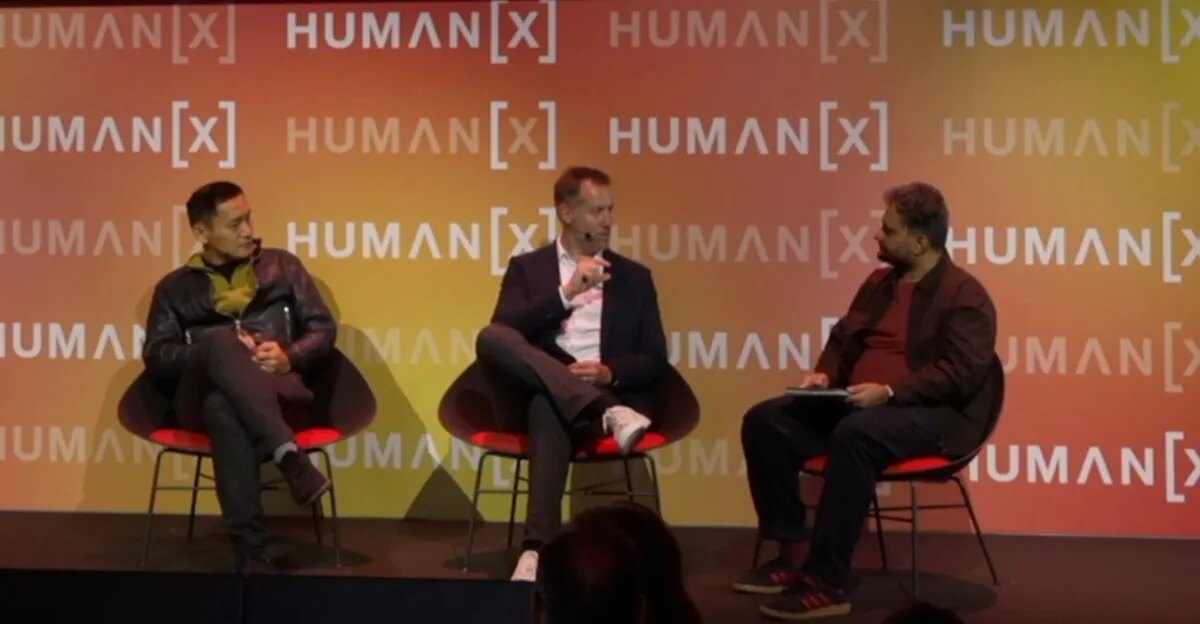
Voice AI has not yet had its “ChatGPT moment,” despite investment across model development, enterprise customer service, meeting notes and AI dictation, PolyAI Chief Technology Officer Shawn Wen said at the HumanX conference. The technology has reached a milestone with full-duplex models that can listen while speaking, but Wen said the next challenge is making reasoning fast enough to retrieve answers without interrupting the natural rhythm of a conversation.
That gap matters for enterprise deployments, where a convincing voice alone is insufficient. Wen said customer-service agents should avoid sounding robotic and give callers confidence that they can resolve an issue. If users are willing to engage for the first two or three turns and receive useful help, he said, they may become more comfortable completing a task without being transferred to a human agent.
Speed and accuracy remain operational constraints
Voice systems can still misunderstand users, while meeting tools can produce incorrect transcripts or summaries. Wen identified automatic speech recognition, or ASR, as a persistent weak point: missed keywords can prevent a system from capturing the full context of a request. That failure can affect not only a transcript, but also every action built on top of it.
Alex Gay, chief marketing officer at meeting notetaker Otter, made the same point. He said transcription was not Otter’s intended endpoint; it was the layer from which productivity gains could be created. But when the initial transcription lacks the required accuracy, follow-up actions become flawed. Once an automated system takes an incorrect action, Gay said, trust in the platform is lost.
Gay also described speaker identification, intent capture and the connection of spoken content with organisational knowledge as important steps towards automation. Otter is working on digital twins that could represent people in meetings. For that kind of tool, he said, the generated voice must convey the emotive qualities of a human discussion. Without the capacity for debate, strategic discussion and a sense of relationship, an avatar becomes little more than a question-and-answer chatbot.
Disclosure is part of the product requirement
Both executives highlighted transparency as voice tools move into enterprise settings. Wen said callers should understand that they are speaking with AI. Otter similarly wants meeting participants to know when recording is taking place, including through approaches such as chat notifications even when its bot is not present in a meeting.
For businesses, the practical implication is to evaluate voice AI as a chain of capabilities rather than a realistic-sounding interface. Teams should assess ASR accuracy, speaker and intent handling, response speed, the reliability of downstream actions and clear disclosure before placing voice agents in customer service or meeting workflows.