


Wabi 2.0 turns prompt-built apps into a personal AI messenger
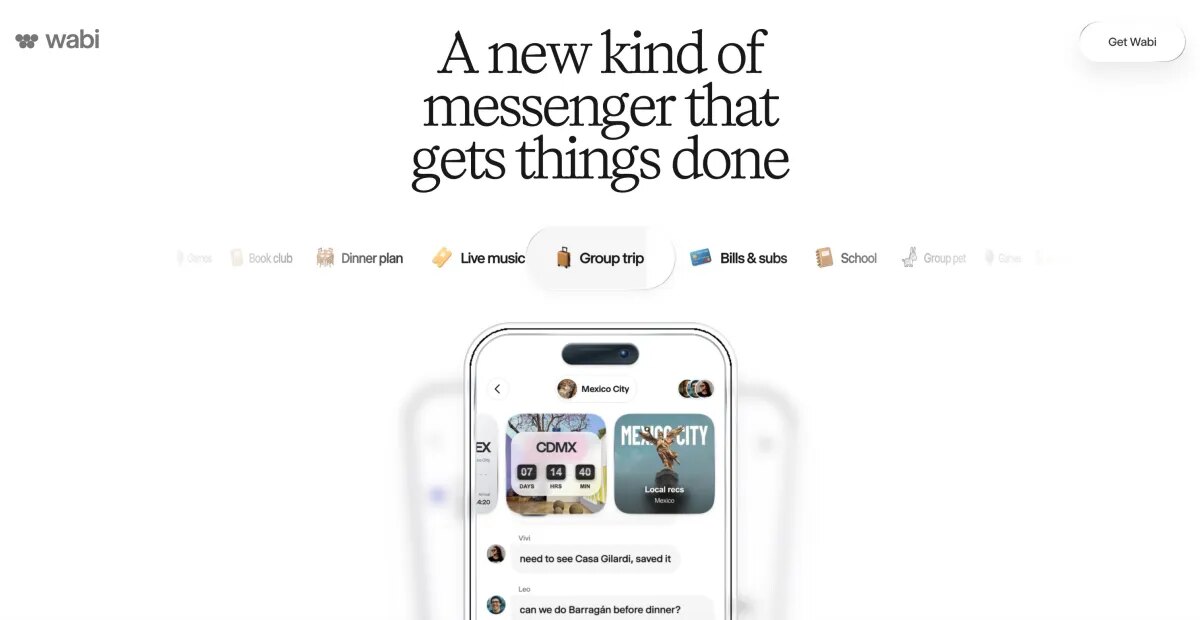
Wabi has introduced Wabi 2.0, an invite-only AI messenger that can create apps as users work through tasks in conversation. The startup, founded by Replika founder Eugenia Kuyda, is repositioning its original prompt-based app maker around a personal-agent experience that combines chat, task execution and on-demand interfaces.
Kuyda described Wabi 2.0 as “a personal agent that does stuff for you and builds the interface you need in the moment.” The company says the new product is intended to put an agent, the apps it generates and the people involved in a user’s life in one place.
From app building to an agent interface
The first version of Wabi let people build apps with prompts. Wabi 2.0 retains that capability, but changes the primary interaction model: rather than beginning with a standalone app-building tool, users start in a messaging environment and can have the agent produce a fitting interface for a particular request.
The pivot places Wabi more directly alongside AI agents that combine conversation with productivity work, rather than alongside tools commonly described as vibe-coding products. It also arrives as major AI companies consider how applications can operate inside general-purpose chatbot interfaces.
OpenAI, for example, announced at Dev Day an update to ChatGPT plugins that will let apps provide interactive experiences within ChatGPT, while making an app’s name more visible in the ChatGPT sidebar. Wabi’s approach similarly treats a conversational interface as the starting point, while adding software-like screens when chat alone is not sufficient.
Why Wabi is adding generated apps
Kuyda argued that chat-only agents become less usable as their histories and active tasks accumulate in one long conversation. In her view, people want to tap, scroll and view information as well as type requests, and the most capable agent will combine both interaction patterns.
Wabi proposes organizing generated tools within topical threads. A health-focused thread could include a calorie tracker, weightlifting log and weight tracker. A family-focused thread could hold a children’s activity calendar, a language-learning app and a tool for monitoring local kid-friendly events, alongside other functions related to parenting and household management.
That structure is meant to move personal-agent use beyond isolated requests. Instead of one person issuing one-off prompts in one chat, Wabi envisions people, agents and task-specific apps working together around the parts of life that matter to them.
Availability and business implication
Wabi 2.0 is currently available only through invite codes, which the company is distributing on X. Its launch will test whether consumers prefer agents that generate and retain visible, task-specific interfaces rather than relying only on a growing chat transcript.
For businesses evaluating AI agents, the practical question is whether recurring workflows need a navigable interface as well as a conversational entry point. Teams should distinguish between one-off chat assistance and repeatable tasks that benefit from persistent trackers, calendars or other purpose-built views.