


YouTube Music introduces labels for generative AI songs
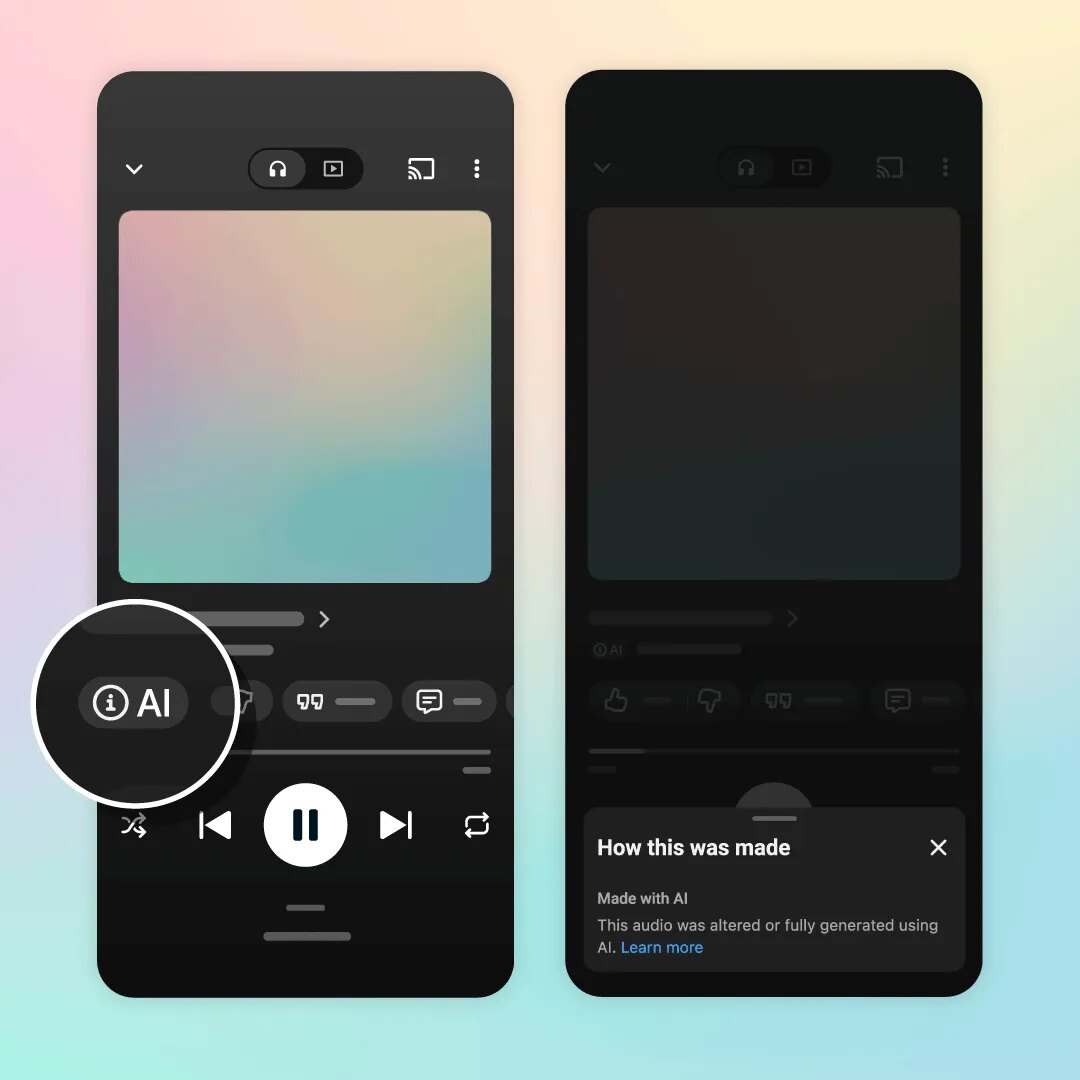
YouTube Music adds AI music disclosures
YouTube Music announced on Wednesday that it is rolling out a labeling system to make the use of generative AI in music more transparent. Listeners will be able to identify tracks involving AI in composition or vocals through a label on the player page.
Selecting the label will provide more detail on the role AI played in creating a particular track. YouTube said the labels will also extend to its main YouTube app, bringing the disclosure system beyond the dedicated music service.
Partners using YouTube can declare generative-AI use through three categories: Fully Gen AI, Partly Gen AI and No Gen AI. YouTube said it is working with music partners and using its own detection tools to identify AI-generated music.
Three categories distinguish AI use from audio editing
Fully Gen AI is intended for tracks created entirely by AI. Partly Gen AI covers releases in which artists use AI-generated components but add their own live elements. No Gen AI applies to music without generative AI involvement.
The distinction also separates generative systems from conventional production processing. Tracks edited with pitch-correction software, including Auto-Tune, fall into the No Gen AI category under YouTube’s guidance.
YouTube’s approach is disclosure rather than a blanket restriction. A song’s AI involvement alone does not make it ineligible for monetization. The company is itself testing AI-assisted music creation through Dream Track, which allows selected creators to make soundtracks featuring AI-generated versions of participating artists’ voices.
Streaming services are taking different approaches
The rollout comes as AI-generated music increases across streaming platforms. Apple Music plans to introduce Made With AI labels as part of its AI Transparency Tags later this year. Spotify has AI labels and a music-spam filter, while TIDAL labels recordings it identifies as entirely AI-generated, lets listeners disable them and excludes those recordings from royalty attribution.
Deezer has adopted a stricter position. In July, it said it was receiving nearly 90,000 fully AI-generated tracks every day. The service labels detected AI music, removes it from algorithmic recommendations and editorial playlists, and withholds royalties from fraudulent streams. Deezer is also working on an option for listeners to filter out AI-generated music.
What music businesses should prepare for
The diverging policies show that AI disclosure is becoming a practical metadata issue for labels, distributors and artists. Businesses releasing music through YouTube should classify generative-AI use accurately, retain clear production records and monitor how platform-specific labels affect monetization, recommendations and listener choice.