


42AI launches with $62.5M for brokerage behaviour prediction
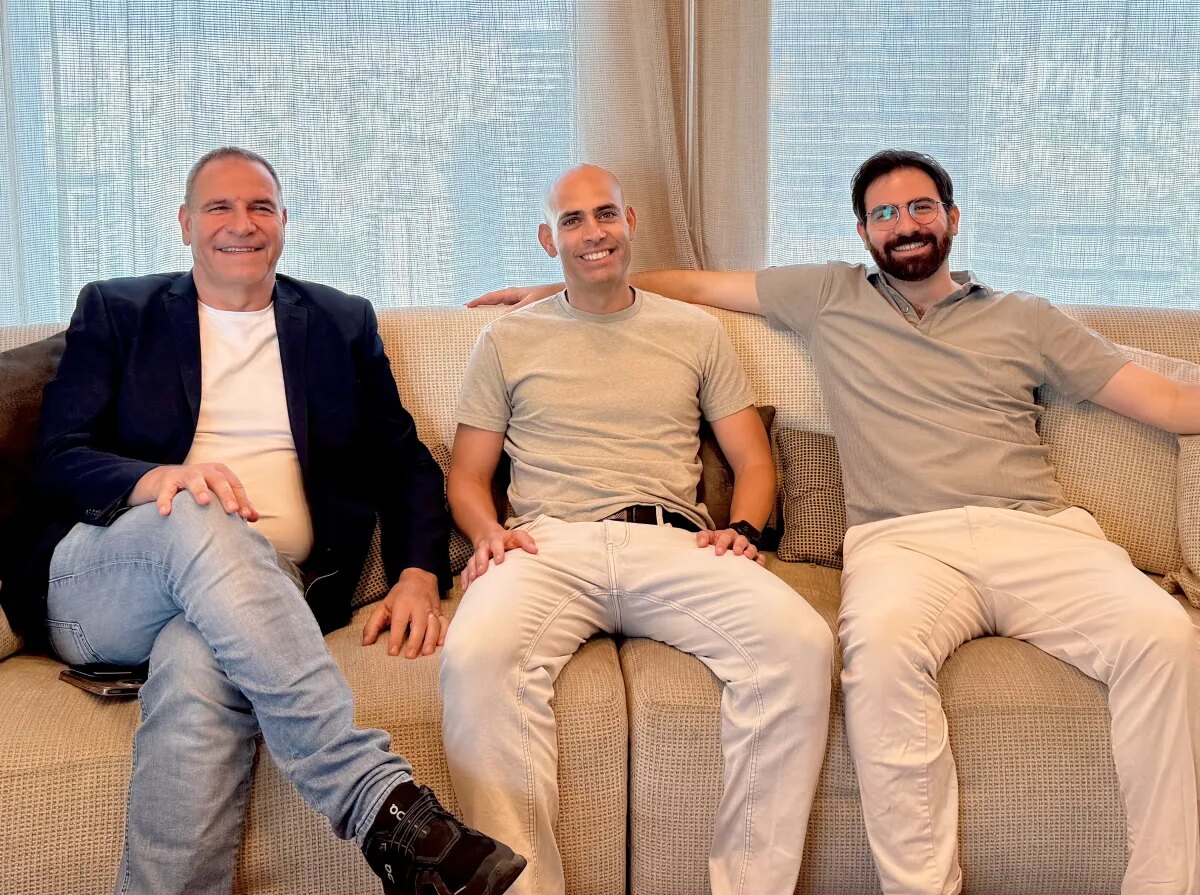
Israeli startup 42AI has emerged from stealth with $62.5 million in seed funding and a behavioural world model it says can estimate how people will respond in unfamiliar circumstances. The company is initially deploying the system with 10 large brokerages for liquidity management, margin requirements and hedging exposure.
42AI says its customers pay either a flat fee or a percentage of the value the platform helps create. Chief executive and co-founder Amit Gal-Or said the company generates more than seven figures of revenue, while declining to give a precise amount. He also claimed that one brokerage produced about $30 million in additional value through dynamic hedging.
A probability model for individual decisions
The company describes behaviour as probabilistic rather than deterministic. Its stated aim is to model underlying tendencies that may influence decisions as circumstances change, rather than simply extrapolating a person’s earlier actions.
In a brokerage setting, 42AI examines customer activity across KYC completion, onboarding, support interactions, money transfers and stock trading. CTO and co-founder Ehud Ezra said the inputs can include sentiment, voice signals, call frequency, later buying and selling activity, and market conditions.
Those observations are converted into mathematical representations of traits and supplied to a transformer-based world model. The model produces probabilities for possible decisions in different situations, while a separate language model generates explanations for its predictions. Ezra said its training process is designed to preserve an individual’s underlying tendencies during simulations; a normally risk-averse person should not arbitrarily be treated as a risk-taker.
Claims, data scale and limits
42AI spent three years developing the approach, drawing on psychological research, neuroscience, genetics, specialist advice in psychology and PTSD, and input from 2011 Nobel Prize in Chemistry winner Dan Shechtman. Gal-Or said the team began with psychological assessments and behavioural scenarios involving thousands of people, then added government and biobank datasets covering more than 2 million people. Customer datasets now cover almost 30 million people, he said.
For trade prediction, 42AI claims 98% accuracy. Gal-Or clarified that this figure refers to whether trading flows fall inside a predicted range, rather than whether every individual trade is predicted correctly. He said the system records an F1 score of 0.8 to 0.85 for trading direction and volume, a measure intended to balance correct classifications against false alarms and missed events.
Gal-Or said the model does not require personally identifiable information and “never knows who the person is,” although it analyses linked customer activity to form individual behavioural profiles. The founders also acknowledge a ceiling on performance when relevant experiences are unavailable to the system. Ezra cited outside advice from a friend or colleague as an example of contextual information that can alter trading choices and reduce accuracy.
Governance questions accompany expansion plans
42AI is exploring uses in gaming, fraud prevention and cybersecurity, and ultimately wants robots and AI agents to better understand people. However, Ezra said each new domain requires training on its own rules and context.
The technology also raises questions about the use of predictions by organisations that hold customer data. Ezra called the possibility of customers using such insight to their own advantage a valid concern. The founders pointed to regulation, monitoring and an internal ethics committee, without detailing controls that would prevent misuse by clients.
For businesses considering predictive behavioural systems, the immediate implication is to separate performance claims from the metric behind them, test sensitivity to missing context, and define governance for profiles that may affect customer-facing financial decisions.