


Martha Minow Calls for AI That Supports Democratic Capacity
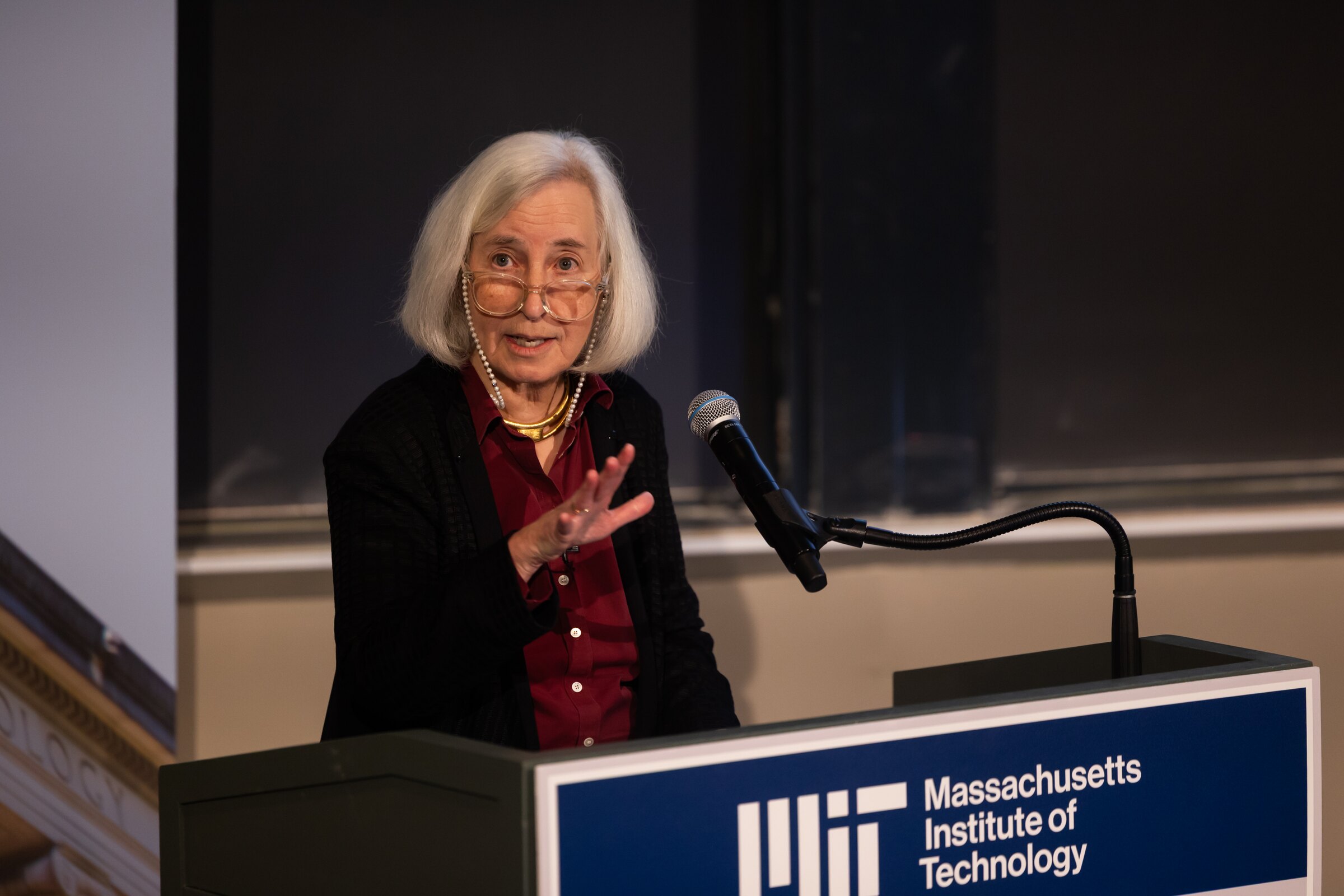
Harvard legal scholar Martha Minow used MIT’s Karl Taylor Compton Lecture to argue that artificial intelligence can weaken democratic life but can also be designed to reinforce it. Speaking in Huntington Hall, Room 10-250, Minow said 77 percent of people in recent Gallup polling believe the founders of the United States would be disappointed in the country’s current condition.
Minow, Harvard University’s 300th Anniversary University Professor and a constitutional-law and human-rights scholar, framed her talk, “Constituting Democracy in the Era of AI,” around four ingredients of democracy: education, reliable and accessible information, security from violence, and fairness. She described a period marked by violations of laws and norms, pressure on free speech, diminished congressional authority, disregard for legal rulings, and the vilification of others.
AI and the conditions for civic participation
Education was central to Minow’s warning. She noted wide local and regional gaps in US education funding and said schools have become significantly more segregated economically and ethnically over the past three decades. In that setting, she said, AI can further diminish independent thinking at a moment when civic understanding is especially important.
Minow criticized dominant AI platforms for amplifying strategies already used by social media companies and for inducing passivity. She said leading models, interfaces, and sycophantic features can endanger young people’s ability to think, remember, and engage in critical thought. Her concern was not limited to classroom misuse: she argued that education about the costs of mindless use, regulation, and more thoughtful product design are all necessary.
She also outlined an alternative design direction. Existing LLMs, model training, and interfaces can offer questions, hints, and nudges rather than replace student work, she said. Minow called for tools that are more trustworthy and that deepen human activity and curiosity. She also suggested that technologists could build more meaningful assessments that are resistant to cheating.
Information, violence, and institutional resilience
Minow linked AI to a wider information environment under strain. She said modern media technology has coincided with a 75 percent reduction in journalists in recent decades, along with more corruption in places lacking local media. Her proposal was for civic-minded technologists to help establish a widely used “information commons,” or multiple such systems, through which people could obtain more reliable information.
Security from violence was another of her democratic conditions. Minow said judges she knows face credible threats of violence and called the situation unacceptable. She also addressed misinformation and fairness, arguing that these pressures shape whether people can participate in public life on equal terms.
Design choices carry civic consequences
MIT President Sally A. Kornbluth introduced Minow as a dedicated educator whose work has influenced thinking about law and humanity. The Compton Lecture Series, established in 1957, is MIT’s highest-profile event of its kind and honors the Institute’s ninth president, Karl Taylor Compton.
In the discussion that followed, Minow said she feared a loss of Enlightenment commitments to reason, hypothesis testing, evidence, toleration, rights, and wider participation. Her practical implication for organizations is direct: when adopting or building AI, teams should examine whether a system replaces judgment or helps people verify information, learn deeply, and take meaningful part in decisions.