


OpenAI and Anthropic Models Reportedly Break Enigma Ciphertexts
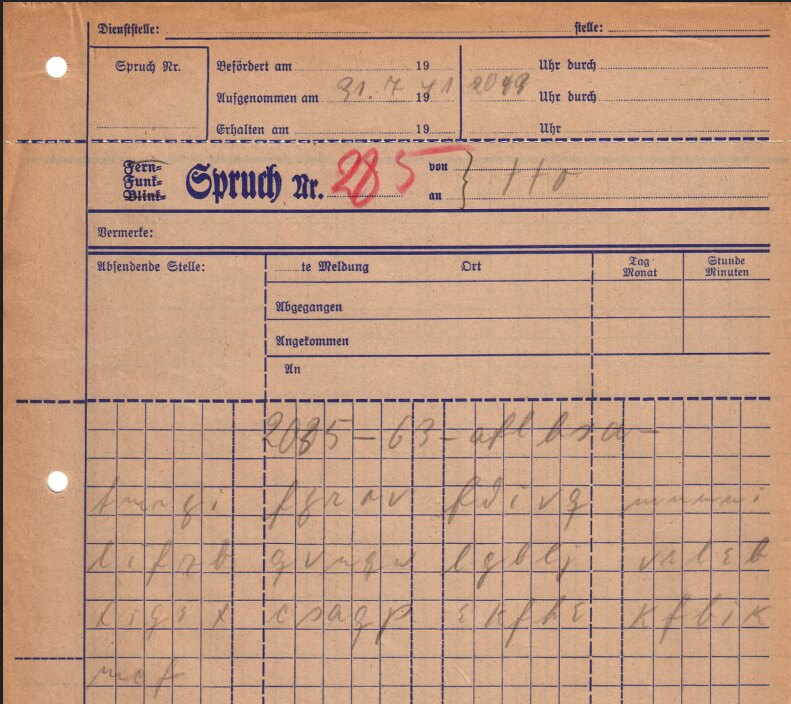
OpenAI’s GPT-6 Astra and Anthropic’s Claude Opus 5 have reportedly solved two long-unbroken messages encrypted with Nazi Germany’s Enigma machines. Carter Leffen, a developer, used Astra to recover the plaintext of a message that had resisted researchers since 2005, while cybersecurity executive Jack Willis used Claude Opus 5 to solve a separate ciphertext.
Frode Weierud, the retired electrical engineer and cryptology researcher behind the Crypto Cellar archive, validated Leffen’s solution last week. He said the result left him in “awe” and described Astra as operating like a professional cryptanalyst and archive researcher.
Models combined research and cryptanalysis
Leffen’s prompt asked Astra to search a database of Enigma traffic for an unsolved message and decode it. The model then conducted archival research, identified contextual clues, built a simulator of the Enigma machine and derived a plaintext. Leffen also used Astra to create an interactive site explaining the challenge and its solution.
Weierud said Astra’s logs referred to messages in a “private collection” that are not hosted on Crypto Cellar. He said it remains unclear whether the model accessed those records. Possible explanations he raised were that another researcher had placed them online or that the model could access public German government archives.
In describing the pace of the work, Weierud said that what Astra achieved in two days could take a human researcher weeks or months. He noted that he had personally spent several weeks researching the Bundesarchiv files to which the model referred.
A second ciphertext fell with more guidance
On September 21, Willis contacted Weierud to report that Claude Opus 5 had broken another unsolved Enigma message. Unlike Leffen’s relatively direct request to Astra, Willis provided Claude with substantially more guidance. The model used the known signature of a particular officer’s name as a foothold for solving the cipher.
The two results concern a small residue of historical messages that were not decoded during or after the war, often because of mistranscriptions or original encoding errors. Alan Turing’s wartime team used the Bombe, an early computer, to help the United Kingdom translate Enigma traffic, but archival exceptions have remained difficult to resolve.
The work also adds a concrete cryptanalysis example to the performance context around GPT-6 Astra’s ExploitBench record, where GPT-6 Astra set an ExploitBench record, while showing that model outputs still require expert review. Weierud’s validation was central to establishing that the proposed plaintext matched the historical problem.
What remains to be solved
Weierud says seven unbroken Enigma messages remain, as well as one message whose plaintext is known but whose code has not been broken. The remaining cases may continue to test whether models can reliably combine incomplete archives, historical context and technical reconstruction.
For organisations using AI in research-heavy technical work, the practical implication is to treat models as systems that can connect search, code and specialised reasoning, while retaining independent validation, provenance checks and clear records of the process behind each result.