


Anthropic introduces enterprise reporting for Claude Code spending
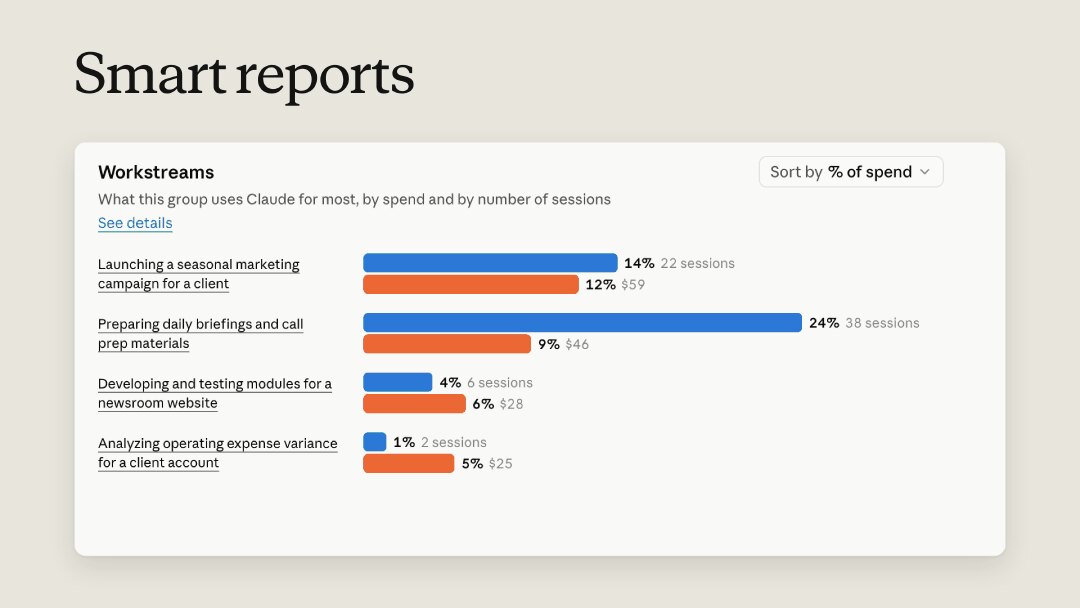
Anthropic adds reporting tools for enterprise AI use
Anthropic has introduced a reporting suite for enterprise customers using its AI products, including Claude Code, as it seeks to show what organisations receive for their token spending. The company said it recorded an operating profit in the second quarter and reported 900% net revenue retention, meaning spending from the same customers in Q3 2025 was nine times higher in Q3 2026.
The new reports let managers examine a team’s activity over a selected date range. They can view what the team produced, the associated cost and points at which workflows broke down. Anthropic says the reports will also recommend ways to improve results.
The company is adding pooled group budgets so teams can manage token spending collectively. Anthropic says it will not use the data collected through these analytics for model training by default.
From AI adoption to measurable return
The release addresses a central enterprise question: whether growing investment in AI tools is producing measurable operational value. Businesses are searching for better visibility as they decide how to deploy AI, while the article notes that many Fortune 500 companies have yet to see major gains from their deployments.
Jellyfish, which provides tools for software developers, examined agentic coding tool use among 276,000 customers. Its report found that Claude Code and other tools built on Anthropic models accounted for nearly one-third of all proposed code changes submitted for review. Spending on those tools rose tenfold since the beginning of the year and now equals about 2% of total engineering cost.
“It’s not enough to just spend a bunch. You now have to optimize it, make it work,” Jellyfish chief scientist Nicholas Arcolano told TechCrunch.
That spending trajectory makes budget controls and outcome reporting more significant for finance and engineering leaders. The enterprise context also differs from a simple model comparison: as open AI and Anthropic market paths outlines competing market paths, customers that standardise workflows around one provider can face practical switching costs.
Why reporting can reinforce existing workflows
Jellyfish AI product lead Nikolas Albarran said Anthropic had established strong enterprise operations and that many customers had invested effort in standardising workflows around its products. He said those tools worked well enough that organisations lacked a sufficiently strong reason to change providers.
Albarran also pointed to forward-deployed engineering teams, through which AI labs embed consultants with customers to help them adopt their systems. The reporting suite can provide a lighter-weight form of that assistance by surfacing usage patterns and potential improvements without the same hands-on engagement.
For businesses, the practical implication is to pair token budgets with recurring reviews of output, costs and workflow failures. That approach can make AI spending easier to govern while teams assess whether a tool is delivering value in their own operating environment.