


DoorDash Launches DoorDash Air and Builds Its Own Delivery Drones
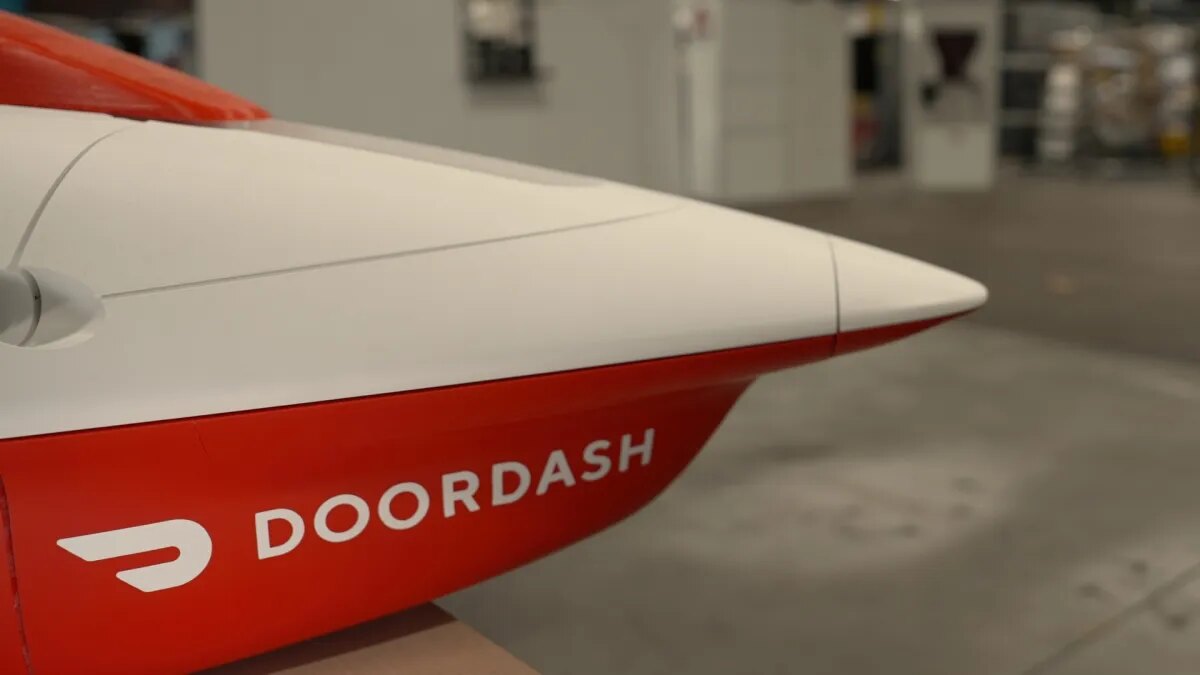
DoorDash unveiled DoorDash Air on Wednesday after receiving Part 135 air carrier certification from the US Federal Aviation Administration. The approval allows the company to operate a commercial drone delivery service, although it has not set a launch date for its custom aircraft.
Why DoorDash is moving beyond couriers
The initiative turns DoorDash from a marketplace coordinating restaurants, customers and contractors into an operator of physical delivery infrastructure. Drones will join human couriers and Dot, the 350-pound sidewalk robot introduced in September 2025.
The challenge is not simply to build an aircraft. DoorDash must choose the right transport mode for each order while accounting for distance, route and operating constraints. That affects delivery speed, unit economics and the ability to serve areas where conventional courier trips are inefficient.
A full-stack delivery network
Initial drone deployments are likely to be limited pilots covering short distances within an operator’s line of sight. Longer autonomous routes will require FAA approval for Beyond Visual Line of Sight technology, which Amazon, Wing and Zipline have already received.
DoorDash will retain its partnerships with Wing and Flytrex. Its Wing program began in Australia in 2022 and expanded to US locations, including Dallas–Fort Worth, in 2024.
“We didn’t start with the question, ‘What’s the coolest autonomous tech we could make?’ We started from first principles: What’s the actual customer problem that needs to be solved?”
DoorDash Labs has built the Autonomous Delivery Platform to coordinate Dot, human drivers and, eventually, drones. The team is working across aircraft and robot hardware, embedded systems, routing algorithms and real-time dispatch decisions. Dot already operates in Tempe, Mesa, Gilbert and Chandler near Phoenix, as well as Fremont, California.
Competition is also widening through Manna Aero’s expansion into US drone delivery, reinforcing the commercial push to make short-range aerial delivery viable in US markets.
For businesses, the strategic lesson is to treat autonomous delivery as an orchestration problem rather than a hardware purchase. The advantage will come from software that assigns each order to the lowest-cost suitable mode while preserving service quality and regulatory compliance.