


Oklahoma federal judge suppresses evidence after Flock database search
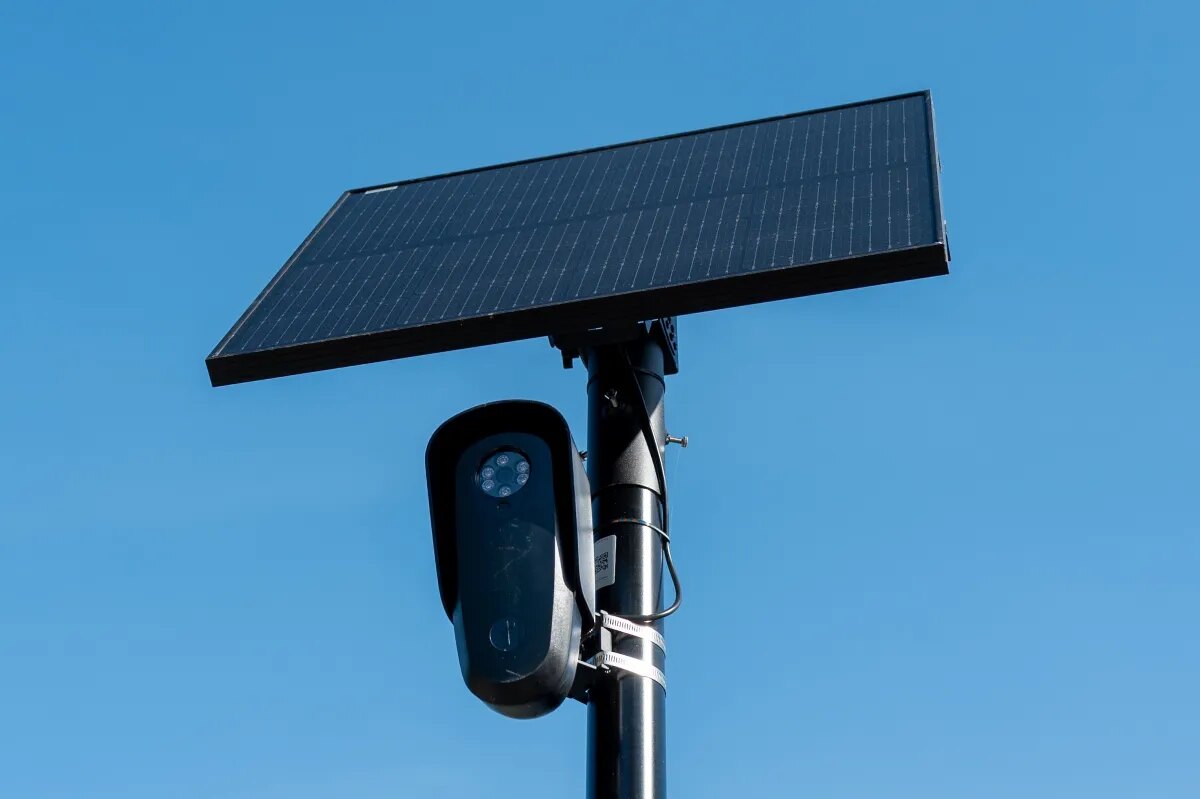
Federal court challenges warrantless Flock searches
A federal judge in Oklahoma has ruled that a Tulsa County sheriff’s deputy violated a woman’s Fourth Amendment rights by searching the Flock Safety automated license-plate-reader database without a warrant. Judge Sara Hill ordered evidence gathered after that search suppressed, applying the doctrine that excludes evidence derived from an unlawful search.
The deputy searched for the woman’s vehicle after seeing that it had California license plates. Judge Hill wrote that there was “no apparent reason” for the database query beyond the plate’s state of origin. The officer later relied on travel history from Flock as part of the basis for searching the vehicle, where authorities allegedly found 91 pounds of methamphetamine.
Hill concluded that all evidence obtained following the Flock search “must be suppressed as the fruit of a poisonous tree.” The decision does not establish binding precedent, but it is among the first federal rulings to find a Flock search unconstitutional.
Location history and the Fourth Amendment
The ruling addresses more than the individual traffic stop. Hill wrote that monitoring a person’s movements in public may become constitutionally problematic when law enforcement can passively catalogue whereabouts over an extended period and retrieve the data for any purpose when convenient.
In the judge’s description, the concern is the scale of a camera network that records vehicles passing network-connected cameras at all times and makes the resulting information available to law enforcement on demand. Hill characterised that model as “indiscriminate mass surveillance,” distinguishing it from targeted data collection involving a single person.
The analysis invokes Carpenter v. United States, the Supreme Court case concerning government access to cell-phone location records. It also arrives amid continuing disputes over automated plate-reader deployments, as LAPD's Flock contract and privacy dispute illustrates how contract decisions can become part of the wider privacy debate.
Policy pressure grows around plate-reader networks
Criticism of Flock has expanded across political lines. Local and state governments, including authorities in Florida and Texas, have said they will stop using the technology. Senator Bernie Sanders has also introduced the Block Flock Act, a proposal that would prohibit federal agencies from using automated license plate readers such as Flock.
Flock CEO Garretty Langley has called for a compromise between privacy and safety and apologised to women stalked by law-enforcement officers using the system. The company has also reportedly offered voluntary employee buyouts as cancellations mount.
For organisations evaluating connected-camera and location-data platforms, the case underlines the practical need to define lawful access rules, warrant requirements, query controls, audit trails and retention limits before operational use. A system’s ability to collect data at scale can itself become central to the legal and governance assessment.