


Gemini’s Feature Labels Illustrate AI’s Consumer Interface Problem
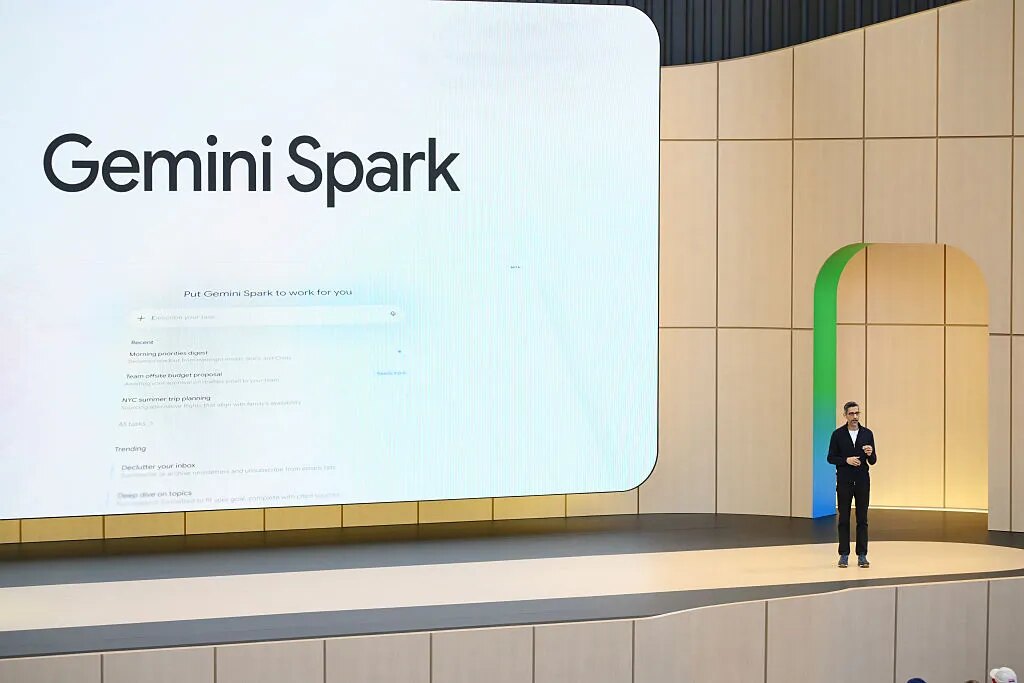
Google’s latest Gemini Live voice announcement promises that users should not need to work out whether a task requires Spark, Daily Brief or a quick inbox search. Yet the Gemini app itself separates Chat, Spark and Daily Brief into distinct features, each with its own icon and position in the navigation. The contrast highlights a broader consumer-AI design problem: product architecture is being presented as an interface users must understand.
Google describes Daily Brief as an AI-enabled agenda providing proactive, personalised updates from services including Gmail and Calendar. Spark takes the opposite role: it is an agent designed to take action on a user’s behalf. Both capabilities can be useful in principle, but their names and dedicated surfaces ask users to decide in advance how a request should be handled.
Useful capabilities, fragmented choices
Daily Brief also exposes the difficulty of deciding what is genuinely relevant. It can surface information that is urgent, actionable or worth remembering, but it may also prompt people to resume research begun in Gemini or remind them of earlier Google searches. A reminder tied to a previous search may not feel like helpful assistance when the topic was a one-off inquiry rather than an ongoing task.
Spark has a different usability issue. An agent that can act for a user could be activated when a request calls for that behaviour, without requiring the person to enter a separately branded area of the app. Internal teams may benefit from distinct product names, but a mainstream user generally wants to state an objective and have the system determine the appropriate route.
The same pattern across AI apps
Google is not alone in exposing interaction modes. Anthropic’s Claude asks people to distinguish between Chat and Cowork; until recently, those modes did not even share the memory of prior conversations. ChatGPT similarly separates Chat from Work. These labels may map cleanly to engineering and product boundaries, but they add cognitive work before a user can begin the actual task.
Apple’s approach to Siri offers a contrasting model. Rather than requiring people to learn a new AI destination, Apple is making existing touchpoints smarter, including Spotlight Search, Photos, the iPhone Camera and Siri voice requests. The emphasis is on improving familiar actions rather than teaching customers a taxonomy of AI features.
Familiar interfaces reduce the learning burden
The growth of text-based assistants follows the same logic. Services such as Poke, Ollie, Lindy, Orchid, Lucas, Folk, Tomo and Instinct use text messaging as the primary interaction surface. As a16z investment partner Justine Moore put it, people may prefer a contact they can text when they need help rather than another app to open, with iMessage as the reference point.
For businesses evaluating AI assistants, the practical implication is to prioritise interfaces that let employees express an outcome in familiar workflows, while ensuring that proactive suggestions remain relevant and appropriately bounded. A larger catalogue of branded modes is not automatically a clearer user experience.