


Google launches orbital TPU test under Project Suncatcher
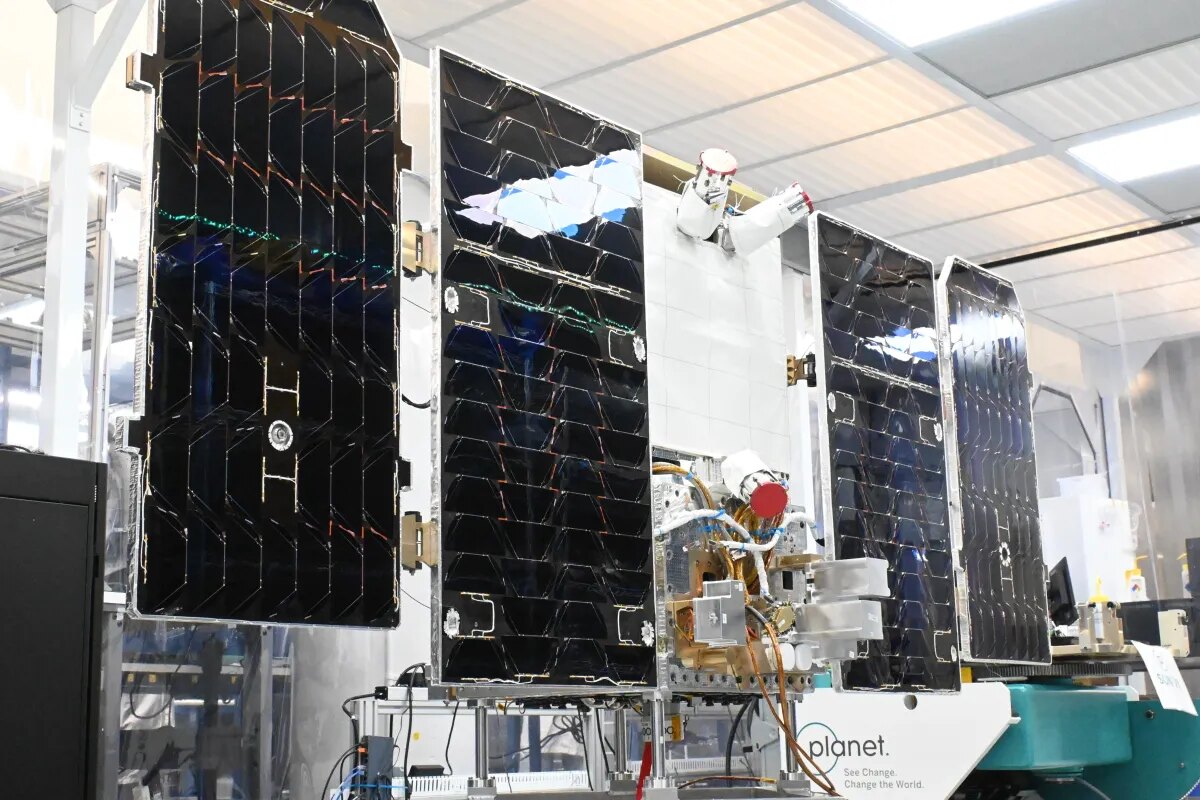
Google has launched its first orbital compute satellite aboard a SpaceX rocket from California, beginning an in-space test of a Google Tensor Processing Unit. Built by Planet Labs, the spacecraft is part of Project Suncatcher, Google’s long-term effort to explore large-scale computing clusters in Earth orbit.
The mission will test whether the TPU can operate under the power, thermal and radiation constraints of a satellite. After commissioning, the payload is expected to run the chip in 15-minute bursts, a limit intended to avoid overloading the spacecraft’s power and thermal-management systems.
From a single TPU to coordinated orbital computing
Google plans to run models on the satellite and monitor the results, following ground testing that cannot fully reproduce conditions in orbit. Travis Beals, the Google executive leading Project Suncatcher, said the live mission is intended to establish how the hardware behaves in the real environment of space.
The initial spacecraft uses a standard Planet Labs platform. Google and Planet Labs are also working on a demonstration planned for next year involving two satellites designed more specifically for advanced computing. Those satellites are intended to attempt collaboration through a laser communications link.
Google’s longer-term concept is a formation of 81 satellites processing workloads in parallel. For multi-rack workloads, the company says bandwidth and latency between TPUs are critical, making close-proximity operation and inter-satellite communications central to the proposal. The initiative is aimed at infrastructure and AI workloads Google expects could emerge over the coming years rather than at an immediate replacement for terrestrial data centers.
Launch economics remain the limiting assumption
Google has also released a peer-reviewed version of its orbital data-center white paper, due to be published in Joule. The researchers stress that the analysis is not an economic feasibility study, but it sets out the launch conditions they believe would be needed to move large amounts of compute into orbit.
The paper points to SpaceX’s historical cost-reduction trajectory and models launch prices approaching $200 per kilogram by 2035. To follow a similar curve based on Falcon 9 payload volumes, it estimates Starship would need to carry 370,000 tonnes to orbit. At 200 metric tonnes per mission, that equates to about 1,800 launches over ten years, or 180 annually.
That scale is far beyond Starship’s historical annual flight activity and depends on payload performance assumed in the model. It also illustrates why Google’s large-scale SpaceX GPU access agreement reflects the strategic value of access to very large GPU capacity as Google evaluates how future AI infrastructure could be supplied across Earth and orbit.
Radiation results favour inference, not long training runs
Google repeated particle-accelerator tests after finding that an earlier chip configuration had supplied more shielding than the TPU would receive in space. The revised work produced somewhat more logic errors, but the company remains confident that the hardware can support large inference workloads during a satellite’s expected five-year lifetime.
Beals described the error rate for typical inference operations as about one in a million. He also said the observed reliability would already be problematic for a mega-scale training job running thousands of chips for months. For businesses, the test clarifies that orbital compute remains an exploratory path for distributed inference infrastructure, whose viability will depend on proven spacecraft operations, communications and launch cadence.