


Nvidia Offers GPU Residual-Value Support in $500 Billion AI Financing Plan
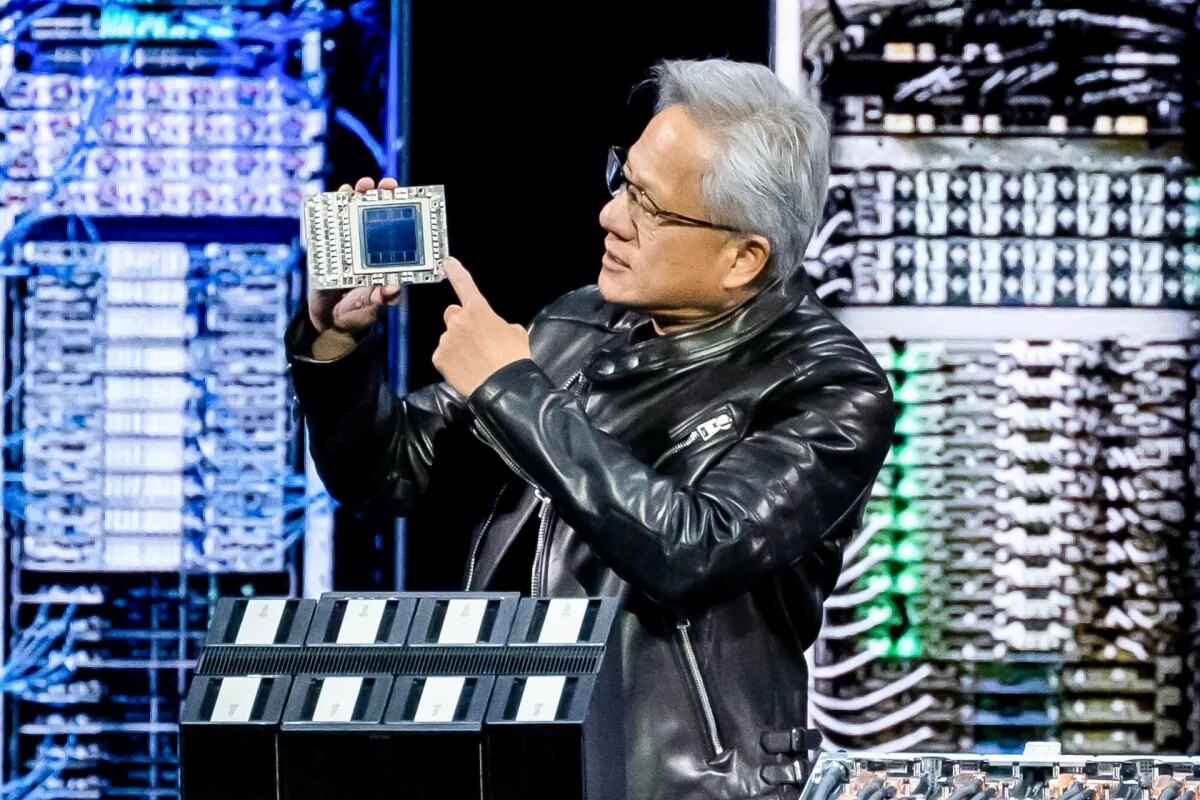
Nvidia has said Apollo, BlackRock, Blackstone, Brookfield, Goldman Sachs and KKR are willing to commit up to $500 billion to AI data-centre construction. The central feature is not simply the headline investment figure: Nvidia has agreed to protect part of the residual value of GPUs used as collateral in the associated financing.
If a data-centre owner defaults and a lender must sell the hardware for less than its book value, Nvidia says it will cover up to 25% of the shortfall. The commitment is intended to make GPU-backed lending more acceptable to large institutional investors while helping fund further AI infrastructure deployment.
A bid to establish a market for older accelerators
The proposal also seeks to create a deeper secondary market for aging AI hardware. Jensen Huang has described AI servers as “AI factories”: assets that can be reassigned to another customer, cloud provider or operator as computing requirements change. In that view, a broad base of prospective users and buyers supports the residual value of Nvidia compute.
That ambition matters beyond the latest generation of chips. A functioning used-hardware market could give startups, enterprises and researchers access to a wider range of accelerators and configurations, with systems selected for particular workloads rather than only for frontier-model training.
The financial model extends Nvidia’s existing exposure to buyers of its hardware. The company has committed billions to customers including OpenAI, Anthropic, CoreWeave, Nebius, Firmus and Lambda. Bloomberg calculated that Nvidia had also been working on another $750 billion in circular deals during the summer.
Why the guarantee has unsettled markets
Critics have compared the approach with Lucent Technologies, the telecommunications equipment supplier that financed customer purchases before the dotcom collapse. Huang has rejected the circular-financing framing, arguing that the initiative brings independent, long-term institutional capital into AI infrastructure and leaves those investors carrying most of the capital and risk.
However, Nvidia’s guarantee introduces what financiers call wrong-way risk. If demand for AI capacity weakens, GPU resale values could fall at the same time as Nvidia’s revenue is under pressure. Its obligation to lenders would then increase in the conditions most likely to constrain the company’s ability to absorb it.
The issue comes as conventional funding routes face pressure. Some hyperscalers have accumulated substantial debt, issued additional equity or consumed significant cash to expand AI capacity. The plan may therefore open another channel for data-centre investment, but it depends on lenders accepting the future utility and resale value of the underlying hardware.
Implications for infrastructure buyers
The market question is whether current demand remains durable or whether lower AI usage, more efficient technology or replacement architectures make installed systems less valuable. The related concern around Nvidia’s compute market is reflected in Nvidia's compute-market financing exposure, where demand concentration and financing exposure remain material to the company’s position.
For businesses acquiring or financing GPU capacity, residual value should be treated as an assumption to test rather than a certainty. Buyers should assess workload portability, likely resale channels, contract terms and the cost of operating older accelerators before relying on hardware collateral as part of an infrastructure plan.