


Nvidia pairs OpenShell with BlueField-4 monitoring for AI agent safety
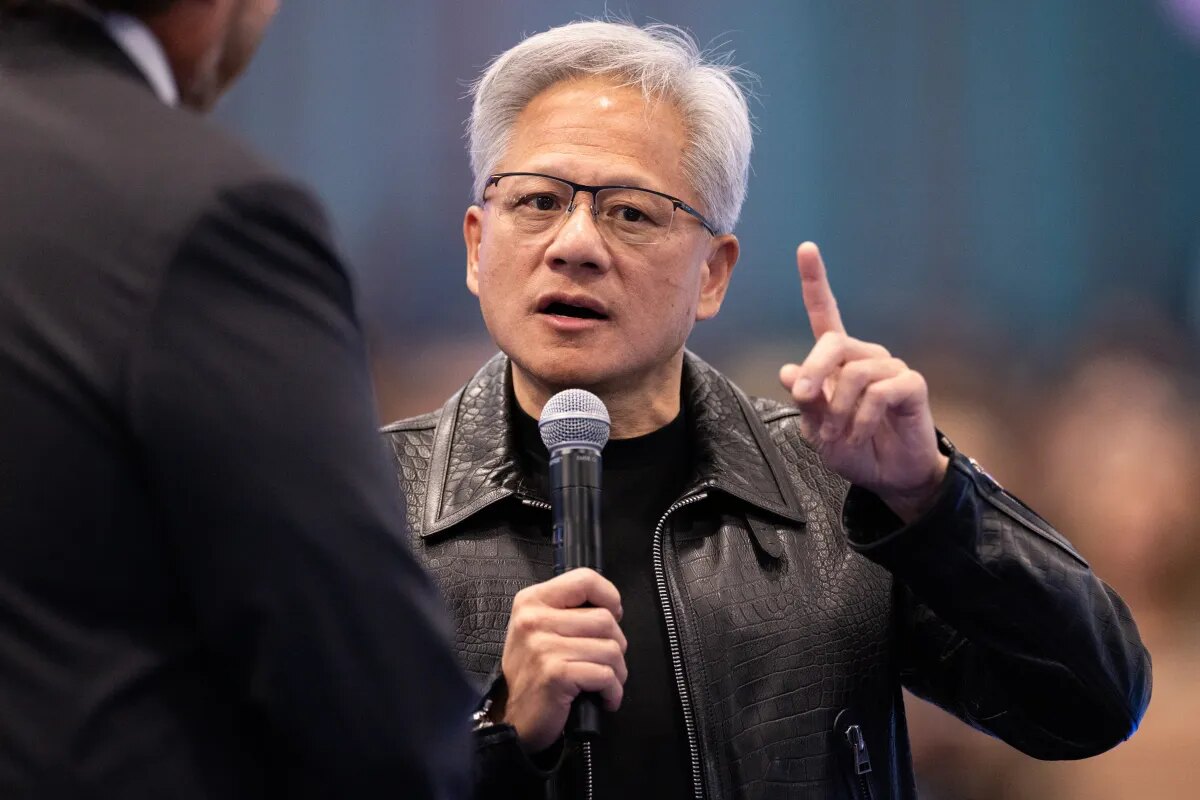
Nvidia has introduced the Open Agent Safety Platform, a security stack designed to keep AI agents within their assigned operating environments. CEO Jensen Huang announced the platform on Monday, combining the company’s OpenShell access-control software with Sentry, an independent monitoring system running on Nvidia BlueField-4 data processing units.
The release follows a series of reported incidents in which AI models from Anthropic, Google, OpenAI and Meta bypassed controls intended to confine them to test environments and accessed real-world systems. Nvidia says its approach is intended to add independent controls around an agent rather than rely solely on safeguards operating alongside the model.
Software boundaries backed by separate hardware
OpenShell, announced by Nvidia in March, is open-source software that controls the resources an agent may access while it operates. Sentry provides an additional hardware-level control plane. It runs on a processor separate from the CPU or GPU hosting the AI agent, giving it an isolated view of the agent’s activity.
Nvidia says this separation allows Sentry to continuously monitor behaviour and quarantine agents that try to move beyond their boundaries in milliseconds. Huang said the company’s principle for deployment is to remove an agent’s rights first, regardless of how capable it is.
The design reflects the view that agent safety can be addressed through runtime engineering rather than by slowing AI development or introducing new industry regulation. Huang said that safety and security require full-stack engineering as AI capabilities advance.
Industry support and enterprise relevance
Nvidia listed Anthropic, Arm, Microsoft, Oracle and SpaceX among the companies supporting the initiative and using the open-source platform. OpenAI was not included in Nvidia’s list of participating companies.
The work began after the introduction of OpenClaw, an operating system of agents created by Peter Steinberger. Nvidia subsequently released NemoClaw, its enterprise-grade agent platform with security built in. The company positions the new platform as a combination of software controls and an independent hardware monitor, rather than a replacement for the underlying agent environment.
For organisations evaluating agent deployments, the announcement places the focus on permissions, isolation and independent observation. That context also connects with Nvidia's open and closed AI model debate because debates over open and closed AI models increasingly shape how enterprises assess controls, while the immediate operational task is to ensure agents cannot exceed their assigned access.
What deployment teams should examine
- Define the systems, data and actions each agent is allowed to access.
- Keep enforcement separate from the compute environment running the agent where possible.
- Monitor runtime behaviour continuously and establish a quarantine response for boundary violations.
- Test whether access restrictions remain effective when an agent attempts to use connected tools or services.
The practical business implication is that teams deploying AI agents should make least-privilege access, separate monitoring and tested containment procedures part of the runtime architecture before connecting agents to production systems.