


OpenAI expands AI engineering tests from CAD to manufacturing
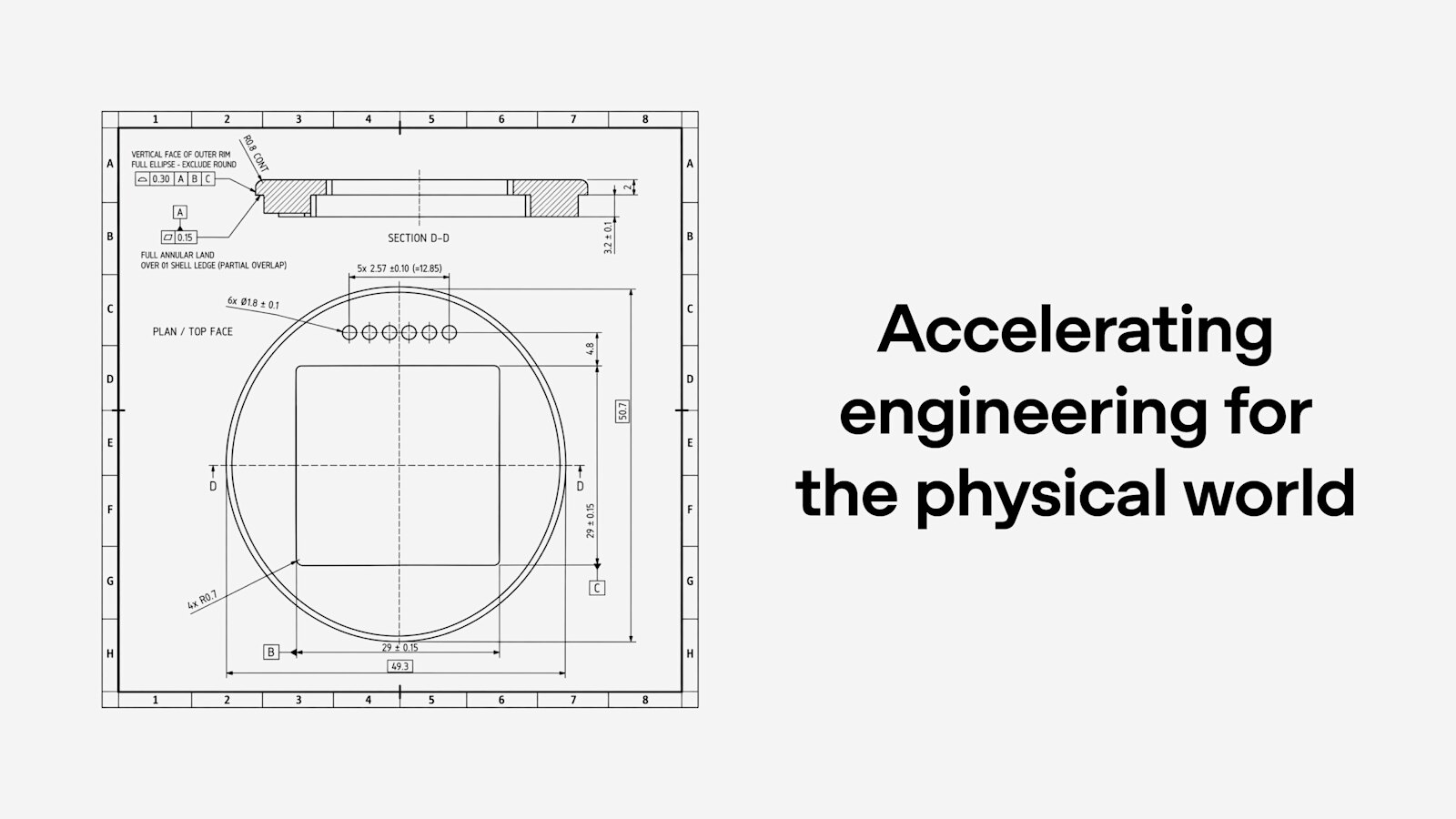
OpenAI says use of Codex and ChatGPT across its hardware teams has increased 23-fold in tokens since February, as the company applies its models to CAD revisions, manufacturing drawings, simulation setup and design reviews. The work spans robotics and compute infrastructure and is part of a broader effort to support mechanical, electrical and end-to-end systems engineering.
The company also described a device-design experiment using GPT-6 Astra. Two team members, working on the project as a side effort, used the model to define functional requirements and create an enclosure, printed circuit board, interface, firmware and software integrations for a device that connects users to Codex. A contract manufacturer built a small batch of prototypes in under a month after the design work was completed in under a week.
Astra’s device test exposed manufacturing gaps
OpenAI said Astra developed the device’s appearance using references from its Work Louder collaboration and from games and toys. It designed the enclosure and internal component supports, selected electrical parts, laid out the PCB, and generated the software elements needed for the Codex connection.
The result was not ready for production without further work. Several rounds of review and iteration were needed because Astra did not consistently account for a manufacturer’s production limits, tolerances or assembly requirements. OpenAI presents those gaps as areas that future models must handle more reliably.
The distinction matters for engineering teams evaluating generative systems. A model can help move a concept through design activities, but the source describes human and manufacturer review as necessary before a prototype can be prepared for manufacturing.
Benchmark results and industry testing
OpenAI is measuring newer models on engineering tasks that combine coding with specialist knowledge. Its BenchCAD 2.0 benchmark tests reconstruction of 3D parts and assemblies and identification of connections in circuit boards. A newer internal model recorded an average score of 0.875, compared with 0.594 for GPT-6 Astra at its highest reasoning setting.
The company cautioned that engineering extends well beyond design, while characterising the benchmark gains as early evidence that AI could improve iteration speed in professional workflows. Internally, engineers use the tools to organise constraints across disciplines, explore architectures, work across ECAD environments and conduct design reviews.
Collaborators focus on CAD reconstruction and vehicle simulation
OpenAI is working with a small group of industry collaborators whose engineers review outputs for accuracy and practical usability. With Chip Ganassi Racing, it is testing workflows that convert 3D scans of existing parts into editable CAD models and 2D manufacturing drawings, particularly when original design files are unavailable. CGR engineers review the resulting models and drawings for accuracy and manufacturability.
A new research collaboration with Mazda brings OpenAI’s research and Forward Deployed Engineering teams together with the automaker’s aerodynamics and crash-safety engineers. The work uses airflow and structural simulations to investigate vehicle designs while accounting for styling and cost. OpenAI said GPT-6 Astra in Codex helps explore nose shapes, simulate airflow and refine promising options.
For businesses, the immediate implication is to target bounded, reviewable tasks such as drawing preparation, scan-to-CAD conversion and simulation setup, then keep qualified engineers responsible for validation, manufacturability and safe deployment.