


Rivian CEO to outline R2, autonomy and robotics plans at Disrupt
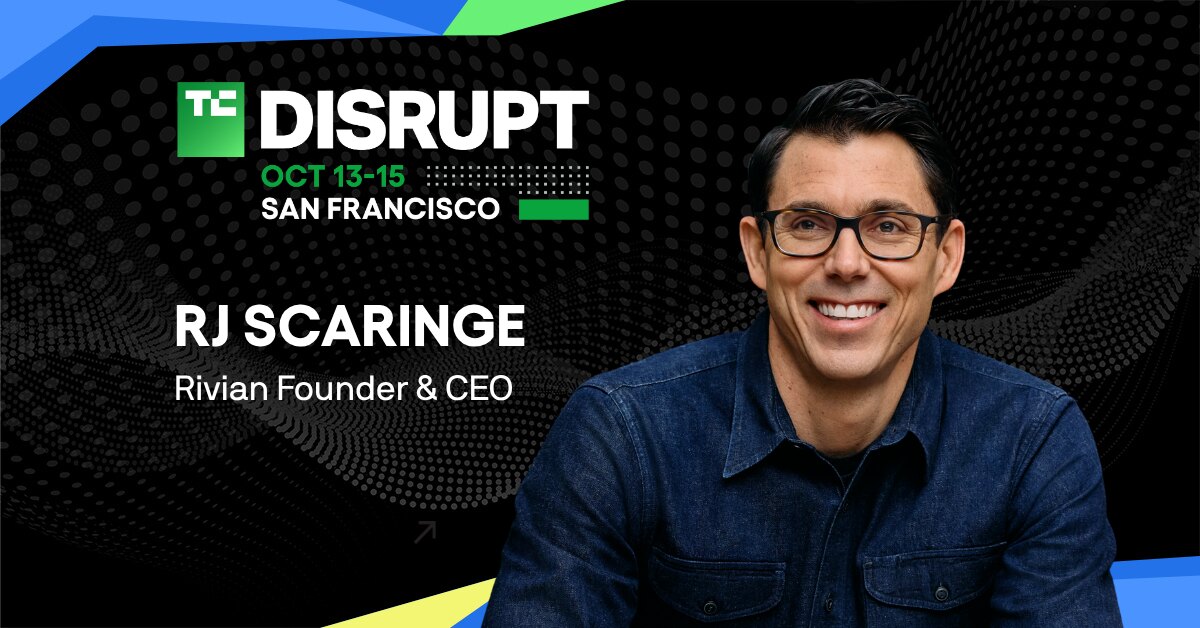
Rivian CEO RJ Scaringe will speak at TechCrunch Disrupt 2026, scheduled for October 13–15 at San Francisco’s Moscone Center. His session will address the EV maker’s R2 rollout, its roadmap to full Level 4 autonomy by 2028, its charging-network ambitions and the robotics work connected to its Normal, Illinois factory.
Rivian has begun rolling out the R2, an SUV priced at roughly $58,000. Scaringe has described it as “maybe the most important thing we’ve launched to date,” positioning the model as a way to expand the company beyond the more niche market served by the higher-priced R1T and R1S.
R2 is central to Rivian’s broader market push
The R2 arrives as demand for costlier electric vehicles slows and competition increases, particularly from lower-cost Chinese EV manufacturers. The vehicle is therefore a key part of Rivian’s effort to reach beyond the customer base for its existing premium models.
Scaringe’s Disrupt appearance is expected to focus on the operational challenge of building a company that designs, manufactures and delivers hardware at scale. That requires coordination across factory operations and supply chains as well as software, AI, robotics and transportation.
Autonomy, charging and factory robotics
Alongside vehicle development, Rivian has set a goal of achieving full Level 4 autonomy by 2028. It is also building its own charging network and has stated ambitions for it to become one of the largest in the United States. Those initiatives broaden Rivian’s work beyond the vehicle itself, bringing software and charging infrastructure into its operating plans.
The company’s automation interests also extend through Mind Robotics, the humanoid robotics company founded by Scaringe. He serves as its executive chair and acting CEO. Mind Robotics has raised $900 million this year, while Rivian is a large shareholder and a launch customer.
Rivian intends to use its Normal factory as a proving ground for closer human and robotic coexistence on assembly lines, with the stated aim of addressing an anticipated shortage of human labor. The factory setting gives the company a place to test how robotics can be incorporated into physical production rather than treated as a separate software exercise.
Why the Disrupt discussion matters
The session will also sit alongside programming on AI Stage: agent security and new sales models, where the event’s agenda examines agent security and emerging sales models. Together, the subjects reflect how AI questions are increasingly tied to deployment environments, operating processes and commercial execution.
For businesses evaluating physical AI, Rivian’s plans underline the need to consider product strategy, production capacity, autonomy and infrastructure together. The practical implication is to define how each technology will operate within a real workflow before committing to a standalone deployment.