


ROMULUS ClickFix Campaigns Deliver CNCMachineRMS Remote Access Trojan
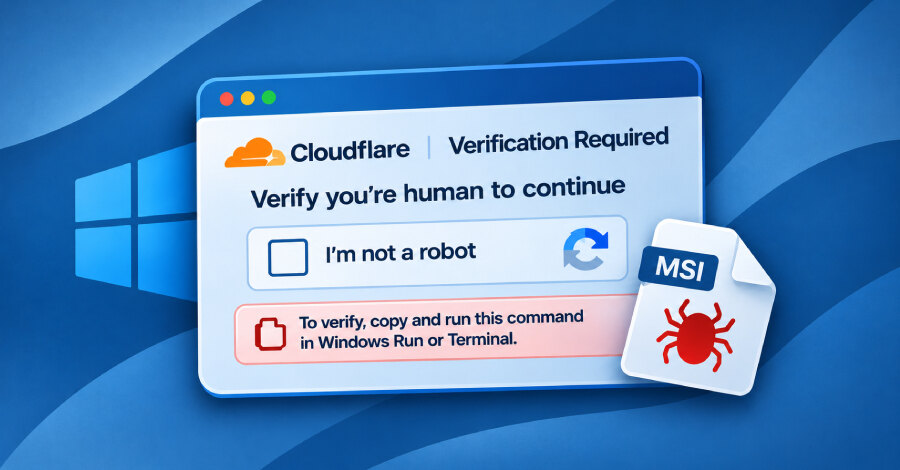
Blackpoint Cyber has identified ROMULUS ClickFix campaigns that deliver the previously undocumented CNCMachineRMS remote access trojan (RAT) alongside Legion Loader through separate infection chains. The RAT gives attackers remote desktop control, screen streaming, microphone and camera capture, file management, system reconnaissance and the ability to execute additional payloads on demand.
ROMULUS was publicly documented by Forescout Research last month as a malware delivery service using ClickFix-style lures to distribute families including Legion Loader, also known as Satacom downloader, CurlyGate and RobotDropper. Blackpoint Cyber assesses that the platform retains ClickFix and signed-binary sideloading techniques while changing the applications and loaders used in its distribution chains.
MSI lure and DLL sideloading chain
In one ROMULUS-associated activity, a malicious MSI installer named IconEdit2Turb.msi is executed with msiexec.exe through a PowerShell command. The installer impersonates Stardock Smart DeElevation Tool and begins a DLL sideloading chain that loads a malicious DLL named I++u.dll.
The DLL decodes and executes embedded shellcode, which launches CNCMachineRMS. The same RAT was also the final implant in campaigns that used ChatGPT Custom GPTs to direct victims to malicious websites containing ClickFix lures. CNCMachineRMS communicates with attacker-controlled infrastructure using DNS over HTTPS, adding another component for defenders to examine during incident triage.
ClickFix expands across platforms and lures
ClickFix attacks manipulate victims into running commands presented as verification or CAPTCHA steps. The wider campaign activity described alongside ROMULUS includes fake Cloudflare prompts, fraudulent Zillow apartment-review pages, spoofed Amazon and Claude download pages, compromised WordPress sites and trojanized MSI packages. The delivered malware includes NetSupport RAT, Lumma Stealer, Atomic macOS Stealer, CrocoRat and CrashHandler RAT.
The broader pattern is consistent with ClickFix chains in the wider threat roundup where ClickFix chains featured among the security issues tracked in a wider threat roundup. Huntress reported that ClickFix has progressed beyond basic script or loader delivery into chains supporting persistence, lateral movement, reconnaissance and credential theft; some campaigns use browser-cache-seeded stages or reconstruct executables from data concealed in PNG files.
What organisations should examine
Blackpoint Cyber said that while attackers change the applications and loaders used to distribute payloads, the underlying malware architecture offers a more consistent way to identify related activity and understand the threats delivered. That observation is relevant when a familiar-looking installer or verification prompt conceals a different payload family.
- Investigate unexpected PowerShell activity that invokes msiexec.exe, especially where MSI files claim to be utility software.
- Review DLL sideloading alerts and the processes that load unfamiliar DLLs alongside signed executables.
- Treat prompts that instruct users to copy and run commands in Windows Run, Windows Terminal or macOS Terminal as a potential social-engineering event.
- Include DNS over HTTPS traffic in investigations of suspected endpoint compromise.
The practical business implication is that user-facing “verification” steps must be treated as a security control point: organisations should prepare staff to stop and report command-pasting prompts, while security teams correlate suspicious installers, PowerShell execution, sideloaded DLLs and encrypted DNS activity before remote-control malware can establish itself.