


Investors outline Series A fundraising tests as AI market froth grows
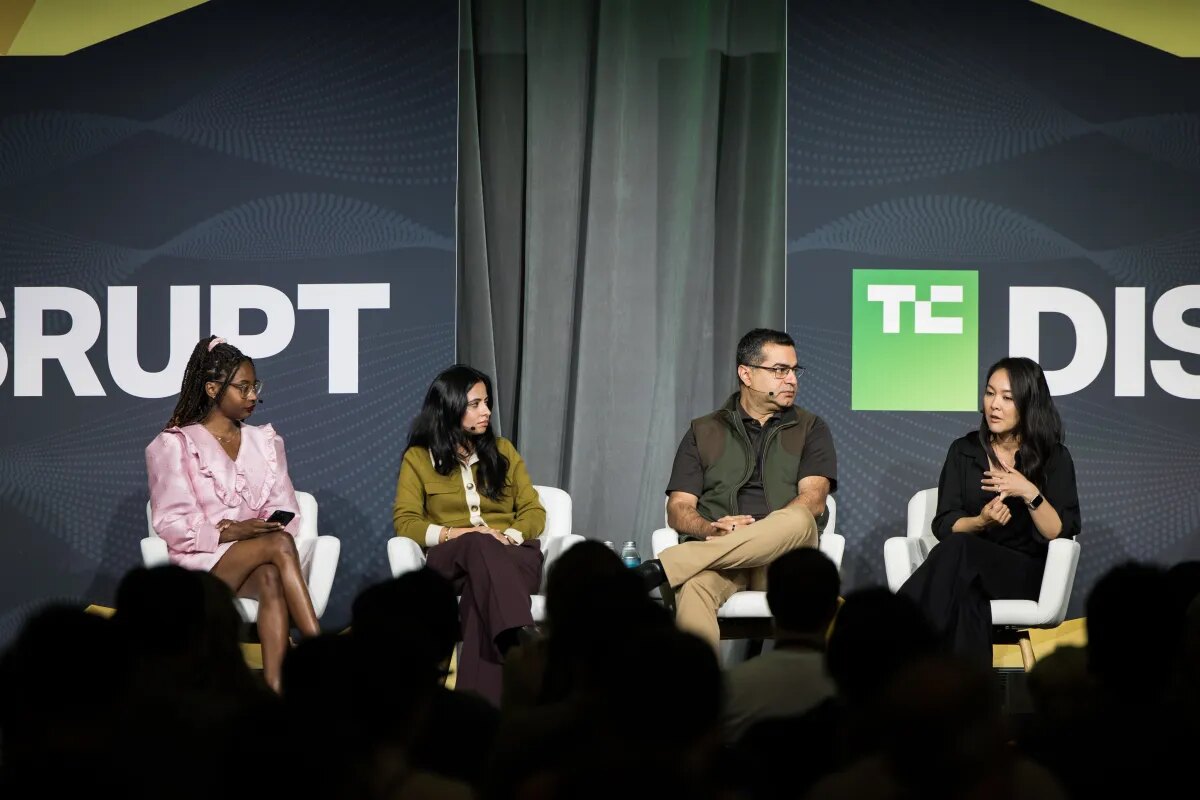
Investors speaking at TechCrunch Disrupt told founders that raising a Series A has become less governed by a single set of metrics, while warning that AI capital, inflated revenue claims and high valuations may be creating market froth. Shailendra Singh, managing director at Peak XV, said he expects a correction by 2027.
Singh appeared with Jahanvi Sardana, a partner at Index Ventures, and Jenelle Teng Wade, a partner at Bessemer. Their discussion presented a market in which companies can receive dramatically different financing terms and, in some cases, attempt to close a round at as many as three different prices.
Series A terms are becoming harder to read
Singh described seed and venture investing as unusually dysfunctional and said the burden on founders is high when persuading a top firm that their company can break out. The resulting dispersion affects both the amount of capital available and the terms attached to it.
Sardana called the splitting of rounds into separate chunks “tranchopalooza.” For founders, that pattern illustrates why a nominal valuation alone may not explain the quality or structure of a financing round.
The panelists nevertheless identified several recurring elements in a credible Series A case. Singh highlighted a founder’s ability to attract high-quality talent, alongside a persuasive account of why the company has a credible path to building a large business.
Opportunity remains, but metrics need scrutiny
Teng Wade said capital continues to flow into defense, robotics and AI infrastructure. She also pointed to foundational-model companies integrating vertically, while identifying space for neo-clouds that rent AI computing capacity and neo-labs focused on AI research.
Metrics remain important, although their meaning is less settled for AI companies with substantial compute costs. Teng Wade cited Bessemer’s early assessment of Anthropic, whose margins were negative and whose compute spending was high. The investment case rested on the possibility that frontier models could command a price premium and become substitutes for other software if the company became one of the leading players.
Anthropic is reportedly preparing an IPO at a valuation of about $2 trillion and told investors this month that it was profitable on an adjusted basis, a measure that excludes some costs. The example does not remove the need for careful analysis of a company’s economics and underlying costs.
Honest reporting is a fundraising requirement
Singh cautioned founders against presenting cumulative revenue or cumulative ARR charts, calling them a major red flag because they can conceal the quality of time-series performance. He urged intellectual honesty in how companies present themselves during a bull cycle, arguing that a market full of optimism will also produce false positives.
Sardana added that founders should learn to pitch without allowing current funding preferences to determine what they build. Singh advised them not to rush, to guard against weak product-market fit and to keep a high bar for the problem being solved. Teng Wade’s advice was to be audacious in the initial ask, then tailor it to the market response.
For businesses preparing a Series A, the practical implication is to pair an ambitious, evidence-based vision with clear period-by-period metrics, a realistic view of costs and product-market fit that does not depend solely on the latest investment trend.