


US Expands DeepSeek Restrictions to Civilian Federal Agencies
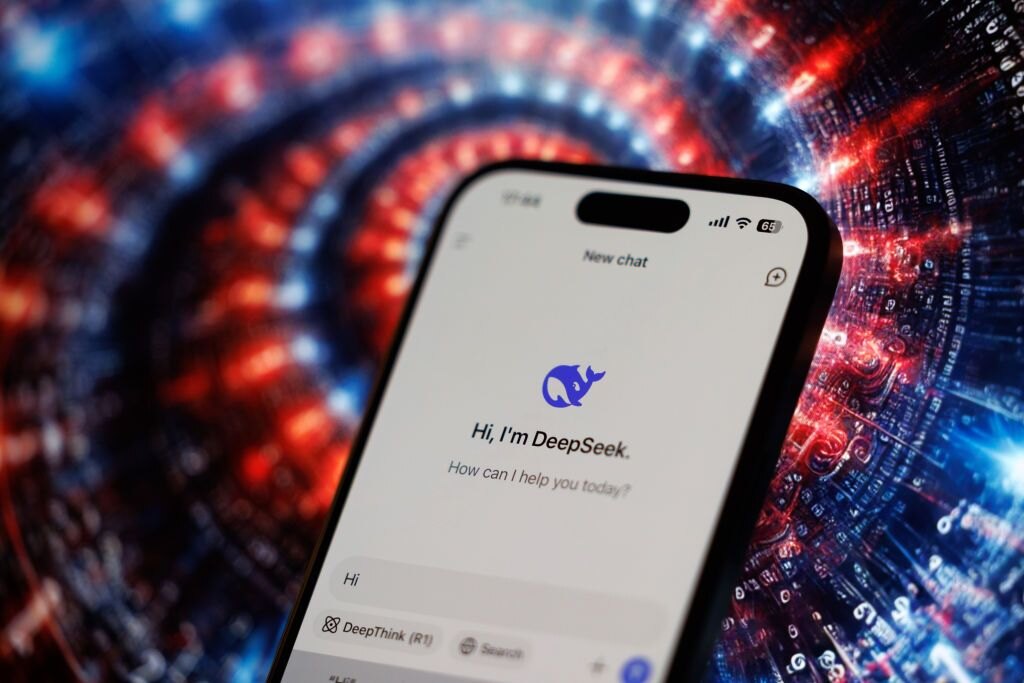
The United States has directed federal civilian agencies to stop purchasing products and services developed by Chinese AI startup DeepSeek and to remove its technology from existing government IT systems. The Department of Homeland Security order also reaches third-party products and services built using DeepSeek technology, though agencies can request exceptions.
The action extends US restrictions beyond DeepSeek’s own applications. It applies both to future procurement and to technology already deployed across civilian federal systems, widening a policy that had previously focused on intelligence and national-security environments.
DHS cites government data exposure concerns
The Department of Homeland Security warned that sensitive information from US government users could potentially be accessible to Chinese authorities under Chinese law because of DeepSeek’s operations in China. That data-handling concern is the stated basis for requiring agencies to remove the technology rather than merely halt new purchases.
A law passed in December 2025 had already targeted DeepSeek’s use in intelligence national-security systems. The latest instruction broadens the scope to federal civilian agencies and includes products or services from other suppliers when they are built with DeepSeek technology.
Restrictions arrive amid AI competition
The decision comes as competition between the United States and China over artificial intelligence intensifies. DeepSeek has challenged US rivals, including OpenAI and Meta, with low-cost open-weight models. Its R1 reasoning model drew global attention in January 2025 and was followed by a sharp sell-off in Nvidia shares.
Chinese officials objected to the US move. Foreign Ministry spokesperson Mao Ning said Beijing opposed what it described as an overstretching of national security and politicisation of technology and trade issues, adding that China would safeguard the legitimate rights and interests of Chinese enterprises.
DeepSeek has also faced scrutiny over allegations of model distillation. A September US report accused DeepSeek and five other Chinese AI companies, including Alibaba and Moonshot AI, of using large-scale model distillation to extract information from American AI systems. OpenAI and Anthropic have separately raised concerns about suspected unauthorised collection or use of model outputs.
What organisations need to examine
The order makes third-party AI dependencies a central procurement issue for affected agencies. A service may not carry DeepSeek branding while still relying on its models or technology, meaning an inventory focused only on directly purchased applications may not identify every affected system.
For businesses operating in regulated or public-sector environments, the practical implication is to map embedded AI providers, assess where prompts and outputs are handled, and maintain replacement plans when a supplier or underlying model becomes restricted.