


Limited partners raise concerns over accelerated venture fund cycles
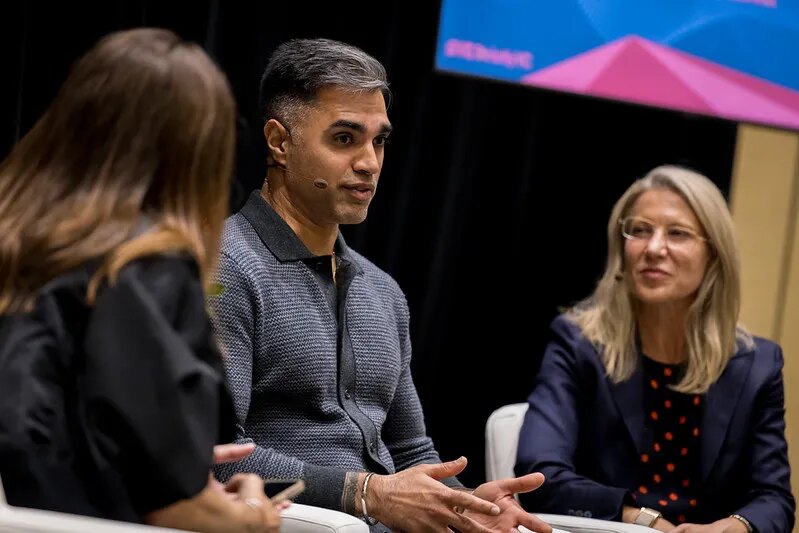
Limited partners backing venture capital firms are welcoming the upside from artificial intelligence investments, but they are also warning that fundraising and deployment are moving unusually fast. Beezer Clarkson of LGT Capital Partners and Amit Bhatti of TrueBridge pointed to venture managers returning for capital in as little as 12 to 18 months, compared with more typical cycles of roughly 24 to 36 months.
Their portfolios are increasingly exposed to the same companies, notably OpenAI and Anthropic, through several different venture firms. That overlap challenges the usual LP objective of diversification, even as the two investors said concentration in a small number of successful holdings is a familiar feature of venture returns.
Concentration arrives faster in the AI cycle
Bhatti said mature venture portfolios commonly consolidate around a few large positions, citing Databricks, SpaceX and Stripe as examples from older funds. In the current generation, he said, LPs would expect to see substantial exposure to Anthropic and OpenAI if those companies remain leading outcomes. The unusual factor is the speed at which this concentration has developed.
Clarkson drew a distinction between early-stage investing and large late-stage rounds. Early funds still see a wider opportunity set and invest smaller amounts, even if their returns may ultimately aggregate into the same small group of companies. That gives LPs some diversity at the entry point, but does not remove portfolio-level overlap.
Fund pacing creates a yellow light
Both investors described rapid fundraising as a reason for caution rather than an immediate alarm. Clarkson said some managers are now operating on one-year pacing, while the former norm was closer to two or two and a half years. Concentrated positions requiring large checks can speed up a fund’s deployment and bring its next fundraising round forward.
Bhatti said fund upsizes during a fund’s life have also become more common, partly because financing rounds are larger. A manager allocating 20% of a fund to a single large Anthropic round will move ahead of plan quickly. Seed rounds have also nearly doubled in size, he said, requiring larger checks from investors that want to lead them.
The comparison with the previous fast-paced cycle matters. Bhatti contrasted current investments in companies progressing from zero revenue to $100 million in revenue with the earlier period’s zero-revenue crypto bets. Still, he described the new tempo as a “yellow light” and said it creates concern for LPs managing their own commitment calendars.
Liquidity tools and emerging managers remain relevant
Secondaries are becoming a more accepted liquidity mechanism in venture alongside IPOs and mergers and acquisitions. Clarkson said secondary activity has grown more sophisticated over roughly the past five years, while Bhatti called it a third leg of liquidity. A manager may sell part of a position rather than exit entirely, particularly when a partial sale can return capital to the fund.
The investors also said emerging managers continue to raise capital, although typically in smaller vehicles. Clarkson cited first funds of $25 million to $50 million, while Bhatti noted that some investors are formalising angel strategies with $5 million or $10 million funds. The key tests remain a differentiated thesis, access to founders and sound investment judgment.
For businesses allocating capital to venture, the practical implication is to assess exposure across all managers, not only fund by fund, and to plan for faster capital calls, larger rounds and a wider use of secondary liquidity.