


WindBorne secures $37 million to commercialize AI weather forecasting
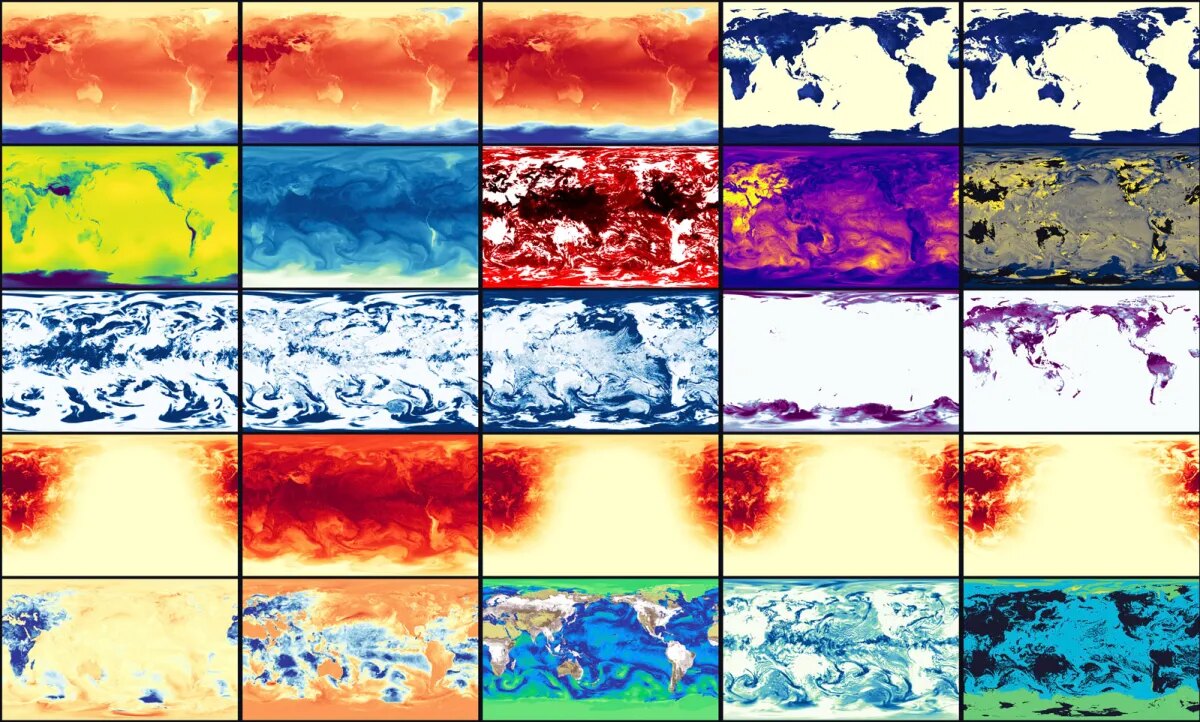
WindBorne Systems has raised a $37 million Series B to expand its AI weather forecasting business beyond government customers. Khosla Ventures and Galvanize co-led the round, joined by TransLink Capital, Lux Capital and existing investors. The financing values the company at $250 million after the round.
Founded in 2019, WindBorne operates 20 launch sites worldwide and has about 600 long-duration balloons airborne at any given time. Its low-cost sensors gather observations from places that are difficult to reach, including the eye of a typhoon.
Proprietary observations strengthen the model
The startup feeds its balloon measurements into a forecasting model alongside datasets produced by government weather agencies. CEO John Dean describes this collection system as a “planetary nervous system” and argues that its proprietary data creates a competitive moat.
The operating model builds on WindBorne’s AI forecasting and airborne sensor strategy while adding a larger financing round and a push into commercial decision-making. Dean said tests showed that adding balloon observations improved forecasts and that each data point delivered substantially more value than satellite data.
WindBorne is also beginning to deploy aerial sensor packages that can descend into the ocean and continue gathering measurements as floating buoys. Part of the new capital will support computing capacity and an effort to replace the balloon network’s satellite communications with a mesh radio network.
Government demand provides the foundation
Government organizations are currently WindBorne’s main customers. The U.S. National Weather Service buys its data, while the U.S. Air Force and U.S. Navy fund research partnerships. One project aims to create forecasting models that can run aboard ships with intermittent external connectivity.
AI has altered the economics behind this work. Deep-learning weather models can run on laptops rather than requiring the supercomputers traditionally used to simulate the atmosphere, making proprietary forecasting feasible for more private companies.
The commercial challenge
WindBorne will use the round to build its go-to-market team and attract more private-sector customers. Its commercial activity currently focuses mainly on investment funds that apply weather data to commodity prices and other business outcomes.
Scaling that market will require more than accurate measurements. Sensing startups have often struggled to win private customers because extracting value from environmental data demands expertise and established workflows. Weather companies have therefore tended to repackage government forecasts for media, aircraft de-icing, ship routing and financial speculation.
Galvanize partner Saloni Multani said integrating forecasts into broader business decisions has historically been costly and difficult. In her view, better predictions make the effort more worthwhile, while AI reduces the difficulty of connecting forecasts to operational choices.
For businesses, the practical implication is to evaluate weather intelligence against a defined decision—such as routing, pricing or operational planning—and determine whether improved forecasts produce measurable value within an existing workflow.