


World-model developers keep commercial strategies under wraps
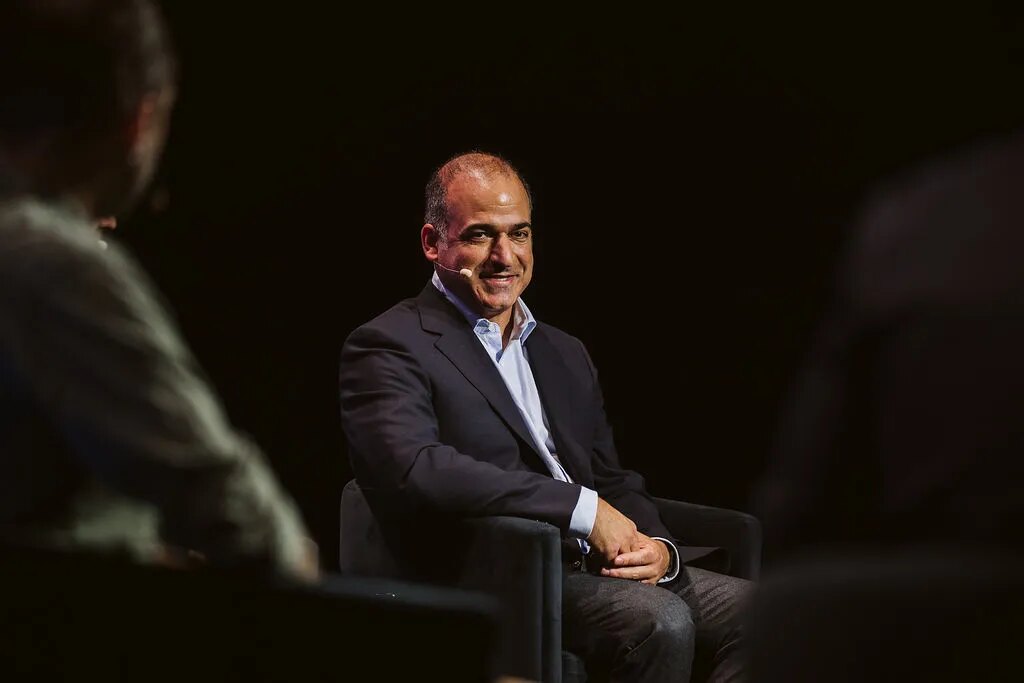
World-model developers AMI Labs and World Labs are attracting attention and capital while disclosing little about the products they intend to commercialise. At the All In conference, Michael Rabbatt, AMI Labs co-founder and vice-president of World Models, said the company would discuss its work when it was ready. In a subsequent email, he said AMI was still in a research-and-building phase and was not publicly discussing product plans or a timetable.
The limited disclosure extends beyond prospective customers and observers. Alex de Vigan, chief executive of data supplier Physicl, said the company knows its data has been useful to world-model businesses but does not know precisely what they are building. He argued that greater clarity would allow Physicl to create more useful data for those efforts.
A broad technical category with few declared products
World models seek to automate spatial intelligence. In a basic form, they can create a navigable representation of the physical world, similar to the modelling used by AI systems for autonomous driving. The same approach could also help a humanoid robot move boxes or turn a short video sequence into an environment a user can explore.
World Labs’ Marble is among the most fully developed public products in the segment. Its demonstrations include media creation, explorable game environments and CGI effects. Robotics is another possible application, although the platform currently appears designed largely to demonstrate what the underlying capabilities can do.
AMI’s activity points to several possible directions. The company has touched manufacturing, biomedicine, robotics and AI software for doctors through its Nabia partnership. The range illustrates why AMI Labs and the importance of world models frames world models as a significant technical layer, while it also leaves the company’s eventual commercial focus unclear.
Secrecy as a competitive choice
The lack of public product detail is not solely a consequence of early-stage research. World models may support viable businesses across robotics, interactive video, autonomous systems and other areas. When funding remains accessible, a laboratory has less pressure to declare a single market before it has decided which opportunities are strongest.
Publicly identifying a promising application could also invite faster competition. A lab that announced a humanoid robot system or a new rendering product might draw interest from other world-model companies, newer AI labs, OpenAI and Anthropic. The same availability of capital that supports quiet development can also finance competitors once a route to market becomes visible.
For businesses evaluating this field, the practical implication is to separate demonstrated capability from declared product readiness. Marble’s demos, AMI’s research-stage position and Physicl’s limited customer visibility show that spatial AI has multiple plausible uses, but they do not yet establish which offerings will be sold, on what timetable, or for which operational need.